
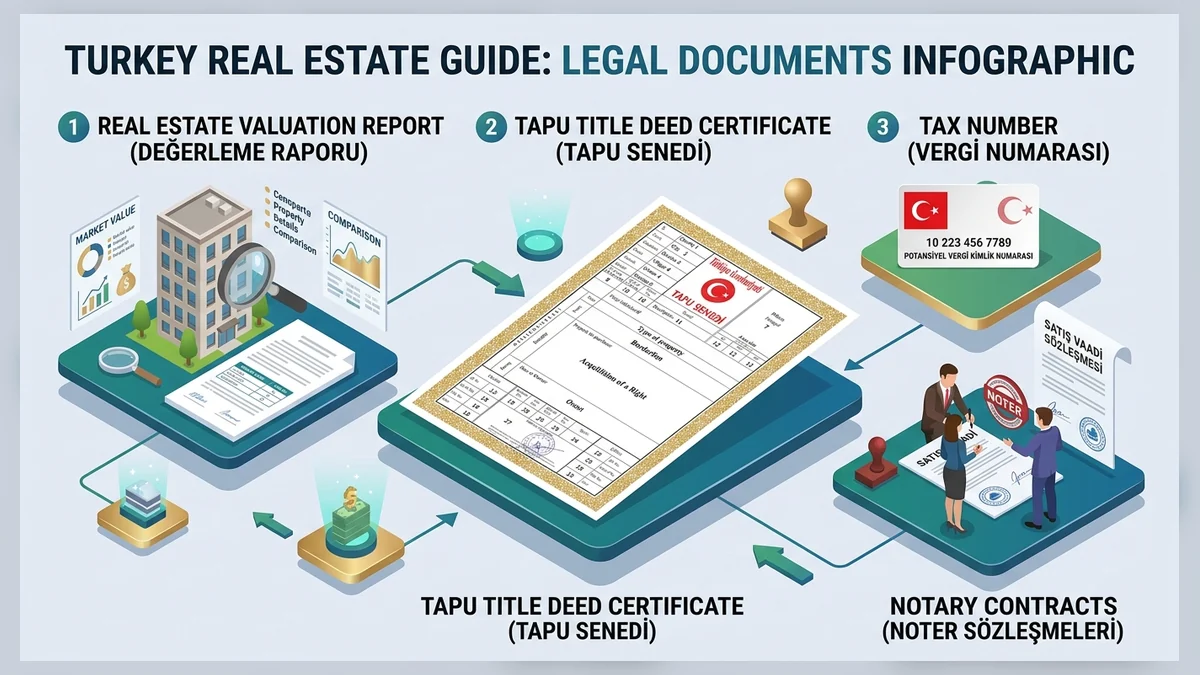
Fake Title Deed Red Flags
Core point
A title-deed image alone does not prove that it is current or unaltered; compare it with a current official registry record or verifiable TKGM document.
How to verify it
Check province, district, neighbourhood, ada/parsel, independent-unit number, owner, title type and restrictions rather than relying on logos or visible stamps.
Decision impact
Red flags include inconsistent data/layout, cropped document areas or refusal to provide a current registry record when requested.
Detecting title fraud without relying on the appearance of a document
A forged title document can look convincing, so the primary test is independence from the copy supplied by the seller. Reconcile the property and owner through a current TKGM channel and review current restrictions instead of reading only a PDF or phone screenshot. Warning signs include a different ada/parsel or independent-unit number, unexplained changes in the owner's name, a reference or code that cannot be tied to an official service, or pressure preventing the buyer from obtaining a fresh record. Where EİDS applies to the listing, compare the verified listing relationship to the property and the person authorised to market it.
Even a genuine document can be stale or relate to another unit, so authenticity, freshness and transaction relevance are separate tests. If a file arrives through email or messaging, retain the original digital file and its source rather than saving only a screenshot that strips context. When doubt remains, do not “repair” the document manually; obtain an independent registry copy or escalate to the competent land-registry office. A last-minute beneficiary-account change should not be funded until the identity discrepancy is resolved, because document manipulation and altered payment instructions can be parts of the same fraud event.
Also examine the age of the file itself. A title copy sent months earlier may be genuine yet say nothing about current restrictions. When two versions differ, record changes in owner, encumbrances or unit description and do not label the difference a harmless update until the official source explains it.
Topic-specific tests Use two-channel verification: information from the counterparty plus independent confirmation from a known register, authority or bank.
Official data point The Ministry of Trade’s EİDS can verify the identity of a person marketing a property and whether that person has authority to market it on electronic platforms.
TKGM states that Web Tapu allows online applications for transactions such as sale, mortgage and inheritance transfer.