
Real-estate fraud red flags in Türkiye: separate ownership, marketing authority and payment authority
Many fraud risks become easier to detect when the buyer separates three questions: who legally owns the property, who is authorised to market or negotiate it, and who is authorised to sign or receive money for the sale? A convincing title image, a social-media account using a company logo and a person who knows detailed facts about the apartment do not answer all three. Each layer should be verified through the appropriate evidence and, where possible, through an independent official channel before material funds are released.
Start with the registered owner and exact property
Confirm the current registry identity of the property: province, district, neighbourhood, block/parcel and, for an apartment, the independent-unit number, owner and transferred share. Do not rely on a title image sent by the seller. Even a genuine older image may not show a later mortgage, attachment or ownership change. Reconcile the unit viewed with the registry and approved project. A party that cannot identify the property legally or refuses ordinary information needed for verification is a significant warning sign.
EİDS supports marketing authority, not ownership or sale authority
The Ministry of Trade uses EİDS to verify identity and authority to market real estate in electronic listings within the system’s scope. This is an important control against copied or unauthorised advertisements, but it does not make the broker the owner and does not automatically authorise that broker to sign a title transfer or receive the full purchase price. Authority to advertise, authority to dispose of property and authority to receive money are separate questions that require separate evidence.
Verify the brokerage business and legal entity
Confirm the legal trade name and relevant real-estate trade authorisation through the Ministry of Trade systems, including TTBS where applicable. A social-media page, branded website or mobile number is not enough. You should be able to identify the legal business providing the service and the person acting for it. If a person requests a commission or reservation payment, ask for written evidence explaining the legal basis for receiving the money and the service or obligation connected with it.
Read a power of attorney clause by clause
If the owner is not attending personally, a document labelled “general power of attorney” is not sufficient by title alone. Match the principal and agent, and read whether it covers the specific sale, signature, receipt of price or sub-delegation actually required. A foreign-issued POA may require apostille or consular legalisation and notarised Turkish translation depending on its origin and TKGM requirements. Check whether it remains valid and whether there is any indication that it has been revoked.
Look for document-manipulation signals
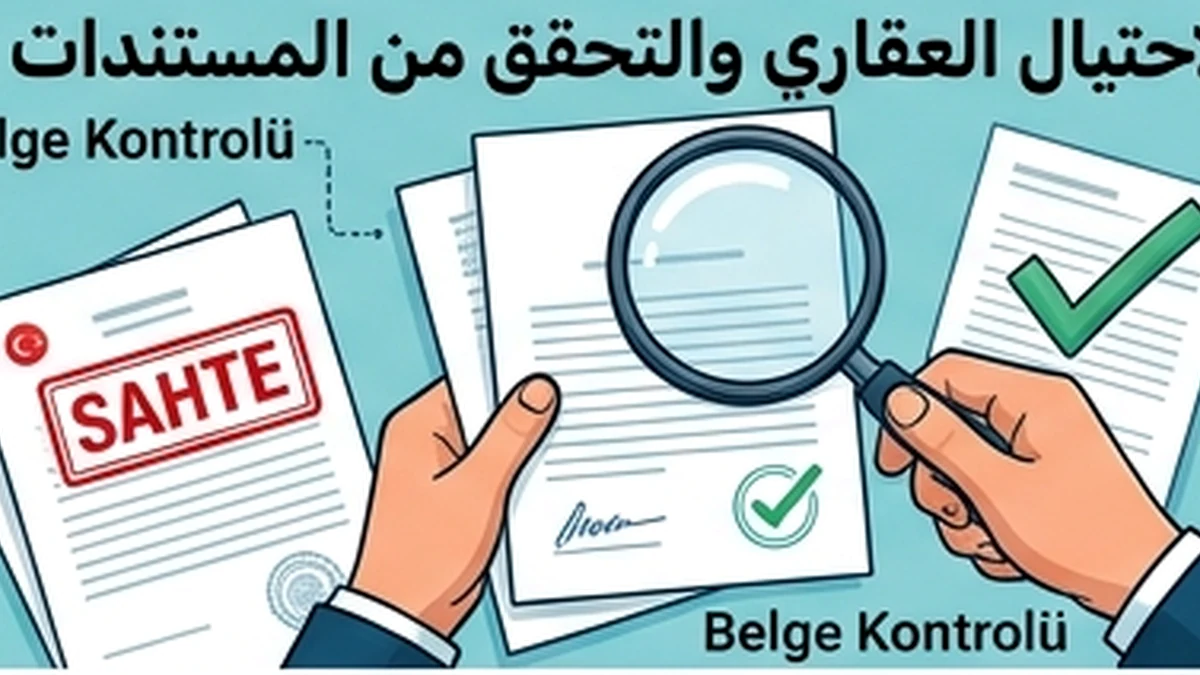
Visual quality of a stamp or logo is not proof of authenticity. Look for inconsistent names across passport, contract and title records, mismatched unit or parcel numbers, missing pages, implausible dates, translations that summarise rather than reproduce powers, or documents whose issuing source cannot be explained. Use verification channels of the issuing authority where available. A document that cannot be linked coherently to the transaction should not support an irreversible payment.
A late IBAN change is a high-risk event
If the beneficiary account changes after the parties have agreed payment details, stop before transferring. Do not confirm the change using only the same message thread that announced it. Contact the seller or authorised representative through a channel established earlier and ask why the account changed and why the new recipient is entitled to receive the money. Genuine transactions can still be targeted through compromised email or messaging accounts. Keep both instructions, the verification record and the final bank evidence.
An unusually low price requires more verification, not less
A genuine motivated seller exists, but a price far below credible comparables can also conceal a fractional interest, tenant occupation, unit mismatch, arrears, title restrictions or a lure for a quick deposit. Compare the property with genuinely similar alternatives. If the discount is large, obtain a documented explanation. Fear of losing a “once-in-a-lifetime” opportunity should never replace owner, title and payment checks.
Control reservation and deposit payments
Before a deposit, write down the exact property, amount, recipient, purpose, reservation period and the circumstances in which the payment is credited or returned. There is no sound universal rule that every deposit is automatically non-refundable or that one percentage is mandatory for every transaction. Recipient authority matters: a broker authorised to advertise is not automatically authorised to hold funds for the owner. Use traceable payments and keep a receipt linking the money to the property and agreement.
Remote purchases require additional independent verification
If the buyer is outside Türkiye, obtain a live viewing of the exact property or independent inspection where appropriate rather than relying on an old video of uncertain origin. Use an adviser or representative chosen by the buyer when the value or risk justifies it, and define that person’s authority. Do not allow the person selling the property to become the only source for title, valuation, inspection and payment evidence.
Stop when a material inconsistency remains
The strongest anti-fraud control is not memorising every possible scam; it is having a rule that material funds do not move while ownership, property identity, representation authority or beneficiary remains unresolved. When registry, identity, POA, contract and money trail reconcile, the opportunity for fraud is reduced. A counterparty who resists ordinary official verification or repeatedly creates artificial urgency should be treated as an additional risk factor, not merely as a negotiation style.