
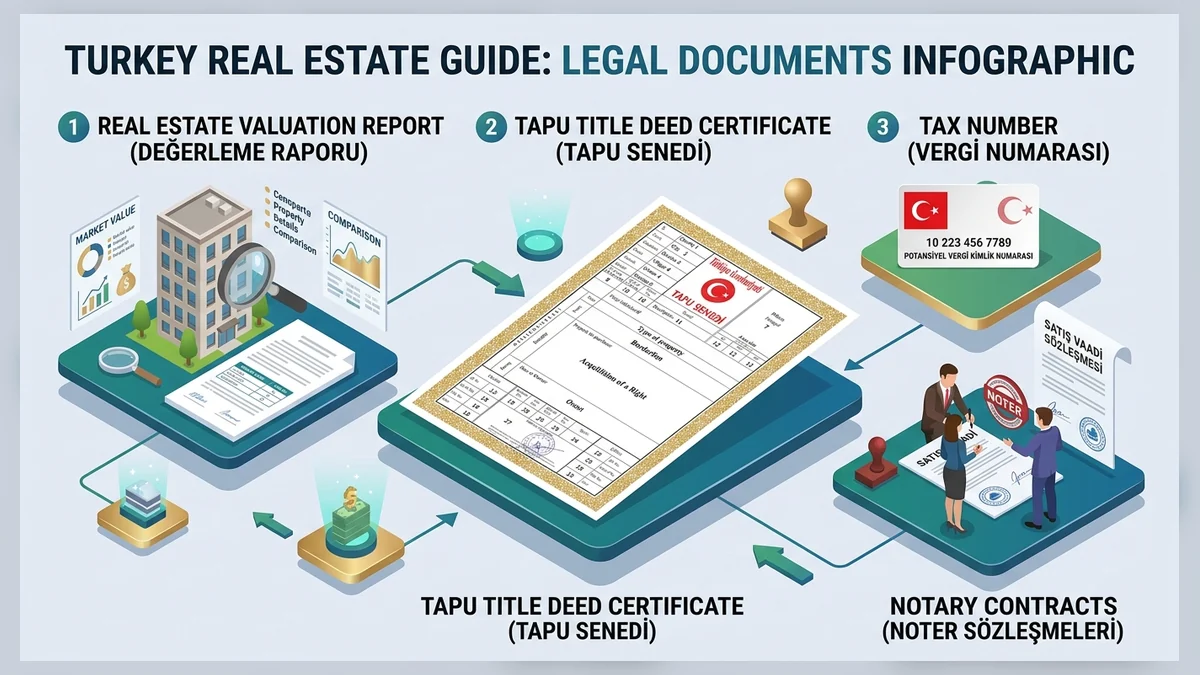
Title-deed encumbrances in Türkiye: mortgages, attachments, annotations and rights
A Turkish land-registry record can carry mortgages, attachments, court measures, annotations, easements, usufruct and other registered limitations or rights. In practice these entries are often discussed under the broad term takyidat, but they do not have one legal effect. A buyer should never accept a simple statement that “the title is clean” or “the entry is harmless”. The correct review identifies each entry, the person or authority in whose favour it exists, its date and basis, and what it means for transfer, use, financing and future resale.
Obtain current official registry information
TKGM's Web Tapu system can provide officially valid current title records and mortgage documents and can display registered information. Institutional Web Tapu guidance also describes viewing attachments, mortgages, easements and other restrictions. A copy of an old title deed is not enough because later entries may have been registered after that document was printed. Review the current position early in due diligence and refresh it close to the transfer date, especially before releasing the final payment.
Mortgage: identify the secured creditor and release mechanism
A mortgage gives security over the property for an underlying claim. Its existence does not always make a voluntary transfer impossible, but a buyer who acquires subject to the mortgage can remain exposed to enforcement against the property if the secured obligation is not discharged. If the commercial agreement is for a mortgage-free transfer, identify the creditor, the amount or discharge conditions and the exact closing mechanism. Payment of the seller's debt should be coordinated with a bank or creditor release and a registry result, not based on a promise that the mortgage will be removed “after the sale”.
Attachment and enforcement entries need their own analysis
An attachment may arise from enforcement or public receivables. Its effect can differ according to the legal basis and the authority that entered it. TKGM instructions on public attachments note that some public-law restrictions prevent voluntary disposition without the competent authority's consent. Court measures such as an interim injunction can also restrict transactions. The buyer should therefore obtain the exact wording and, where necessary, the supporting enforcement, court or administrative document before deciding whether a transfer is possible and safe.
Annotations can protect or restrict contractual and statutory positions
The annotations section may contain rights or restrictions arising from preliminary sale promises, family-home mechanisms, court proceedings, statutory rights or other registrable matters. An annotation should not be dismissed because it is “only a şerh”. Read what was registered, for whom, for what duration and with what consequence. If the seller says the right has expired, require official evidence of expiry or removal rather than relying on the age of the entry.
Easements and usufruct affect how the property can be used
An easement can burden land with access, utility, passage or another limited real right. A usufruct can give another person extensive rights to use and benefit from the property even while bare ownership is registered to the seller. These rights may not block title transfer, yet they can fundamentally change what the buyer can occupy, build, rent or control. For land or villas, map the right to the physical route or area; for an apartment, understand whether the right concerns the independent unit, main property or appurtenant areas.
Do not assume every entry must be removed
Some entries may be acceptable to the buyer if understood and priced; others must be removed as a condition of purchase. The contract should specify which entries can remain, which must be discharged, who is responsible, the deadline and what happens if release fails. If the buyer is using a mortgage, the new lender may impose stricter requirements than a cash buyer. Citizenship or other regulated transactions can add further constraints, so the closing plan should reflect the actual purpose of the acquisition.
Recheck the registry on closing day
Encumbrances can change between the first review and transfer. A seller can incur new enforcement, a court can enter a measure, or a previously agreed discharge may not yet have been registered. The final payment should therefore be linked to a current registry review and the documented release of any entry that the agreement requires to disappear. Preserve the pre-closing and final registry evidence together so later verification can show what changed.
Build an encumbrance register, not a yes/no label
For each entry, record its category, holder, date, reference, practical effect, required action and closing status. This prevents different restrictions from being blended into a vague “takyidat problem”. A reliable decision is reached only when every material entry has one of three outcomes: accepted with understood consequences, removed with official evidence, or unresolved and therefore a reason to postpone or stop the transaction.