
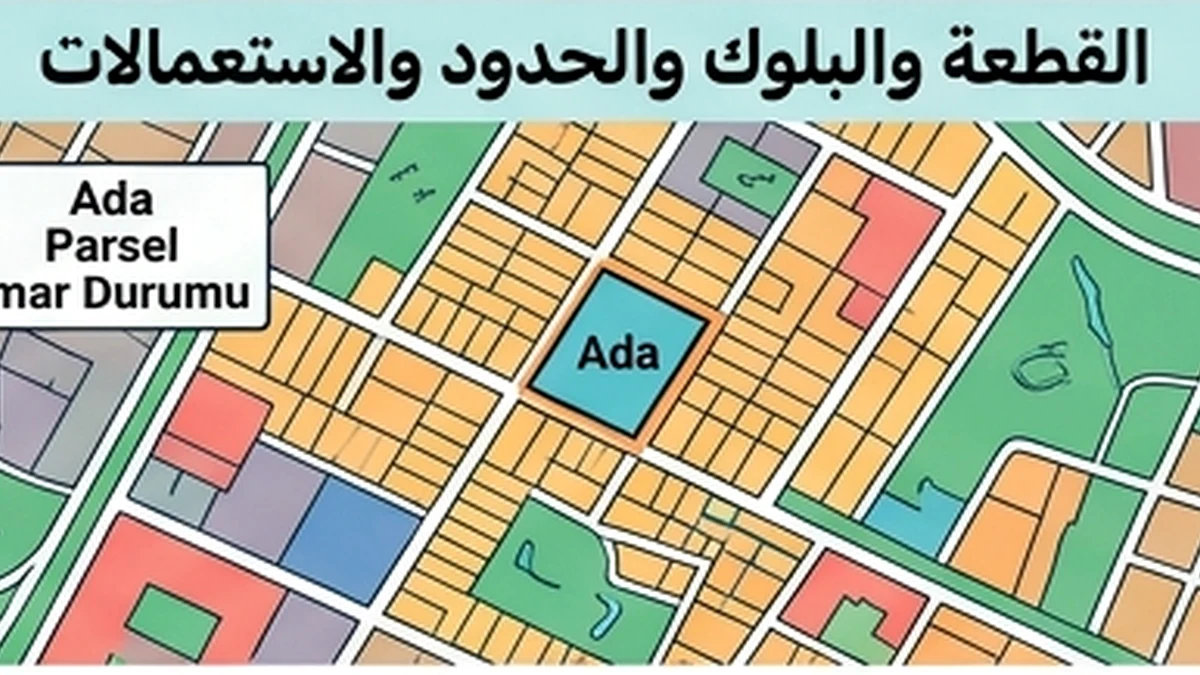
Cadastral Boundary and Neighbor Dispute Check A fence, wall or cultivated line is not conclusive evidence of the cadastral boundary. Start from the registered ada/parsel and cadastral records, then use the competent surveying/cadastral process where the ground position matters.
Record the exact disputed segment and compare title area, cadastral geometry and physical occupation. A small-looking encroachment can affect access, buildable area or future permit work.
Do not settle a neighbour-boundary issue only with an informal sketch or verbal agreement if ownership/use is materially affected; document the agreed legal/cadastral solution and any required registration.
Cadastre and enforceable planning status
Planning review should distinguish higher-level plans from the 1/1000 implementation plan and from the parcel’s actual imar durumu; an advertisement saying “residential” is insufficient. Check permitted use, height, density or building rights, setbacks, roads, public-space effects and any pending or recent plan amendment. For each fact use a source capable of proving it and link the result to its effect on purchase, ownership or cost. If area, boundary, land character or a right of way has changed, reconcile the result with TKGM, the municipality and relevant technical documents rather than a commercial map.
The review becomes useful when the finding is tied to a defined effect on rights, price, cost or executability and backed by evidence that can be rechecked later. Land verification starts with ada/parsel, boundaries and cadastral records, then moves to the planning and building status held by the competent authority. TKGM Parsel Sorgu is useful for locating a parcel and viewing data, but it does not replace cadastral documents or an official determination when boundaries are disputed. Turn the review topic into provable facts: identity, date, amount, registry status, document or technical condition.
Property identity and the current registry
Match the name and identity or legal-entity details, province, district, neighbourhood, ada/parsel and the independent-unit number where applicable. For each fact use a source capable of proving it and link the result to its effect on purchase, ownership or cost. Read mortgages, attachments, annotations, easements and other restrictions before a material commitment. Web Tapu allows applications for transactions such as sale, mortgage and inheritance transfer, but it does not make an earlier registry copy current evidence.
If a representative acts, check the representation document against the party’s identity, scope of authority and transaction type. A mismatch in unit, share, owner or a newly added restriction requires the file to be reconciled again before payment or completion. The review becomes useful when the finding is tied to a defined effect on rights, price, cost or executability and backed by evidence that can be rechecked later. The current TKGM land-registry record is the starting point for proving the owner and the property; an old title-deed copy or an advertisement is not a substitute. Turn the review topic into provable facts: identity, date, amount, registry status, document or technical condition.
Independent unit and land share
For each fact use a source capable of proving it and link the result to its effect on purchase, ownership or cost. A wrong independent-unit number or share can connect the buyer to a different legal unit from the one inspected. Compare the registry with the independent-unit plan, project description, actual use and management plan rather than relying on the door number shown in the building. For condominium property, keep three items separate: whether the record is Kat İrtifakı or Kat Mülkiyeti, the independent-unit number and the land share (arsa payı). Turn the review topic into provable facts: identity, date, amount, registry status, document or technical condition. Read this evidence together with the “Property identity and the current registry” review before relying on the conclusion.
The review becomes useful when the finding is tied to a defined effect on rights, price, cost or executability and backed by evidence that can be rechecked later. Conversion to Kat Mülkiyeti is tied to documents including the building-use permit under TKGM procedures, so Kat İrtifakı alone is not proof that construction is fully completed or that occupancy approval exists. The land share is not decorative data; it forms part of the ownership structure and can affect rights, voting, allocation of some common obligations and redevelopment. Turn the review topic into provable facts: identity, date, amount, registry status, document or technical condition.