
Skip to content
+90 505 506 38 10 WhatsApp
← Back to the Academy
Real estate guide

Fire, Emergency and Security Guide

Review fire alarms, evacuation routes, equipment servicing, incident records and emergency responsibilities before property handover.

42 knowledge topics
Fire, Emergency and Security Guide

Test emergency readiness rather than trusting equipment lists

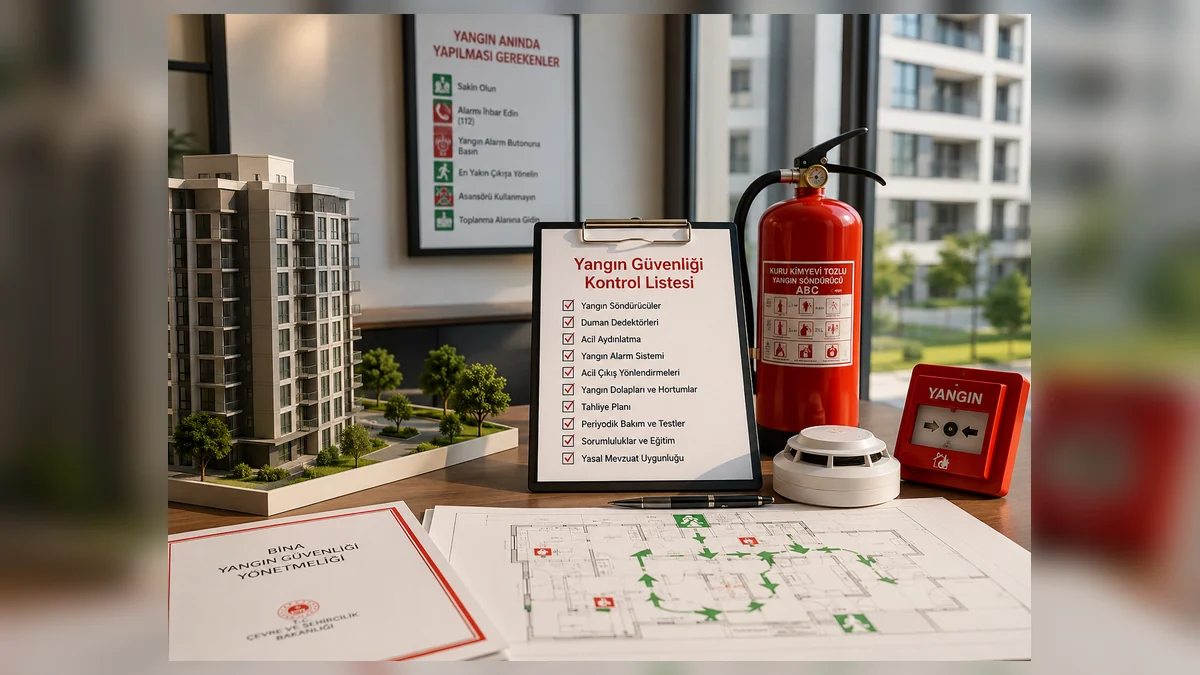
Walk the actual escape routes and inspect signage, fire doors, alarm points, emergency lights, extinguishing equipment and access for responders. Request dated testing and maintenance records and identify who is authorized to coordinate incidents and corrective actions. A device shown on a plan might be missing, blocked or untested in operation. Document observed defects, responsible parties and completion evidence, and obtain a competent technical assessment when the building's use or condition requires it.

Practical verification checklist

Emergency readiness: Review documented fire detection, exits, evacuation routes, extinguishing equipment and inspection responsibilities with qualified specialists. Identify who contacts emergency services, how occupants receive alerts and where incident records are stored. Budget for corrective actions without treating a checklist as a substitute for statutory inspection.


JUANA Real Estate Editorial Team

Last reviewed: 2026-08-27

Content is reviewed against official and primary sources and updated when rules or information change.

Official review sources

Topics in this guide

Below-Market Property Price Red Flags

Below-Market Property Price Red Flags

Below-Market Property Price Red Flags: a practical guide to separate genuine warning signs from harmless irregularities and define which warning requires escalation before commitment, with emphasis on current evidence, property and party identity, document version, unresolved conflicts and the transaction consequence before commitment.

Read topic →
Property Emergency Contact Plan

Property Emergency Contact Plan

Property Emergency Contact Plan A property emergency plan should list property-specific contacts: building manager/security, insurer/DASK policy channels, utility fault channels, keyholder and trusted local contact, with authority and availability clearly stated. Keep critical property data with the plan—address, independent-unit number, meter/utility identifiers, main shut-off locations, alarm/fire equipment.

Read topic →
Emergency Service Access Location Check

Emergency Service Access Location Check

Emergency-service access should be measured from the exact address rather than by a neighborhood label. Identify the relevant hospitals and emergency facilities from official sources, then test the road and public-transport path that would actually be used, including barriers, steep access, gated compounds or a single road entrance. Compare normal and congested conditions where possible. A facility that is.

Read topic →
EİDS Property Listing Verification Guide

EİDS Property Listing Verification Guide

Use EİDS Property Listing Verification Guide to build a clear, evidence-based answer to the topic itself. The guide separates verified facts from assumptions, records the competent source and date, and keeps any unresolved legal, technical, tax, payment or cost issue visible.

Read topic →
Fire Safety Records Verification Guide

Fire Safety Records Verification Guide

Verification of fire-safety records is a core due-diligence step. It helps the buyer compare the documents presented in the transaction with current official information and the actual condition of the property. The review should focus on authenticity, validity, scope, dates, responsible parties and any material inconsistency that could affect use, transfer, cost or future resale.

Read topic →
Fire safety records Workflow Guide

Fire safety records Workflow Guide

Use Fire safety records Workflow Guide to turn the topic into a sequenced due-diligence process with a clear owner, evidence step and completion point. The guide separates verified facts from assumptions, records the competent source and date, and keeps any unresolved legal, technical, tax, payment or cost issue visible.

Read topic →
Fire Safety Records Risk Review

Fire Safety Records Risk Review

A risk review of fire-safety records is intended to identify weaknesses that may be hidden by apparently complete paperwork. The review considers whether the records are current, authentic, internally consistent and aligned with the actual property or service. It also asks whether missing or inaccurate information could create legal, financial, safety or operating costs for the buyer.

Read topic →
Fire Safety Records Decision Framework

Fire Safety Records Decision Framework

The decision framework for fire-safety records converts document review into a controlled transaction decision. It is designed to prevent a buyer from proceeding merely because a document exists; the document must also be current, relevant, consistent and sufficiently verified.

Read topic →
Buyer Questions for Fire safety records

Buyer Questions for Fire safety records

Buyer Questions for Fire safety records: a practical guide to equip the buyer with specific questions whose answers can be checked against documents rather than sales assurances, with emphasis on current evidence, property and party identity, document version, unresolved conflicts and the transaction consequence before commitment.

Read topic →
Fire Safety Records Closing Day Check

Fire Safety Records Closing Day Check

The closing-day check for fire-safety records is the final confirmation that the transaction is relying on the latest and correct records. It should verify that no material change has occurred between earlier due diligence and the transfer or final payment.

Read topic →
Fire Safety Records: Recordkeeping Guide

Fire Safety Records: Recordkeeping Guide

A structured archive for fire-safety records allows the owner or reviewer to reconstruct what was checked, which document version was relied upon and how exceptions were resolved. Good recordkeeping supports later management, audit and resale.

Read topic →
Fire Safety Records Red Flags

Fire Safety Records Red Flags

Red flags in fire-safety records are warning signs that the file may be incomplete, inaccurate, outdated or inconsistent with the actual property or transaction. A red flag does not automatically prove a defect, but it requires documented follow-up before the buyer relies on the record.

Read topic →
Official Source Revalidation — Fire safety records

Official Source Revalidation — Fire safety records

A decision-focused guide to Official Source Revalidation — Fire safety records: return to the competent official source and verify that the prior conclusion still matches the current rule or record, preserve the controlling evidence, recheck material changes.

Read topic →
Validity and Deadline Control — Fire safety records

Validity and Deadline Control — Fire safety records

Ask which fire-safety systems are installed, when they were last maintained/tested, whether fire stairs and exits match the approved design, whether use has changed, whether there are recent control records, and who is responsible for common-area maintenance. fire-safety records: Fire-safety review should be tied to the building’s actual use, escape arrangements, installed systems and periodic records rather than relying on one old document or a marketing description.

Read topic →
Counterparty Confirmation — Fire safety records

Counterparty Confirmation — Fire safety records

Use Counterparty Confirmation — Fire safety records to obtain independent confirmation of material facts from the responsible party or issuer instead of relying on a forwarded copy alone. The guide separates verified facts from assumptions, records the competent source and date, and keeps any unresolved legal, technical, tax, payment or cost issue visible.

Read topic →
Exception Register — Fire safety records

Exception Register — Fire safety records

Exception Register — Fire safety records — Fire-safety records should evidence the building’s current condition, not merely that equipment existed when it was first completed. Check escape routes, stairs, alarm/suppression systems, maintenance and periodic tests, and identify who performed each inspection.

Read topic →
Payment Release Gate — Fire safety records

Payment Release Gate — Fire safety records

A decision-focused guide to Payment Release Gate — Fire safety records: define the evidence that must exist before a specific payment is released and block payment when a required condition remains unresolved, preserve the controlling evidence, recheck material changes.

Read topic →
Change Control — Fire safety records

Change Control — Fire safety records

Change Control — Fire safety records — Fire-safety records should evidence the building’s current condition, not merely that equipment existed when it was first completed. Check escape routes, stairs, alarm/suppression systems, maintenance and periodic tests, and identify who performed each inspection.

Read topic →
Resale File Preservation — Fire safety records

Resale File Preservation — Fire safety records

Resale File Preservation — Fire safety records — Fire-safety records should evidence the building’s current condition, not merely that equipment existed when it was first completed. Check escape routes, stairs, alarm/suppression systems, maintenance and periodic tests, and identify who performed each inspection.

Read topic →
Independent Evidence Replication — Fire safety records

Independent Evidence Replication — Fire safety records

Independent Evidence Replication — Fire safety records: In May 2026 the Ministry of Environment announced a new framework for periodic building fire-safety inspections, with building owners or managers responsible for following the applicable requirements. The record focuses on Independent Evidence Replication within Fire safety records.

Read topic →
Pre-Commitment Freeze — Fire safety records

Pre-Commitment Freeze — Fire safety records

Pre-Commitment Freeze — Fire safety records: In May 2026 the Ministry of Environment announced a new framework for periodic building fire-safety inspections, with building owners or managers responsible for following the applicable requirements. The record focuses on Pre-Commitment Freeze within Fire safety records.

Read topic →
Document Version Reconciliation — Fire safety records

Document Version Reconciliation — Fire safety records

Document Version Reconciliation — Fire safety records: In May 2026 the Ministry of Environment announced a new framework for periodic building fire-safety inspections, with building owners or managers responsible for following the applicable requirements. The record focuses on Document Version Reconciliation within Fire safety records.

Read topic →
Cost Consequence Trace — Fire safety records

Cost Consequence Trace — Fire safety records

Cost Consequence Trace — Fire safety records: In May 2026 the Ministry of Environment announced a new framework for periodic building fire-safety inspections, with building owners or managers responsible for following the applicable requirements. The record focuses on Cost Consequence Trace within Fire safety records.

Read topic →
Resale and Exit Review — Fire safety records

Resale and Exit Review — Fire safety records

Resale and Exit Review — Fire safety records: In May 2026 the Ministry of Environment announced a new framework for periodic building fire-safety inspections, with building owners or managers responsible for following the applicable requirements. The record focuses on Resale and Exit Review within Fire safety records.

Read topic →
Cross-Party Consistency Check — Fire safety records

Cross-Party Consistency Check — Fire safety records

Cross-Party Consistency Check — Fire safety records: In May 2026 the Ministry of Environment announced a new framework for periodic building fire-safety inspections, with building owners or managers responsible for following the applicable requirements. The record focuses on Cross-Party Consistency Check within Fire safety records.

Read topic →
Closing-Day Recheck — Fire safety records

Closing-Day Recheck — Fire safety records

Closing-Day Recheck — Fire safety records: In May 2026 the Ministry of Environment announced a new framework for periodic building fire-safety inspections, with building owners or managers responsible for following the applicable requirements. The record focuses on Closing-Day Recheck within Fire safety records.

Read topic →
Source Freshness Review — Fire safety records

Source Freshness Review — Fire safety records

A decision-focused guide to Source Freshness Review — Fire safety records: confirm that the relied-on rule, registry extract, certificate or other evidence is current enough for the decision date, preserve the controlling evidence, recheck material changes.

Read topic →
Deadline Readiness Review — Fire safety records

Deadline Readiness Review — Fire safety records

Deadline Readiness Review — Fire safety records: a practical guide to confirm that required documents, approvals and responsible parties will be ready before the relevant contractual or filing deadline, with emphasis on current evidence, property and party identity, document version, unresolved conflicts and the transaction consequence before commitment.

Read topic →
Change Impact Assessment — Fire safety records

Change Impact Assessment — Fire safety records

Use Change Impact Assessment — Fire safety records to treat a material change in party, property, document, amount, use or timing as a trigger to reassess the affected conclusions. The guide separates verified facts from assumptions, records the competent source and date, and keeps any unresolved legal, technical, tax, payment or cost issue visible.

Read topic →
Audit Trail Reconstruction — Fire safety records

Audit Trail Reconstruction — Fire safety records

Audit Trail Reconstruction — Fire safety records: In May 2026 the Ministry of Environment announced a new framework for periodic building fire-safety inspections, with building owners or managers responsible for following the applicable requirements. The record focuses on Audit Trail Reconstruction within Fire safety records.

Read topic →
Physical Security and Guarding Records Verification Guide

Physical Security and Guarding Records Verification Guide

Verification of physical-security and guarding-system records is a core due-diligence step. It helps the buyer compare the documents presented in the transaction with current official information and the actual condition of the property. The review should focus on authenticity, validity, scope, dates, responsible parties and any material inconsistency that could affect use, transfer, cost or future resale.

Read topic →
Physical Security and Guarding Records Risk Review

Physical Security and Guarding Records Risk Review

A risk review of physical-security and guarding-system records is intended to identify weaknesses that may be hidden by apparently complete paperwork. The review considers whether the records are current, authentic, internally consistent and aligned with the actual property or service. It also asks whether missing or inaccurate information could create legal, financial, safety or operating costs for the buyer.

Read topic →
Physical Security and Guarding Records Decision Framework

Physical Security and Guarding Records Decision Framework

The decision framework for physical-security and guarding-system records converts document review into a controlled transaction decision. It is designed to prevent a buyer from proceeding merely because a document exists; the document must also be current, relevant, consistent and sufficiently verified.

Read topic →
Physical Security and Guarding Records Closing Day Check

Physical Security and Guarding Records Closing Day Check

Closing-day security and guarding review tests who actually controls access and operating permissions. Review guarding contracts, shift arrangements, access points, staff and visitor credentials, open incidents, and keys or cards that have not been recovered. Where a control room, visitor log or eme

Read topic →
Physical Security and Guarding Records Recordkeeping

Physical Security and Guarding Records Recordkeeping

A structured archive for physical-security and guarding-system records allows the owner or reviewer to reconstruct what was checked, which document version was relied upon and how exceptions were resolved. Good recordkeeping supports later management, audit and resale.

Read topic →
Physical Security and Guarding Records Red Flags

Physical Security and Guarding Records Red Flags

Red flags in physical-security and guarding-system records are warning signs that the file may be incomplete, inaccurate, outdated or inconsistent with the actual property or transaction. A red flag does not automatically prove a defect, but it requires documented follow-up before the buyer relies on the record.

Read topic →
Occupational Health, Safety, and Emergency Records Verification Guide

Occupational Health, Safety, and Emergency Records Verification Guide

Verification of occupational health, safety and emergency records is a core due-diligence step. It helps the buyer compare the documents presented in the transaction with current official information and the actual condition of the property. The review should focus on authenticity, validity, scope, dates, responsible parties and any material inconsistency that could affect use, transfer, cost or future resale.

Read topic →
Occupational Health, Safety, and Emergency Records Risk Review

Occupational Health, Safety, and Emergency Records Risk Review

A risk review of occupational health, safety and emergency records is intended to identify weaknesses that may be hidden by apparently complete paperwork. The review considers whether the records are current, authentic, internally consistent and aligned with the actual property or service. It also asks whether missing or inaccurate information could create legal, financial, safety or operating costs for the buyer.

Read topic →
Occupational Health, Safety, and Emergency Records Decision Framework

Occupational Health, Safety, and Emergency Records Decision Framework

The decision framework for occupational health, safety and emergency records converts document review into a controlled transaction decision. It is designed to prevent a buyer from proceeding merely because a document exists; the document must also be current, relevant, consistent and sufficiently verified.

Read topic →
Occupational Health, Safety, and Emergency Records Closing Day Check

Occupational Health, Safety, and Emergency Records Closing Day Check

Closing-day review of occupational health, safety and emergency records should test actual readiness. Identify open incidents or findings, the latest evacuation drills, emergency-equipment status, assigned responsibilities and contact details. Handover should include evacuation plans, contact lists

Read topic →
Occupational Health, Safety, and Emergency Records Recordkeeping

Occupational Health, Safety, and Emergency Records Recordkeeping

A structured archive for occupational health, safety and emergency records allows the owner or reviewer to reconstruct what was checked, which document version was relied upon and how exceptions were resolved. Good recordkeeping supports later management, audit and resale.

Read topic →
Occupational Health, Safety, and Emergency Records Red Flags

Occupational Health, Safety, and Emergency Records Red Flags

Red flags in occupational health, safety and emergency records are warning signs that the file may be incomplete, inaccurate, outdated or inconsistent with the actual property or transaction. A red flag does not automatically prove a defect, but it requires documented follow-up before the buyer relies on the record.

Read topic →
JUANA Intelligent Site AgentKnows JUANA public sections, pages and content
Would you like an advisor to contact you?
The agent searches public site content only. Chat and browsing data may be stored to improve service and connect your request with the sales team. Private admin/client data is never exposed.