
Official facts that control the topic
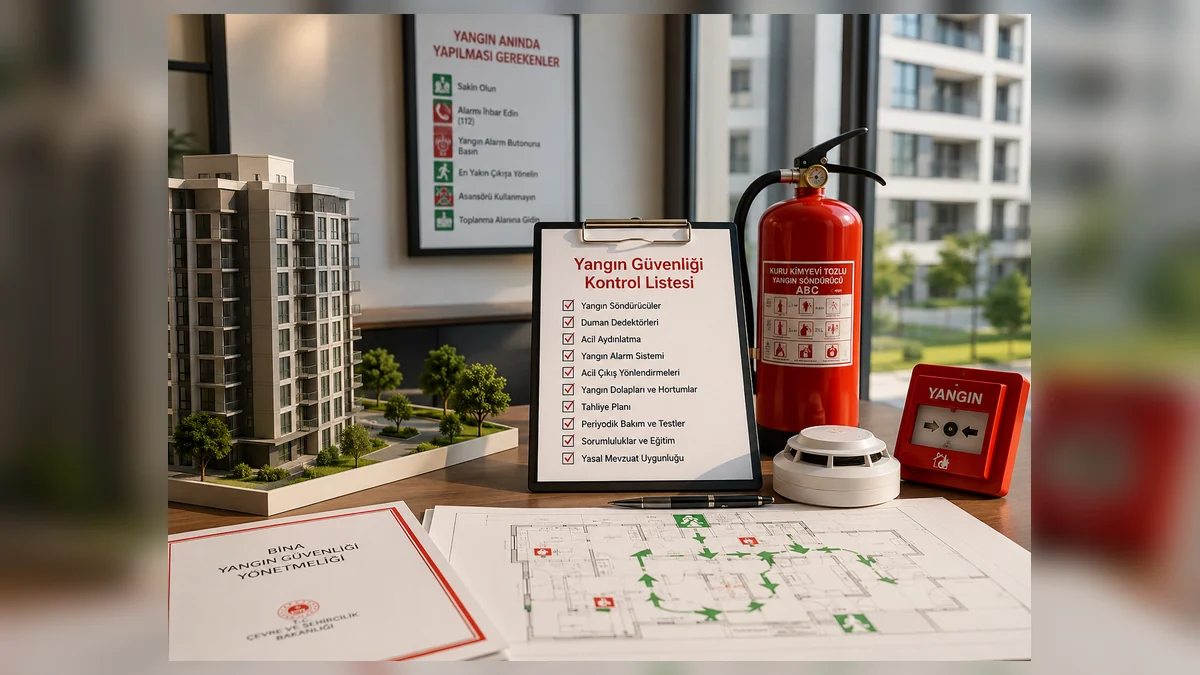
The first substantive rule for “Resale and Exit Review — Fire safety records” is this: In May 2026 the Ministry of Environment announced a new framework for periodic building fire-safety inspections, with building owners or managers responsible for following the applicable requirements.
Applied specifically through the “Resale and Exit Review” lens to Fire safety records, the official position is more precise: Inspections may be carried out by fire departments or authorised fire-safety experts under the framework and address the building’s required safety measures rather than merely the presence of an extinguisher or an old report. Where deficiencies are found, the announced framework can allow a remediation period of up to six months, making the deficiency list and evidence of correction as important as the inspection date.
What this review changes
An exit review asks how Fire safety records will look to the next buyer, bank or adviser, not only to the current owner. An issue tolerated during ownership can become a transaction blocker at resale, financing or transfer.
Read these items through the eyes of the next buyer or lender: date and inspecting body, inspection scope, alarm and suppression systems, escape routes, fire-rated doors/compartmentation where applicable, deficiency list, remediation deadline and closure evidence. Ask whether they are clear, current and tied to the same property, and whether a gap or obligation will need to be resolved.
Resale review is not a promise of price; it identifies whether Fire safety records can create delay, cost or additional negotiation when the owner exits.
Documents and data that must reconcile
For “Resale and Exit Review”, the key evidence is: date and inspecting body, inspection scope, alarm and suppression systems, escape routes, fire-rated doors/compartmentation where applicable, deficiency list, remediation deadline and closure evidence
Scope boundary
Because this record is limited to “Resale and Exit Review”, its boundary matters: Fire safety is not structural or earthquake assessment; evidence for those fields should remain separate.
Fire-safety records as an exit and resale issue
A resale review asks a different question from an initial compliance check: what evidence will a future buyer, lender, insurer, manager or operator be able to rely on when ownership changes again? The file should therefore be organised so that the current fire-safety status can be transferred and independently understood. Preserve the latest inspection result, earlier adverse findings, evidence of remediation, system test and maintenance records, equipment changes and any open deadlines. A building may have completed expensive works yet still present a resale problem if the record does not clearly show what was corrected and whether the competent authority accepted the result.
For exit planning, identify whether documents relate to the whole building, a particular block, a common-area system or only the independent unit. A seller should not present a unit-level extinguisher service record as proof that common alarm, smoke-control or suppression systems are compliant. Conversely, a building-level fire record may not confirm the condition of alterations inside a specific unit. The chain of evidence should also show which party controls each record after sale, because management documents can remain with the building administration rather than the former owner.
Recent regulatory changes make freshness important. The May 2026 framework introduced periodic fire-safety controls and a mechanism for remediation of identified deficiencies, so a historical “clean” file may need a fresh check before resale. A useful exit review flags open findings, approaching inspection or maintenance dates, missing closure evidence and costs that could pass to the buyer. It also distinguishes fire safety from structural, seismic, zoning and title matters. The result is not a guarantee of sale value; it is a transparent record of what a future counterparty is likely to ask and which evidence is ready to answer.
Official source
Ministry of Environment — 2026 Building Fire-Safety Controls
Reviewing fire-safety evidence for a future resale
Resale readiness is not the same as present-day usability. A later buyer, lender or adviser may ask for a newer and more orderly evidence file, so today’s fire-safety records should be reviewed as though a new party will need to verify them tomorrow. An old report without closure evidence, or a deficiency schedule without a final outcome, can become a negotiation point at exit even if the property continues to be occupied.
A useful review looks for matters that could slow a future sale: a long gap between inspections, building changes after the latest report, corrective fire work with no traceable documentation, or a difference between what management says and what the file proves. Records should also be stored in a form that can be transferred to a later buyer with source and date information, instead of depending on individuals who may no longer manage the building when the property is sold.
Where an open item exists, assess its effect on timing as well as price. Closure may require physical work followed by verification or reinspection, and that sequence may extend beyond a planned sale date. Early action can therefore be valuable: obtain the most recent record, fill documentary gaps and tie each repair to its evidence. The objective is an exit-ready file that reduces late questions and prevents a manageable safety issue today from becoming an unexpected delay, price reduction or condition precedent during the next transaction.