
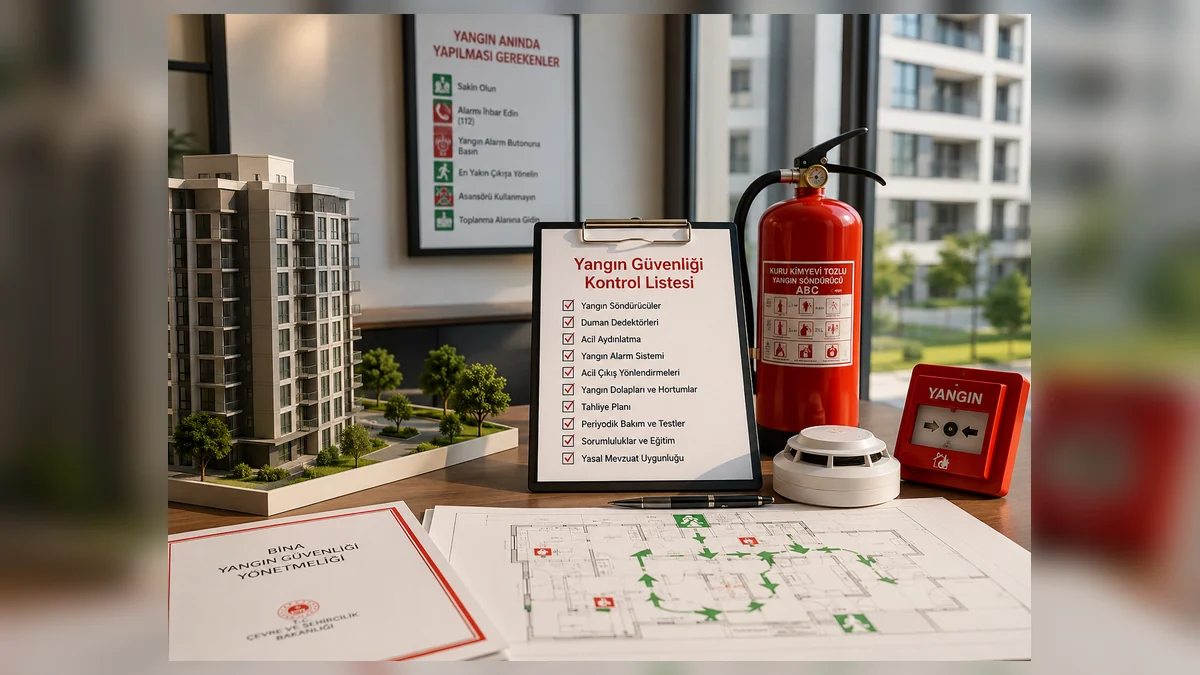
Validity and Deadline Control — Fire safety records
Primary official evidence
Ask which fire-safety systems are installed, when they were last maintained/tested, whether fire stairs and exits match the approved design, whether use has changed, whether there are recent control records, and who is responsible for common-area maintenance. fire-safety records: Fire-safety review should be tied to the building’s actual use, escape arrangements, installed systems and periodic records rather than relying on one old document or a marketing description. Official source: Ministry of Environment Record the effective, issue, expiry or renewal date relevant to this evidence and test whether it is still fit for the transaction date.
Key verification points
Use the Ministry’s current fire-safety guide and latest regulatory/control updates because requirements and control mechanisms can evolve. Fire-safety evidence needs periodic refresh: recheck after a change of use, major renovation, system replacement, new inspection/control regime, incident, or long transaction delay. Maintenance/test dates matter as much as the original installation record.
Document and identity reconciliation
Identify building use/height → determine applicable fire-safety requirements → inspect documentary evidence for escape routes, protected stairs, alarm/suppression systems where required → compare with the actual common areas → escalate discrepancies to the competent authority or qualified specialist. Fire-safety evidence needs periodic refresh: recheck after a change of use, major renovation, system replacement, new inspection/control regime, incident, or long transaction delay. Maintenance/test dates matter as much as the original installation record.
Timing and change risk
For Validity and Deadline Control — Fire safety records, fire-safety records should evidence the building’s current condition, not merely that equipment existed when it was first completed. Check escape routes, stairs, alarm/suppression systems, maintenance and periodic tests, and identify who performed each inspection. Log every mismatch or missing item as a separate exception: the field involved, the conflicting document, the authority responsible for correction and the condition that blocks closing until resolution. Do not leave exceptions as oral notes.
Decision standard
For Validity and Deadline Control — Fire safety records, fire-safety records should evidence the building’s current condition, not merely that equipment existed when it was first completed. Check escape routes, stairs, alarm/suppression systems, maintenance and periodic tests, and identify who performed each inspection. If registry, project, numbering or share data changes after verification begins, preserve the old and new versions with date and reason. A valid change may be legitimate; relying on a superseded version is the real risk.
For Validity and Deadline Control — Fire safety records, What official evidence should control this check?
For Validity and Deadline Control — Fire safety records, fire-safety records should evidence the building’s current condition, not merely that equipment existed when it was first completed. Check escape routes, stairs, alarm/suppression systems, maintenance and periodic tests, and identify who performed each inspection. Preserve a file that can be handed to the next buyer: reference record, verification results, corrections, supporting documents and last-check date. A strong file shortens future due diligence and avoids rebuilding the property history from scratch.
For Validity and Deadline Control — Fire safety records, Which details must match across the transaction file?
For Validity and Deadline Control — Fire safety records, log every mismatch or missing item as a separate exception: the field involved, the conflicting document, the authority responsible for correction and the condition that blocks closing until resolution. Do not leave exceptions as oral notes. Fire-safety records should evidence the building’s current condition, not merely that equipment existed when it was first completed. Check escape routes, stairs, alarm/suppression systems, maintenance and periodic tests, and identify who performed each inspection. The 2026 regulatory update strengthened periodic fire-safety inspection and owner/manager follow-up duties. Older reports should therefore be reconciled with current use and any later building alterations.
For Validity and Deadline Control — Fire safety records, What discrepancy requires further verification?
For Validity and Deadline Control — Fire safety records, if registry, project, numbering or share data changes after verification begins, preserve the old and new versions with date and reason. A valid change may be legitimate; relying on a superseded version is the real risk. Fire-safety records should evidence the building’s current condition, not merely that equipment existed when it was first completed. Check escape routes, stairs, alarm/suppression systems, maintenance and periodic tests, and identify who performed each inspection. The 2026 regulatory update strengthened periodic fire-safety inspection and owner/manager follow-up duties. Older reports should therefore be reconciled with current use and any later building alterations. Record the effective, issue, expiry or renewal date relevant to this evidence and test whether it is still fit for the transaction date.