
Preparing for the title-deed appointment: review the transaction before it becomes final
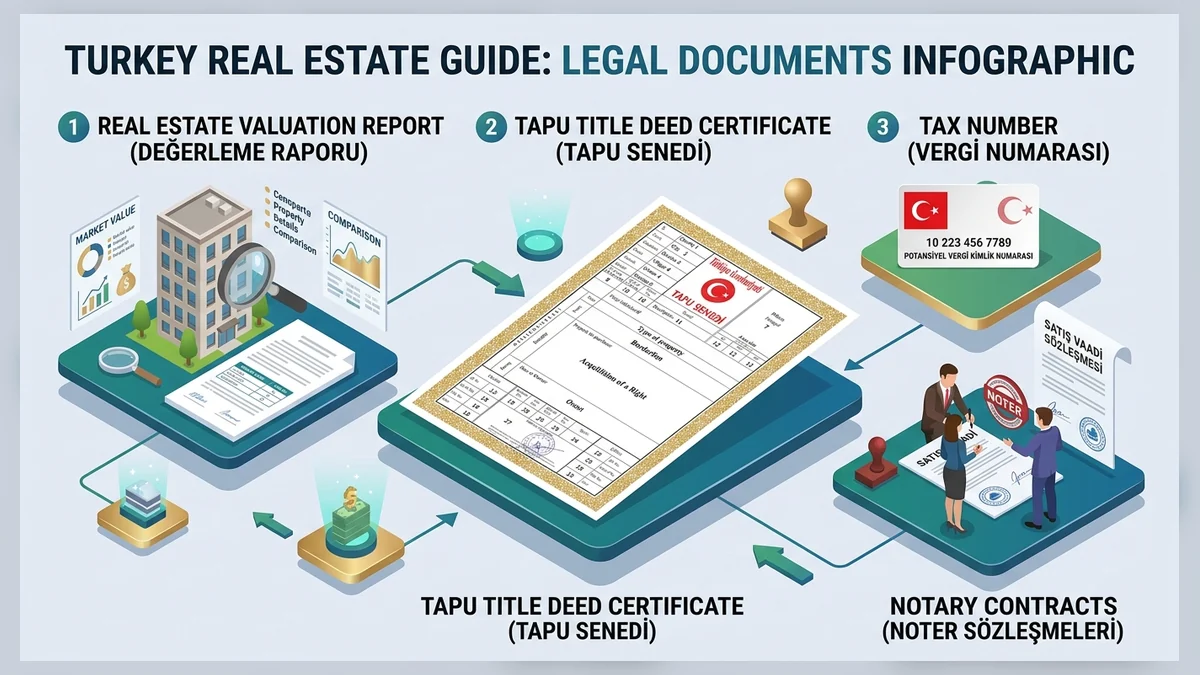
A title-transfer appointment at the land registry is not merely the last administrative step. It is the point at which the parties’ arrangements become an official registered transaction. Buyer and seller should therefore arrive only after resolving property identity, party identity, representation authority, material restrictions, payment mechanics and required documents. TKGM explains that sale applications can be initiated through Web Tapu and other authorised channels, and that identity, representation documents, DASK for building-qualified property and transaction-specific information form part of the process. Good preparation reduces both delays and the risk of discovering a fundamental inconsistency at signing.
Reconfirm the exact property before the appointment
Review the province, district, neighbourhood, ada/parsel, independent-unit number, registered characteristic and share being transferred. Reconcile those details with the negotiated transaction, not merely the online listing. If parking, storage or other appurtenances matter, establish whether they form part of the independent unit, a separate registered right or common property. Any difference between what the buyer believes is being purchased and what the registry identifies should be resolved before the appointment.
Verify the parties and representatives
TKGM lists identity documents for the parties and, where representation exists, the relevant representation document such as a power of attorney or guardianship decision. Match names and identity/passport details to the transaction file. Where a POA is used, confirm that it covers the required act and remains valid. A foreign-issued POA may require apostille or consular legalisation and a notarised Turkish translation depending on origin and TKGM rules. Do not wait until the appointment to discover that the agent lacks the power to sell or receive funds.
Recheck mortgages, attachments and annotations
The title position can change between first due diligence and closing. Review current mortgages, attachments, annotations, easements and other material restrictions. If a mortgage is to be released before or in connection with sale, the release mechanism should be understood. TKGM explains that, in relevant procedures, banks can transmit mortgage-release documentation electronically to the title office. The key point is not to assume that a restriction disappears automatically merely because a debt was paid.
Prepare DASK and municipal-value information
For building-qualified property, TKGM includes compulsory earthquake insurance (DASK) among sale documents. Check the property data and policy period and confirm that the policy refers to the actual unit. The process also interacts with municipal property-tax value information transmitted within the official system under applicable rules. Do not rely on an old document or one relating to a neighbouring unit simply because the project name looks similar.
Agree sale value and payment mechanics before arrival
The declared sale value should already be agreed and consistent with the transaction structure and applicable fee/tax rules. TKGM states that title-deed sale fees are calculated on the declared value subject to the municipal property-tax-value floor and that buyer and seller are charged under the rules then in force. Keep this separate from brokerage commissions or private expenses. Decide before the appointment when the purchase price moves, who the beneficiary is and what evidence will prove payment.
Do not accept a last-minute beneficiary change without verification
If the IBAN changes or the seller asks that funds be split among new accounts, pause and establish the basis. The recipient should connect coherently to the owner, an authorised representative or a written payment arrangement. Do not verify a changed account only through the same message thread that announced it. Use a previously established communication channel and preserve the transfer evidence and reference.
Apply foreign-buyer requirements only where relevant
Foreign-buyer documentation can include passport or national ID with translation where required, foreign/tax-number information in the appropriate case, DAB transmitted by the bank through the specified channel and a sworn interpreter where the party does not understand Turkish. Valuation reports and bank-receipt requirements associated with citizenship applications have their own contexts. Do not mechanically import every citizenship document into every ordinary foreign purchase without checking the current transaction rules.
Treat appointment and fee messages as controlled transaction data
TKGM provides Web Tapu and official channels for applications, tracking and fee processes. Do not pay a fee simply because a random text message or unfamiliar link instructs you to do so. Reconcile the application number, property and amount through the official process. A message requesting transfer to a personal account or presenting a transaction that does not match the file is a reason to stop and verify.
Use a small closing-day checklist
Before leaving for the appointment, gather the original identity document, POA where used, property information, DASK where required, payment evidence or banking arrangements and any transaction-specific document. Keep organised electronic copies, but do not assume a scan always replaces an original where an original is required. Ensure the telephone number used in the application is available for official notifications.
Read the transaction document before signing
At the appointment, do not treat reading as ceremonial. Match the buyer and seller, exact property, transferred share, declared value and any material statement. If there is an inconsistency, ask for it to be corrected before signature. The buyer does not need to memorise every registry rule, but should ensure that the official document reflects the deal actually agreed.
Connect title transfer to physical handover
Registered transfer and physical possession may occur on the same day or at different times. If the seller remains temporarily, or keys, meters, furniture and other items still need to be delivered, use a clear handover record. Registration in the buyer’s name does not prove that every physical obligation has been performed. A successful appointment is one reached with a reconciled file and completed with registered ownership, a traceable money path and a documented possession plan.