
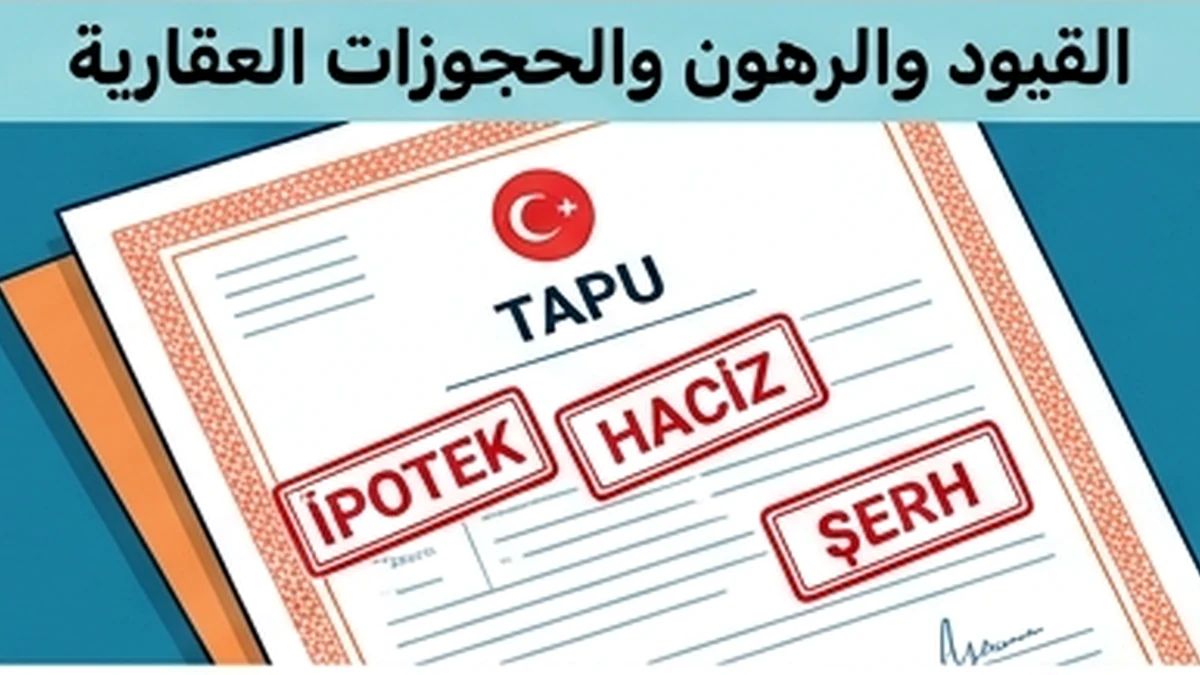
Ask the seller to identify the enforcing authority/creditor, reference and claimed status of each seizure, then compare it with current TKGM takyidat data. If the seller says the matter is paid or lifted, request the official release and verify the registry update. A pending enforcement or deletion process should be described as pending, not cleared. Counterparty confirmation is useful for understanding the planned cure and timing; the registered record determines whether the attachment is still on title.
Documented encyclopedia enrichment: Counterparty Confirmation — Seizure and attachment status
Counterparty confirmation of seizure or attachment status is supporting evidence, not a substitute for the official register. Ask the seller or representative expressly about restrictions that may affect transfer and compare the statement with current title annotations. If a restriction appears, identify its nature, related authority or file, and what is required for release before registration.
Verification method
Counterparty confirmation is supporting evidence, not conclusive evidence. Keep the statement in writing, dated, and attributable to a person with authority, then test it against official and independent evidence. Any difference becomes an exception to resolve before closing. If resolution depends on a future seller action, convert it into a closing condition with a defined completion document.
Evidence file
The evidence file should contain the reviewed document, reference or application number where available, retrieval date and time, reviewer, and any earlier version used for comparison. If the information can change, record the effective date of the review and the recheck point. These details prevent a result that was correct on an earlier date from becoming a permanent assumption after the register or transaction circumstances change.
Review checklist
When applying this record to “Counterparty Confirmation — Seizure and attachment status”, review at least five elements: property identity, identity and authority of the parties, date of the source or document, any open restriction or exception, and whether the decision requires revalidation before registration or payment release. If any element conflicts with an official source, reliance on the result should stop until the resolution is documented.
Reliance decision
At the end of the review, record a clear status: confirmed, confirmed with conditions, further evidence required, or currently unacceptable. Link the status to the document that resolved each point, with verification date and authority or reference. If the transaction remains open, identify the next action, owner, and deadline. A longer file should not automatically receive a higher confidence level; quality depends on verifiability and consistency of evidence.