
Skip to content
+90 505 506 38 10 WhatsApp

DASK, Energy Performance (EKB), Building Insurance and Fire-Safety Due Diligence

A verification guide for DASK in Turkish property purchases: confirm the compulsory earthquake policy is active, reconcile address, area and construction data, understand coverage and exclusions, recheck it for title, utilities and financing, and never treat the policy as a structural-safety certificate.

Author / reviewer: JUANA Real Estate Last reviewed: 2026-08-20
DASK, Energy Performance (EKB), Building Insurance and Fire-Safety Due Diligence

How to verify DASK before buying property in Türkiye

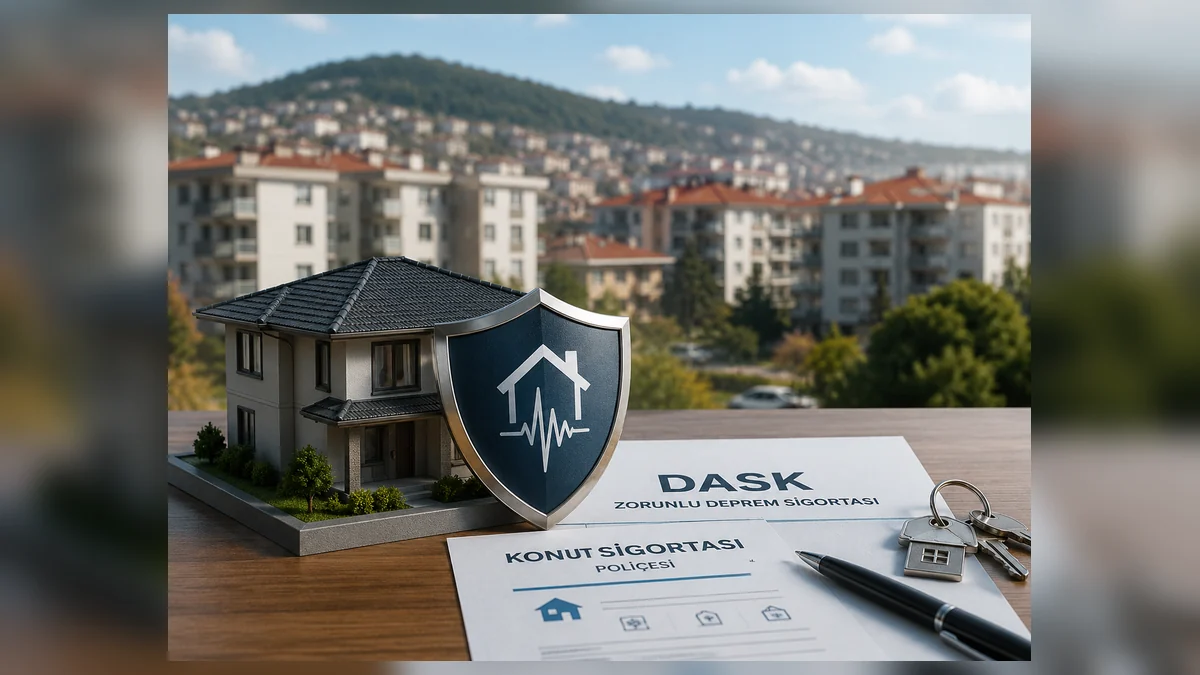
DASK is the compulsory earthquake-insurance system for eligible residential buildings. It is financial protection, not an engineering inspection. A valid policy is important in a property file, but it does not prove that the building complies with seismic code or is structurally safe. Verification should therefore cover the policy data, term, coverage and exclusions while keeping structural due diligence on a separate engineering track.

1. What the compulsory policy covers

The General Conditions of Compulsory Earthquake Insurance cover direct material damage to the insured building caused by earthquake and also damage caused by earthquake-related fire, explosion, tsunami and landslide, up to the insured amount and subject to the conditions. The covered building elements include foundations, main and shared walls, floors and ceilings, stairs, lifts, landings, corridors, roofs, chimneys and similar integral parts described in the policy conditions.

2. What it does not cover

The General Conditions exclude categories such as debris-removal costs, loss of profit, business interruption, loss of rent, alternative accommodation or workplace cost, financial liabilities, movable property and contents, bodily injury or death, moral damages and losses not caused by earthquake or the covered earthquake consequences. Damage developing over time solely because of the building’s own defects or characteristics and not tied to a specific earthquake event is also outside the basic DASK protection. These gaps are central when deciding whether separate home insurance is needed.

3. Confirm that the building falls within the scheme

Law No. 6305 and the General Conditions define buildings and independent units subject to compulsory insurance, including independent units under the condominium regime and registered buildings constructed as residences, with specified related categories. The conditions also list excluded building classes and circumstances. If a seller says a property “does not require DASK,” obtain the actual legal or policy classification rather than treating the statement as sufficient.

4. Reconcile policy data with title and reality

Check policy number, start and expiry dates, address, independent-unit information, insured person, construction type, construction year and gross area used for the policy. DASK warns that inaccurate area or structural type can affect the insured amount and claim calculation. Address-system changes or different door numbers should be resolved before closing. A genuine policy for a similar address is not evidence for the purchased unit.

5. The policy term is one year

Compulsory earthquake insurance is issued for one year and requires renewal. It is not enough for a seller’s historic file to show that DASK was once purchased. Compare the expiry date with the transfer date and avoid relying on a policy that expires before closing. Preserve the active policy and verification/payment reference.

6. Why DASK appears in title, utility and financing processes

The compulsory-insurance framework requires verification in specified land-registry transactions, electricity and water subscriptions and housing-loan processes. This is why DASK commonly appears in closing checklists. Administrative acceptance of a policy number, however, does not certify that all policy data are accurate and does not replace engineering due diligence.

7. Insured amount is not market value

DASK’s insured amount is based on the insurance methodology and reconstruction cost of the insured building within the tariff structure; it is not the apartment’s market sale price and does not represent land or contents value. Do not use the DASK sum insured as a valuation. Where the owner wants protection beyond DASK limits or for contents, loss of rent and other risks, an appropriate voluntary property policy should be considered separately.

8. Do not substitute DASK for structural inspection

A policy does not mean an engineer inspected columns and foundations or that the building passed a seismic-performance analysis. Older, modified or damaged buildings require separate review of permits, building history, visible defects and professional engineering evidence. Where statutory risky-building determination is relevant, that process follows Law No. 6306 and licensed technical procedures. DASK deals with insured financial loss; it does not certify habitability or seismic resistance.

9. Closing-day check

On transfer day confirm that the policy remains active, the address and independent unit match, and the policy number belongs to the current file. If ownership data will be updated after sale, clarify the insurer/DASK procedure and renewal responsibility. Do not allow an unresolved mismatch to be deferred simply because a screenshot exists.

10. Red flags

  • An expired policy or one expiring before closing.
  • Address, independent-unit number or area mismatch.
  • A claim that DASK proves the building is earthquake-safe.
  • A claim that basic DASK covers furniture or loss of rent.
  • Using the insured amount as market value.
  • A policy image whose number and active status cannot be verified.
  • No plan for annual renewal or correcting key property data.

Frequently asked questions

Does DASK cover furniture? No. Movable contents are excluded by the General Conditions.

Does it prove structural safety? No. It is an insurance contract, not a seismic engineering report.

How long is the policy term? One year, after which it must be renewed.

Official sources

Frequently asked questions

What does compulsory earthquake insurance (DASK) prove, and what does it not prove?

Under DASK’s currently published tariff, from 1 August 2026 the maximum insured amount is TRY 2,451,062; the unit construction values are TRY 11,562 for reinforced-concrete buildings and TRY 7,708 for other construction types. These are insurance-calculation values, not market valuations. Verify that a current DASK/ZDS policy exists for the correct independent unit and address, not merely that the seller has an old PDF. DASK provides an official policy-query service; match the address code and building/unit data. This record applies that evidence specifically to compulsory earthquake insurance (DASK), and should be reconciled to the exact property rather than generalized from another unit.

How recent should the evidence for Energy Performance Certificate (EKB) be before signing?

EKB contains at least energy need/consumption classification, insulation characteristics and heating/cooling efficiency. It is valid for 10 years and is required for new buildings licensed from 1 January 2011 at the occupancy-permit stage. Risks include a certificate for another block, illegible or partial copies, marketing claims that exaggerate what the class means, a major renovation not reflected in the file, or assuming that an efficient class guarantees a specific monthly energy cost. This record applies that evidence specifically to Energy Performance Certificate (EKB), and should be reconciled to the exact property rather than generalized from another unit.

Can Energy Performance Certificate (EKB) affect financing or valuation?

EKB contains at least energy need/consumption classification, insulation characteristics and heating/cooling efficiency. It is valid for 10 years and is required for new buildings licensed from 1 January 2011 at the occupancy-permit stage. Separate certificate validity, energy class, building characteristics and actual consumption. The EKB is a standardized performance document; the buyer should combine it with insulation/heating system details and real consumption records when cost forecasting matters. This record applies that evidence specifically to Energy Performance Certificate (EKB), and should be reconciled to the exact property rather than generalized from another unit.

What is the most important exception or limitation in compulsory earthquake insurance (DASK)?

Under DASK’s currently published tariff, from 1 August 2026 the maximum insured amount is TRY 2,451,062; the unit construction values are TRY 11,562 for reinforced-concrete buildings and TRY 7,708 for other construction types. These are insurance-calculation values, not market valuations. Near closing, query again if expiry is close or property data changed. Record the final policy number and verification date, and do not rely on an emailed copy if the official query shows a different status. This record applies that evidence specifically to compulsory earthquake insurance (DASK), and should be reconciled to the exact property rather than generalized from another unit.

How does Energy Performance Certificate (EKB) affect a foreign buyer?

EKB contains at least energy need/consumption classification, insulation characteristics and heating/cooling efficiency. It is valid for 10 years and is required for new buildings licensed from 1 January 2011 at the occupancy-permit stage. Keep the full EKB copy/reference, verification details, certificate date, building/block identity, energy class and any later major-renovation documentation. Preserve a dated screenshot or official verification output where the system allows it. This record applies that evidence specifically to Energy Performance Certificate (EKB), and should be reconciled to the exact property rather than generalized from another unit.

How can Energy Performance Certificate (EKB) affect the legal ability to use the property?

EKB contains at least energy need/consumption classification, insulation characteristics and heating/cooling efficiency. It is valid for 10 years and is required for new buildings licensed from 1 January 2011 at the occupancy-permit stage. Ask for the EKB number/date, class, whether it covers the exact building/block, who prepared it, whether major energy-related renovations occurred afterwards, and for recent common-area or unit energy bills where operating cost is part of the decision. This record applies that evidence specifically to Energy Performance Certificate (EKB), and should be reconciled to the exact property rather than generalized from another unit.

Sources

Related content

Real Estate Academy
JUANA Intelligent Site AgentKnows JUANA public sections, pages and content
Would you like an advisor to contact you?
The agent searches public site content only. Chat and browsing data may be stored to improve service and connect your request with the sales team. Private admin/client data is never exposed.