
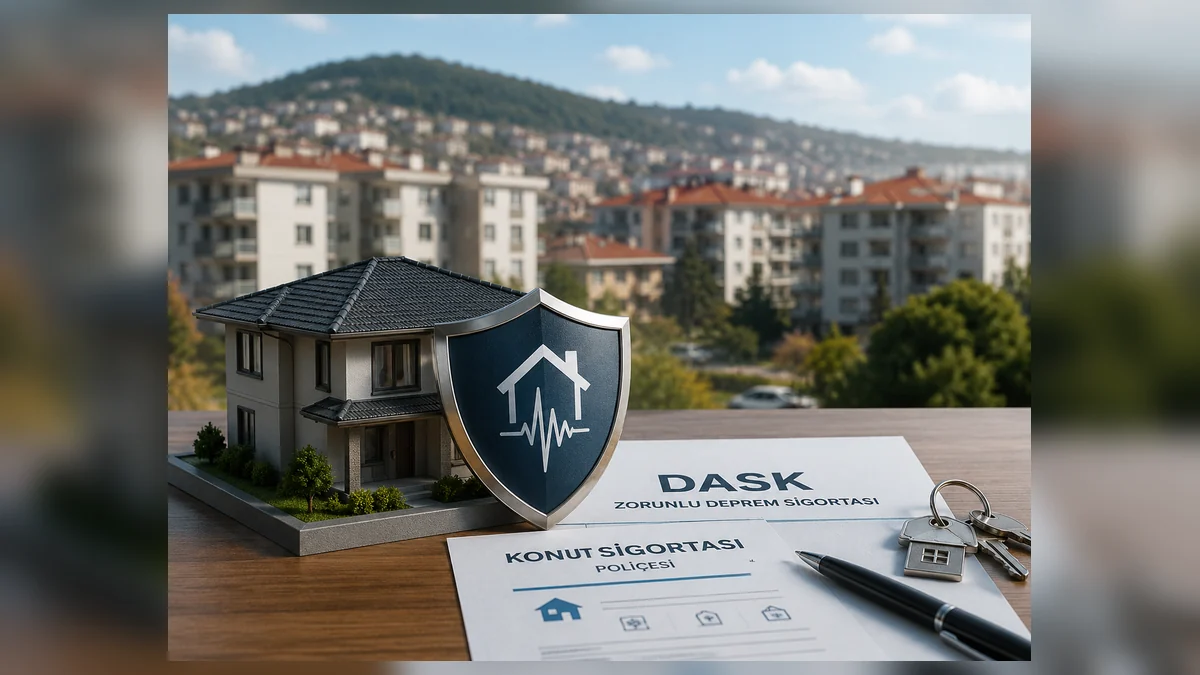
DASK compulsory earthquake insurance in Türkiye
DASK's Zorunlu Deprem Sigortası (ZDS) is Türkiye's compulsory earthquake insurance for buildings and independent units that fall within the statutory scope. It is designed to provide defined financial protection for direct material damage caused by earthquake and for damage caused by fire, explosion, tsunami or landslide resulting from earthquake, subject to the policy conditions and limits. It should be understood as an insurance contract, not as a certificate that a building is earthquake-resistant, compliant with every building rule or free from structural defects.
Which buildings and units fall within the compulsory system?
The Disaster Insurance Law and DASK guidance place within the compulsory framework, among other categories, registered privately owned residential buildings, independent units under the Condominium Ownership Law and certain commercial or office units located inside qualifying residential buildings. DASK also explains that some buildings with kat irtifakı or certain transitional title characteristics can be insured when they meet the stated conditions. Conversely, public-service buildings, some village-area buildings, buildings used entirely for commercial or industrial purposes and specified unsafe or uninhabitable categories fall outside the compulsory scope. Because classification can be property-specific, the owner should check the current DASK criteria rather than deciding from a listing label.
What the compulsory policy covers
DASK lists covered building components such as foundations, main walls, common walls separating independent units, garden and retaining walls, ceilings and floors, stairs, lifts, landings, corridors, roofs, chimneys and comparable structural/complementary parts. Coverage applies to direct material damage from the insured earthquake-related causes within the insured amount and applicable limits. The policy value is linked to reconstruction-type parameters under the tariff system and is not the market sale value of the land and property. A buyer should therefore never compare the DASK insured amount directly with the asking price and conclude that one of them is “wrong”.
Important exclusions
DASK's general conditions expressly exclude a number of losses from the compulsory policy. These include debris-removal expenses, loss of profit, business interruption, loss of rent, alternative accommodation or workplace costs, liability-type indirect losses, movable contents, bodily injury and death, moral-damages claims, damage from causes outside the defined earthquake-related perils, and deterioration arising over time from the building's own defects independently of an earthquake. Owners who need protection for contents, liability, loss of rent or broader perils should examine optional insurance products separately.
Deductible and insurance amount
The general conditions provide for a deductible equal to 2% of the insured amount for each loss, with the policy responding above the deductible according to the rules. The tariff and maximum protection mechanism can change over time. DASK's public information explains that maximum protection and square-metre parameters are updated under the applicable system; therefore owners should rely on the current policy and tariff rather than a historical maximum copied from an old article. Incorrect area or building-type information can affect the premium and claim outcome, so policy data must reflect the actual property.
Check the policy against the exact unit
Review the insured address and address code, the policyholder/right-holder details, building type, construction year, floor count, gross area and other property information appearing in the policy. DASK itself warns policyholders to check contact and address details. At acquisition, confirm that the policy relates to the same independent unit and that it is active on the relevant date. A valid policy for another apartment in the same building is not evidence for the purchased unit.
Renewal and ownership operations
Compulsory earthquake insurance is issued for a defined policy term and DASK states that it must be renewed annually for properties within the compulsory scope. Owners should calendar the renewal date and update changed address, area or building information through the appropriate insurance channel. In property transactions and some utility processes, DASK status can be an operational requirement, so leaving renewal until the day of a title appointment can create avoidable delay.
DASK does not answer the structural-safety question
An insurance policy transfers defined financial risk; it does not test concrete strength, reinforcement, foundations, soil conditions or unauthorised structural alterations. AFAD also distinguishes earthquake hazard from building-specific risk. A buyer concerned about structural performance should examine official building records and obtain qualified engineering assessment where justified. DASK and engineering due diligence therefore complement rather than replace one another.
Keep a complete insurance file
Preserve the current policy, renewal records, premium receipts, property data used to issue the policy and any claim correspondence. If information is incorrect, correct it formally through the insurer or authorised channel. The practical objective is simple: the owner should know exactly which building interest is insured, for which perils, to what limit, with what deductible and exclusions, and for what period. That is a much stronger position than merely knowing that “a DASK paper exists”.