
Closing-Day Recheck — Right of way
A practical Closing-Day Recheck workflow for Right of way, focused on evidence, timing, record reconciliation, exception closure and an auditable decision.
Verified facts relevant to this topic
Purpose of this guide
Closing-Day Recheck — Right of way applies an operational verification workflow to Right of way. The specific objective is to recheck changeable points on the closing day itself so final execution does not rely on information that became stale between review and signature. A fact should not be treated as operationally reliable merely because it exists; it must be tied to the correct property, party and date and supported by evidence that another reviewer can audit later.
When to use this review
- Before signing a contract or amendment that changes rights or obligations.
- Before sending money or changing a beneficiary or account.
- When a new version of a previously relied-on document arrives.
- When there is arrival of the final signature or transfer day.
- When the database and a primary document or official source disagree.
- Before final closing when the information can change over time.
Starting point
Execution sequence
- Define the critical point and pass criterion.
- Retrieve the current source or request the primary document.
- Cross-check names, identifiers, dates, amounts and rights.
- Log every conflict or gap explicitly.
- Assign an owner and closure date to each open point.
- Turn unresolved material points into written pre-commitment conditions.
- Recheck changeable information at the actual decision moment.
- Archive the pass, conditional-pass or stop decision with its reason.
Verified facts from official sources
Right-of-way verification
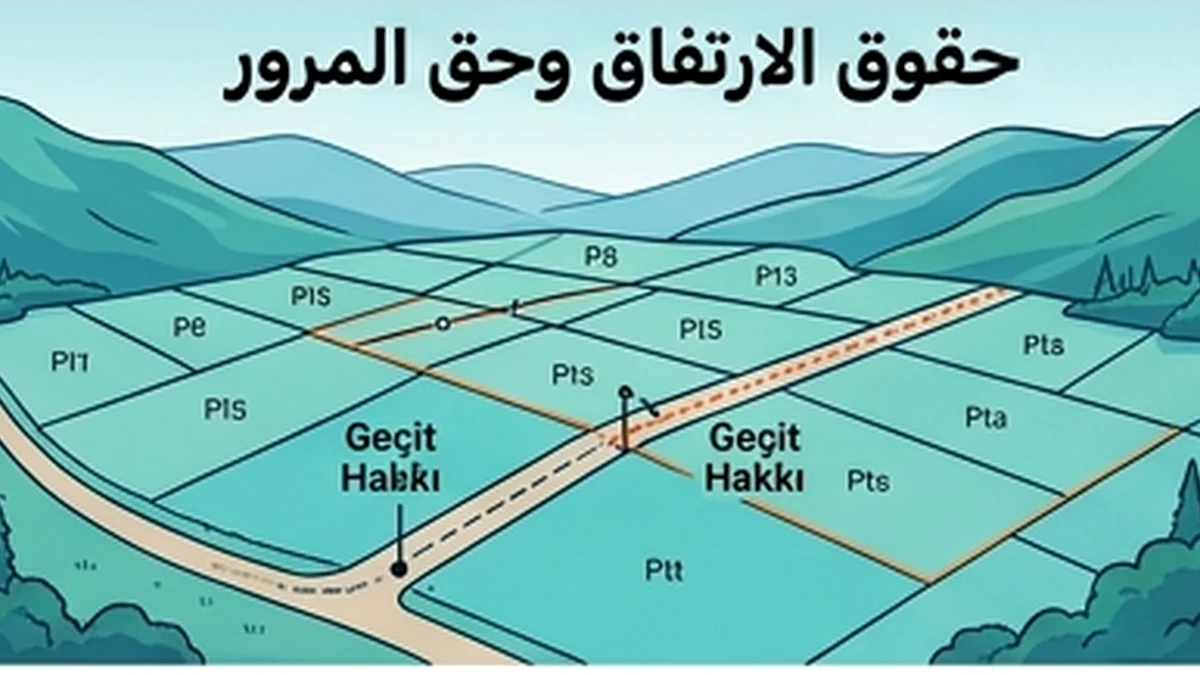
Check cadastral changes, subdivision/merger and whether the recorded route still serves the property.
easement-right verification
How can easement-right verification affect the buyer's legal or financial position?
The decisive evidence point is this: Easement review should identify the benefiting and burdened properties, legal basis, registered scope and any route or use restriction; physical use alone does not prove a registered right. Do not accept the issue until its legal and financial consequence is understood and documented.
What consequence of easement-right verification should be quantified before proceeding?
When should an unresolved easement-right verification issue block payment?
Evidence and decision plan for Closing-Day Recheck — Right of way
For “Closing-Day Recheck — Right of way”, the practical objective is to repeat the critical checks immediately before completion so stale evidence is not mistaken for current status. The review should distinguish what is proved now, what still depends on a missing or stale document, and what difference that gap makes to price, signing, payment, handover or later resale.
Evidence to assemble
- For “Closing-Day Recheck — Right of way”, match the property and party identifiers in the evidence to the asset and people actually involved; a correct document for the wrong unit or person does not close the check.
- For “Closing-Day Recheck — Right of way”, record issuer, source, issue or retrieval date and version where available, then distinguish an original/current record from a scan, translation, draft, expired copy or superseded version.
- For “Closing-Day Recheck — Right of way”, compare documentary status with the physical, payment or operational reality relevant to the topic and write down every unexplained difference before commitment.
- For “Closing-Day Recheck — Right of way”, convert each unresolved difference into a named condition: evidence required, person responsible, deadline and the consequence if the condition is not satisfied.
Official reference to recheck
The source register for “Closing-Day Recheck — Right of way” includes TKGM — Takyidat / Encumbrance Information (https://www.tkgm.gov.tr/en/node/3347). Use that source for the matters within its authority and recheck it when timing or rules are material; it does not replace a registry, engineering, tax, banking or contractual record that the specific decision separately requires.
Decision boundary
Close “Closing-Day Recheck — Right of way” only when the conclusion can be reproduced from evidence by another reviewer. A reasonable outcome may be proceed, proceed subject to a written condition, reprice, obtain specialist advice, or stop; uncertainty should remain visible instead of being converted into a positive statement.
Closing-day recheck — right of way
On transfer day, confirm that any right of way the buyer relies on remains registered and has not changed in scope or benefiting property. If the property is burdened by a right for others, also check for any new or amended route since the previous review. Reconcile the final register with the plan used in the purchase decision.
If practical access depends only on an unregistered arrangement, do not let closing-day pressure turn that weakness into an assumption. Make creation of the right or provision of a legally secure alternative a written condition before funds are released. Preserve the final entry and plan in the transfer file.