
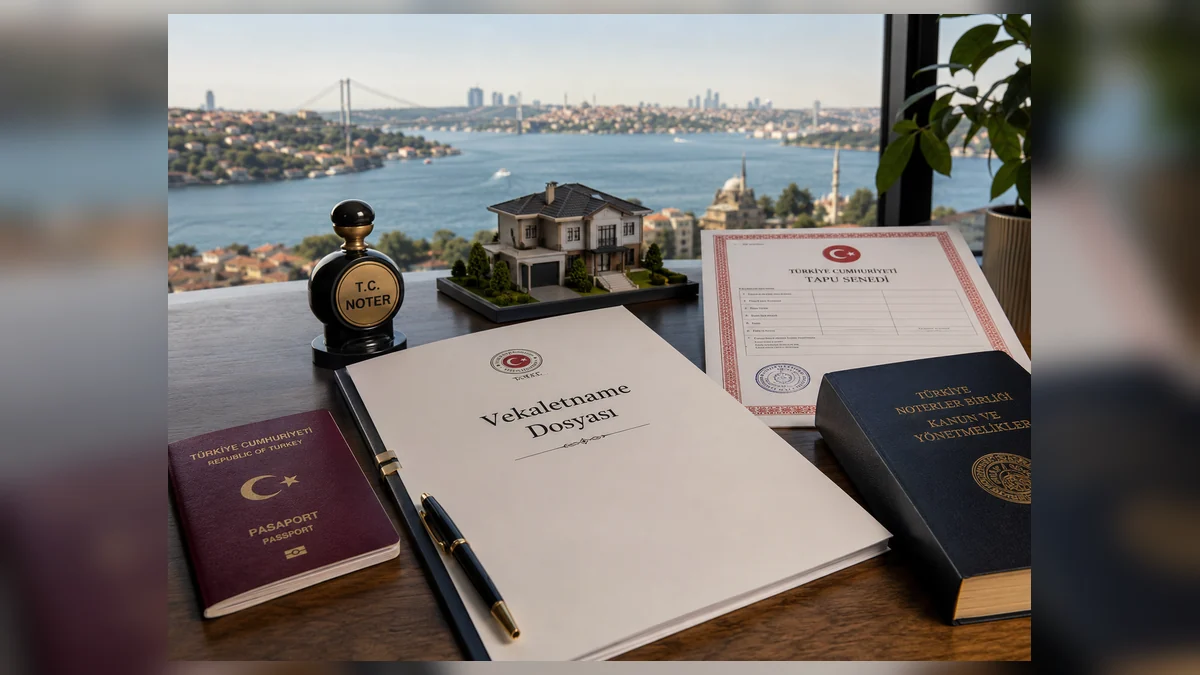
Closing-Day Check for a Title-Deed Transfer Appointment
A closing-day check is different from the review performed at reservation or several days before the land-registry appointment. Its purpose is to revalidate facts that can change until the final moment and then make a clear decision: proceed, proceed only with a documented condition, or stop. Time pressure, travel arrangements and the fact that everyone is already at the office are not valid reasons to accept an unverified change.
Before leaving for the land registry office
Start with the official appointment message or application status. Confirm the land registry office, appointment time, application reference and parties. TKGM explains that land-registry applications can be managed through Web Tapu and that ALO 181 provides appointment and procedural support; TKGM also notes that SMS messages can occasionally be delayed. If a message or payment link is doubtful, confirm it through an official channel rather than relying on a forwarded screenshot.
Review the document set one final time: identity or passport, representation evidence if applicable, property-specific documents, compulsory earthquake insurance for buildings where required, foreign-party documents where relevant, interpreter arrangements and every document that was designated as a closing condition. The aim is not to carry more paper. The aim is to ensure that the current, valid document belongs to the correct person, property and transaction.
Recheck people and authority at the start of the day
Match the seller’s identity to the owner information in the transaction file. If an agent will sign, confirm that the person present is the authorized representative and that the authority document covers the sale and any related act required to complete it. For a corporate seller, confirm that the representative’s authority is appropriate for this disposition. Do not resolve differences in names, document numbers or legal capacity by assumption.
Freeze the property identity before any final payment
Reconfirm the province, district, neighborhood, block and parcel, independent-unit number and any ownership share that matters. Compare those identifiers with the final agreement and the actual unit viewed. If a parking space, storage unit, garden use, terrace or another appurtenant right is material to the purchase, determine how it is legally reflected. A last-minute substitution of unit, price or appurtenance should not be accepted without clear documentation and an informed decision.
Recheck the registry and changeable barriers
If the decision depends on the absence or release of a mortgage, attachment, annotation or other restriction, the verification should be close enough to closing to be meaningful. A conclusion reached days earlier may not be sufficient for a fact that can change. If a mortgage was supposed to be released, a loan-payment receipt alone is not proof that the registry entry has been removed. Verify the result through the official process. TKGM guidance also explains that certain bank-originated mortgage release documentation is transmitted electronically to the land registry office.
Review time-sensitive documents
Check the validity of documents that can expire or become stale and make sure the parties are working from the controlling version. Do not sign an earlier draft if price, handover, charges or another material term has changed. For a foreign party, confirm the documents actually required for that transaction, which can include passport evidence, the foreign-exchange purchase document and banking materials, valuation documents where applicable, DASK for buildings and interpreter arrangements. A document created for another unit or another transaction cannot simply be assumed reusable.
Official charges: amount, collection reference and receipt
Before paying, separate title-deed fees, the revolving-fund service charge and private transaction costs. TKGM’s official sale guidance states that the title-deed fee is collected separately from buyer and seller at 20 per thousand of the declared sale value, provided that value is not below the relevant property-tax value. TKGM’s e‑Tahsilat service allows payment and inquiry using the collection number issued for the transaction. Do not pay government charges into a private account, and retain evidence that links the payment to the correct application.
Recheck the purchase price and bank instructions
Stop a transfer if the IBAN, beneficiary name or amount changes on closing morning without independent verification. Match the payment instruction to the contract, the beneficiary and the stated purpose. If part of the price was paid earlier, calculate the remaining amount from actual receipts rather than an unverified spreadsheet. For foreign-buyer transactions, make sure that the foreign-exchange purchase document and bank payment evidence, where applicable, correspond to the correct buyer, seller, property and amount.
Before signature, read the official declaration
Do not let appointment pressure remove the need to read and understand. Check the names, property, consideration and legal capacity in the declaration. If a party does not know Turkish, confirm the appropriate sworn-interpreter arrangement. The party must understand the legal effect of the declaration, not merely recognize that a signature is expected. Any difference between the declaration and the agreed transaction should be resolved before signing.
The decision point: proceed or stop
Proceed when identity, authority, property, registry, documents, official charges, payment instructions and closing conditions are consistent and evidenced. Proceed with a condition only when that condition is legally workable, documented and protective. Stop when the property differs, authority is insufficient, a new restriction appears, a decisive document has expired or is missing, payment instructions cannot be verified, or a party does not understand the official act.
After signature, close the evidence loop before leaving
Confirm that the transaction has been completed in the official system and that the result is the expected one. Gather fee receipts, payment records, official messages and final transaction evidence. Then address physical handover: keys, meter readings, handover minutes, furniture inventory where relevant and occupancy status if it was part of the deal. Legal registration and physical handover are connected stages, but they are not the same event.
Closing-day quick check
- The application reference, office and appointment have been confirmed officially.
- The people present and their legal capacity match the file.
- The property identity has not drifted from the final agreement.
- Registry items that matter have been rechecked when necessary.
- The controlling documents are current and complete.
- Official charges are understood and paid through a correct channel.
- The beneficiary, IBAN, amount and payment purpose match the transaction.
- No material open condition has been hidden by time pressure.
- Every party understands the official declaration before signing.
- Registration, payment and handover evidence will be retained together.
FAQ
Is a registry check from last week enough?
Not always. If the decision depends on something capable of changing, such as a registry restriction, authority or payment instruction, recheck it close to closing.
What if the beneficiary account changes on closing morning?
Do not use the new instruction until its source, account holder, reason for the change and consistency with the contract have been independently verified. A last-minute account change is a reason to stop and verify.
Does paying the official charges mean ownership has transferred?
No. Payment of charges is a procedural and financial step. Completion of the transfer is established by the result of the official registration process.
Is physical handover the same as registration?
No. It should be coordinated with registration, but keys, inventory, occupancy and meter readings may require a separate handover record even after legal registration is complete.
This closing-day control is a practical decision tool and does not replace transaction-specific legal, banking or tax advice.