
Encumbrance review starts from a current land-register record, not an old title image
Encumbrance review starts from a current land-register record, not an old title image. TKGM uses the term Takyidat for restrictions, annotations and rights such as declarations and easements that affect ownership. A mortgage, attachment, annotation and easement must be distinguished because their legal and commercial consequences are not the same. Repaying a mortgage debt also does not by itself prove that the registry entry has been cancelled; deletion must be verified in the register. If two registry versions are available, preserve both dates and issuers, explain which one is current, and tie every entry to the exact target property rather than a similar unit in the development.
From a takyidat entry to an encumbrance decision
A mortgage, attachment, annotation, easement or declaration in the land register cannot be reduced to one checkbox saying “encumbrance exists.” TKGM uses the term takyidat for restrictions, annotations and rights affecting ownership, but different entries have different legal and commercial consequences. Obtain a current record and identify the entry type, date, beneficiary or authority, amount where relevant, and the instrument or transaction that created it.
Distinguish an entry that blocks or complicates transfer from one that can be discharged before or at closing and from a real right that is intended to survive the purchase, such as certain easements. A bank mortgage is not the same as an enforcement attachment, and an administrative declaration is not the same as a right of way. If a mortgage will be released from sale proceeds, the payment and release mechanics should be coordinated with the bank and land registry for the transfer day.
Do not rely on an old clean title image; encumbrances can change after it was issued. TKGM allows a title-record copy to be requested through Web Tapu, making the extraction date part of the evidence. Where land has been subdivided or converted into condominium ownership, check whether entries were carried to the new independent unit rather than relying on the earlier parcel record.
Create a separate disposition for every entry: discharge before closing, accept subject to price or contract protection, obtain legal opinion, or stop. If discharge is a condition, specify the evidence required, responsible party, cost and deadline instead of relying on the seller’s promise. When accepting an easement, read its scope and location and test its practical effect on access and use.
Refresh the register close to transfer and retain the version on which payment was authorized. A strong conclusion does not merely say “clean title”; it identifies what was checked, what was removed, what remains and why the remaining entries are acceptable or immaterial to the buyer’s intended use.
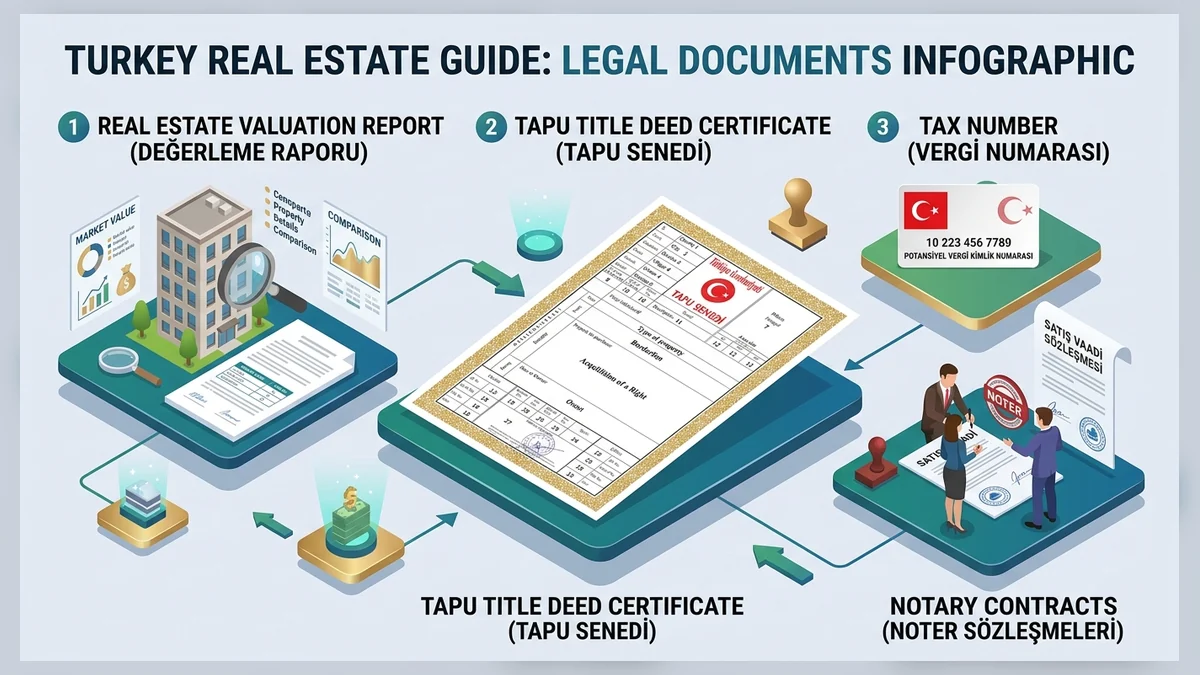
Title verification starts with the identity of the registry record, not a circulated image of a title certificate. Match province, district, neighbourhood, ada/parsel, independent-unit number and land share to a current record, then review the registered owner, right, mortgages, attachments, annotations and easements. TKGM’s Web Tapu and official services are designed for land-registry information and transaction applications, which makes the date and version of the record part of the evidence.
A commercial door number or a building-management apartment number can differ from the independent-unit number in the land registry. A discrepancy should not be resolved by assumption; use the approved plans or registry material that connects the physical unit to the legal unit. The land-share ratio is also not decorative data: it forms part of the condominium title structure and can matter to rights, allocations and decisions affecting the property.
Entries do not all have the same effect. A mortgage, enforcement attachment, annotation, easement or right of way must be assessed separately: who holds the right, what property or share it burdens, whether it restricts transfer or leaves an obligation with the buyer, and what official evidence proves release where the deal requires clean title. Recheck close to payment and transfer instead of relying on a search performed weeks earlier.
Mortgage release must be visible in the register
If a sale is conditional on discharging a bank mortgage, coordinate debt payment, the release instrument and the registry update before releasing the full purchase price. TKGM guidance treats mortgage cancellation as a land-registry procedure and allows a current land-register record sample to be requested through Web Tapu. A payment receipt is therefore not a substitute for the updated record after cancellation has been completed. If an easement or declaration remains but does not block transfer, read its scope, location and practical effect on intended use before deciding that it is acceptable.