
Independently proving who occupies a tenanted property
A seller’s statement that an apartment is “rented” or “vacant” is not enough for a buyer who needs to know who will actually possess the property after completion. Tenant-occupancy status should be rebuilt from independent evidence: the current lease, actual payment history, the occupant’s identity, the property being occupied, any deposit or security record, notices and any pending dispute. The objective is to confirm the present legal and factual relationship rather than preserve an old label in a database.
Begin with the current lease, then test it against reality
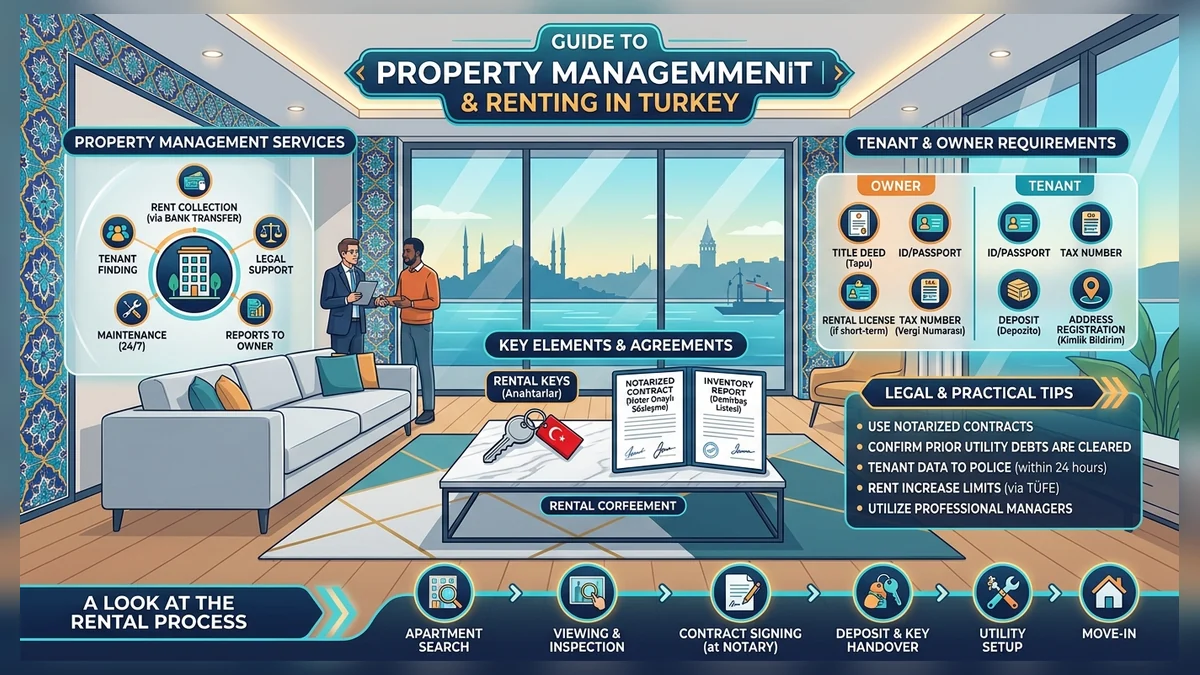
Read the signed lease and identify landlord, tenant, exact property, commencement date, duration, current rent, payment method and any later addendum. Then compare those details with recent bank payments and, where appropriate, a current tenant confirmation or handover/management record. A lease signed years ago can still matter, but it does not by itself establish that the same tenant remains in possession or that later amendments did not change the economic terms.
The Turkish Code of Obligations is important when the property changes hands. Article 310 states that if the leased property changes owner after the lease has been formed, the new owner becomes a party to the lease. This means a sale does not simply erase the existing rental relationship. A buyer assessing occupancy therefore needs the real lease file, not an assumption that title transfer automatically delivers vacant possession.
Verify money separately from possession
Recent rent payments help show that the relationship is active, but payment evidence must be connected to the correct tenant, landlord and period. Review the account holder, transfer references and any rent changes. A cash-payment claim needs stronger supporting evidence because it is harder to reconcile independently. If there is a security deposit, record the amount and where it is held. For residential and roofed-workplace leases, Article 342 limits contractual security to three months’ rent and regulates monetary security when it is agreed.
Identify notices, undertakings and disputes without treating them as automatic eviction
Ask for any written notice, eviction undertaking, enforcement file, court case or mediation record. Read the actual document and date. The Ministry of Justice has emphasized that a generic sentence in a lease saying that the tenant will leave on a certain date is not the same as the legally relevant written eviction undertaking. The legal effect depends on the applicable conditions, not on a seller’s summary.
Rental disputes, with the statutory exception relating to eviction through non-judicial enforcement, have been subject to mandatory pre-litigation mediation under Article 18/B of the Mediation Law since 1 September 2023. A mediation application proves that a dispute process exists; it does not by itself prove the landlord or tenant’s factual allegation.
Use a second source that did not originate with the seller
Independent replication means obtaining evidence from outside the seller’s prepared sale file. Depending on the case, that may be the tenant’s current written confirmation, original bank payment records, a management record showing the occupant, or an official court/enforcement/mediation document. Do not use a copied spreadsheet created by the same agent as the “second source.”
Describe the status precisely
The final conclusion should say more than occupied/vacant. Record whether the current occupant is the named tenant, whether the lease appears active, the current rent and last verified payment period, whether security exists, whether any notice or proceeding is open, and whether vacant delivery has actually been agreed and documented. If the evidence is inconsistent, keep the status unresolved rather than choosing the version that best suits the transaction.
This approach protects both investment buyers who expect rental continuity and buyers who require physical possession. It also prevents a later surprise in which a valid tenant remains after title transfer because the purchase file treated ownership and occupancy as if they were the same thing.