
Tax recordkeeping file for a property sale in Türkiye
The purpose of tax recordkeeping is not to collect receipts after closing; it is to reconstruct acquisition, cost and disposal if the tax treatment is later questioned. GİB’s guide on disposal of real estate treats the acquisition date as a central element in capital-gain analysis. For real property, registration at the land registry is generally the acquisition point, while the guide describes circumstances in which earlier actual use may matter. A seller should therefore retain the acquisition title deed and registry documents, relevant handover records and any development, exchange or land-for-construction documents that may affect how the acquisition date is characterised.
The financial file should also prove acquisition price and cost rather than rely on a spreadsheet with unexplained numbers. Keep the purchase contract, bank-payment evidence, title-deed charges and invoices or records for amounts that are legally relevant to the cost calculation. Genuine capital improvements should be evidenced separately from ordinary living or maintenance expenditure; whether a cost is deductible depends on the Income Tax Law and the nature of the expense. Property acquired by inheritance or another gratuitous method, or property received through a construction-for-land arrangement, can require a different analysis, so the chain of ownership must be preserved.
A sale is more than one headline price
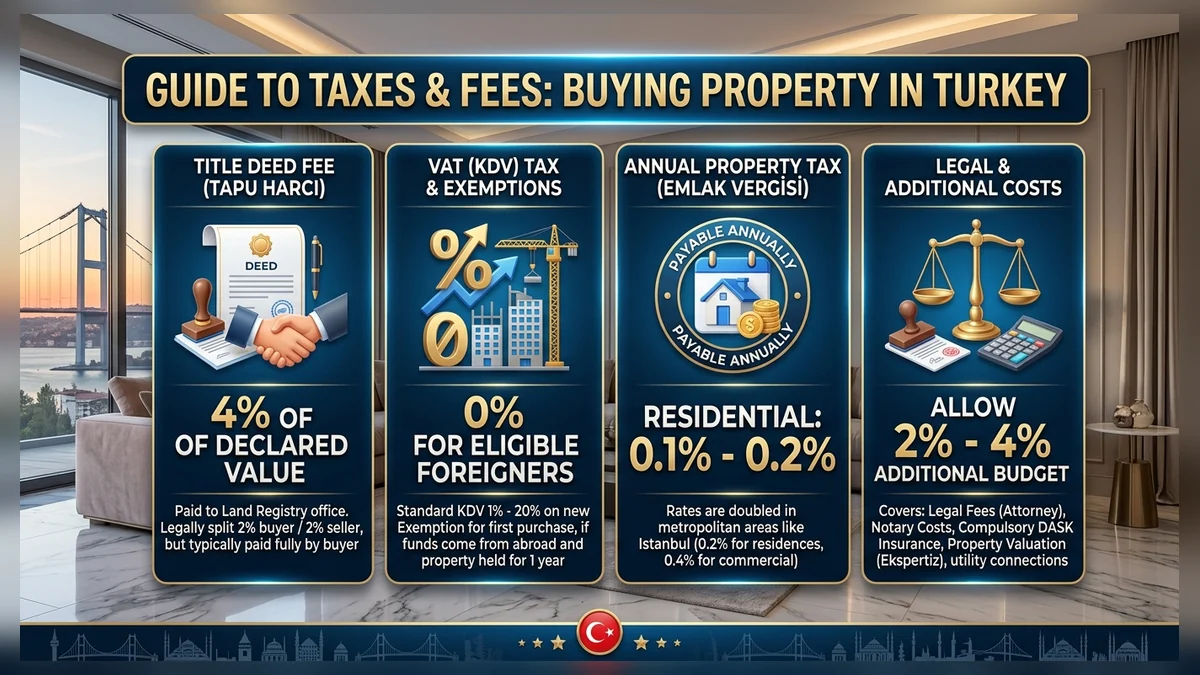
For the disposal itself, retain the sale agreement, new registry record, consideration details, bank statements and documents explaining any adjustment or settlement. With co-owners, separate each person’s share, acquisition circumstances and relevant dates instead of assuming one tax result because there was one sale transaction. Title-transfer charges and possible income tax on a gain are different liabilities and should not be merged into a single “tax paid on sale” figure.
GİB explains that gains within the scope of değer artışı kazancı are tested under the rules for the relevant year and that annual exemption amounts and tax brackets change over time. The permanent file should therefore record the precise year and date of disposal and link the computation to the GİB guidance for that year rather than hard-coding an old monetary threshold. GİB also provides Hazır Beyan and Digital Tax Office channels for qualifying declarations. Preserve the submitted return, assessment/accrual document and proof of payment; a note saying “declared” is not an auditable tax record.
Prepare a short calculation schedule identifying the acquisition date and why it was selected, acquisition price, evidenced costs, any indexation and its source, sale consideration, the applicable annual exemption if relevant, and each owner’s share. When professional advice is obtained, retain the facts and question sent to the adviser as well as the answer because a changed fact can change the tax conclusion. Non-resident and unusual cases should not automatically be processed as ordinary resident sales; declaration mechanics can differ. A strong sale file is one from which a second reviewer can reproduce the result directly from primary documents.