
Skip to content
+90 505 506 38 10 WhatsApp

Municipal Property Tax Workflow

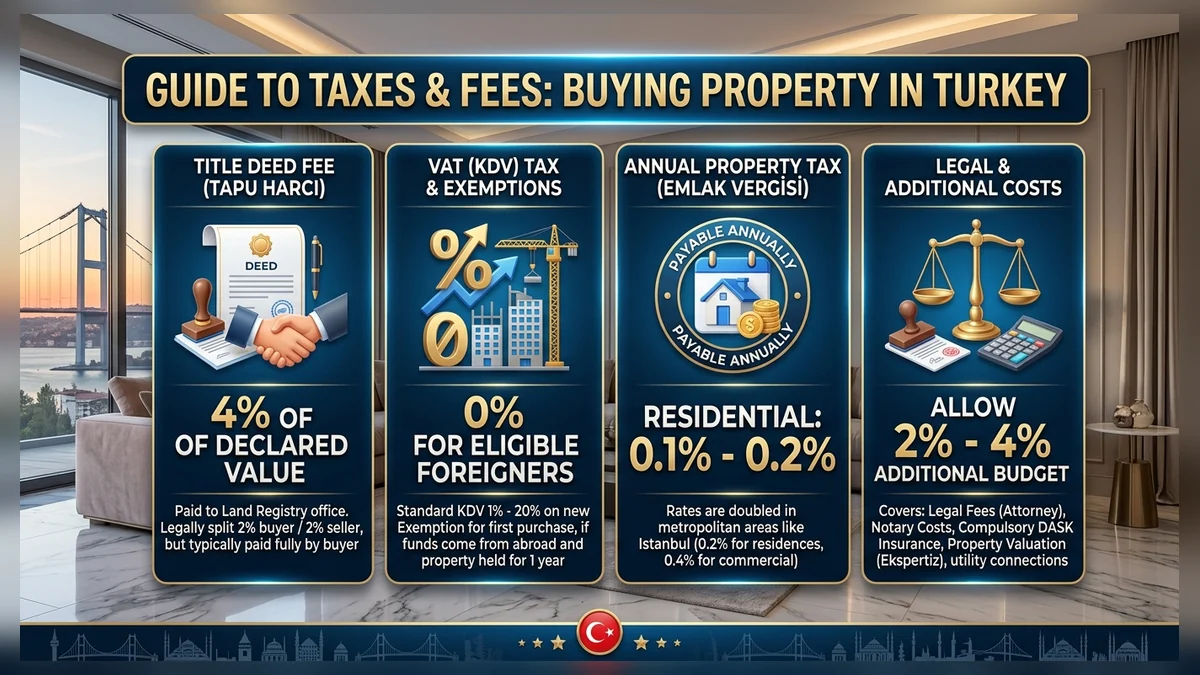
Municipal property tax is a recurring legal financial obligation imposed by local administrations and municipalities on property owners. The workflow is intended to support the collection of revenue used for infrastructure, public maintenance, waste collection and local facilities. Understanding the process protects owners and buyers from accumulated penalties and legal consequences that could adversely affect the property.
Author / reviewer: JUANA Real Estate Last reviewed: 2026-08-21
Municipal Property Tax Workflow
1. Introduction and importance of municipal property tax Municipal property tax is a recurring legal financial obligation imposed by local administrations and municipalities on property owners. The workflow is intended to support the collection of revenue used for infrastructure, public maintenance, waste collection and local facilities. Understanding the process protects owners and buyers from accumulated penalties and legal consequences that could adversely affect the property. 2. Main stages of the municipal-tax workflow Initial registration and assessment: the property is registered with the municipality's tax department on the basis of its area, use and geographic location so that the applicable taxable value can be determined. Periodic assessments: the municipality issues annual or semi-annual notices stating amounts due and statutory payment dates. Review of official sources and current data: owners or their representatives should check municipal electronic systems regularly so that discrepancies or unexpected arrears are identified promptly. 3. Payment-release and counterparty checks When a property sale is being completed, the municipal property-tax position should be checked as part of the transfer file. Counterparty confirmation: the seller should provide official receipts for previous years to demonstrate the status of municipal obligations relating to the property. Financial-release gate: where an unresolved liability exists, part of the seller's proceeds may be held back or the final payment delayed until a current municipal clearance or equivalent evidence is produced, in accordance with the applicable transaction arrangements and law. 4. Archive and resale file Tax-clearance documents and official receipts should be kept with the property's resale file. This makes future verification easier and improves readiness for later transactions. 5. Frequently asked questions Q1: When is municipal property tax usually paid? A1: Payment timing follows the schedule set by the relevant municipality and applicable law, often through annual instalment periods. Current deadlines should be checked to avoid late-payment penalties. Q2: What if the buyer discovers old municipal tax arrears on the property? A2: The parties should identify the legal responsibility for the arrears and settle them before completion. Transaction payment controls can be used to ensure unresolved amounts are cleared rather than passed to the buyer without agreement. Q3: Does municipal clearance need to be current? A3: Yes. Evidence used for closing should be recent enough to confirm the position immediately before transfer and to reduce the risk that a newly recorded liability is missed.

Frequently asked questions

What is the practical purpose of “Municipal Property Tax Workflow”?

Municipal property tax is a recurring legal financial obligation imposed by local administrations and municipalities on property owners. The workflow is intended to support the collection of revenue used for infrastructure, public maintenance, waste collection and local facilities. Understanding the process protects owners and buyers from accumulated penalties and legal consequences that could adversely affect the property.

What should be verified before relying on “Municipal Property Tax Workflow”?

The review should be tied to the title deed and the relevant official record, assessment, or claim rather than relying only on a statement by an owner or property manager. Verify who bears the obligation, the period covered by the document, the outstanding balance or right, and any update made after the copy in the file was issued.

What evidence should be retained when applying “Municipal Property Tax Workflow”?

Retain the deed or official statement used, proof of payment or settlement where relevant, the verification date, and any consent from co-owners or the responsible management body. If the information can change, record the effective date of the check and revalidate it close to closing.

Sources

Related content

Real Estate Academy
JUANA Intelligent Site AgentKnows JUANA public sections, pages and content
Would you like an advisor to contact you?
The agent searches public site content only. Chat and browsing data may be stored to improve service and connect your request with the sales team. Private admin/client data is never exposed.