
Source Freshness Review — Mortgage and Lien Status
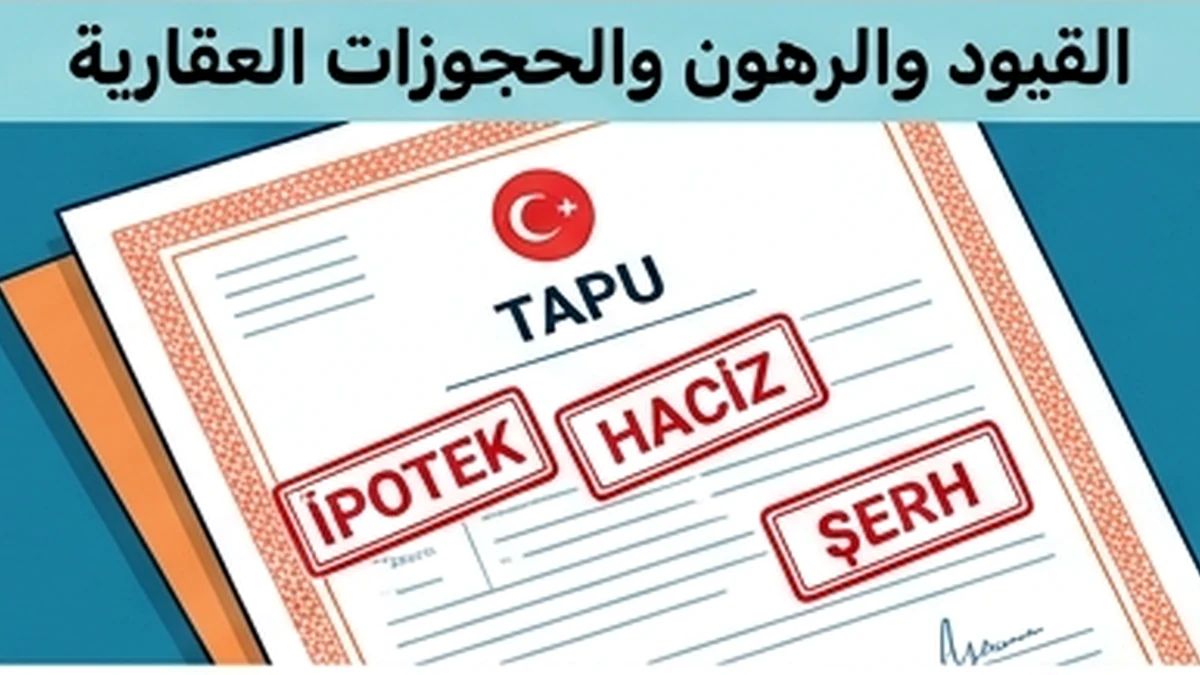
A mortgage source-freshness review asks whether the evidence used to describe a property as mortgaged, released or “debt free” is current enough for the decision being made. In Türkiye, a bank loan balance and the land-registry mortgage are related but distinct facts. Paying the underlying debt does not by itself prove that the mortgage entry has been deleted from the title register. TKGM states that, for bank mortgage deletion, the relevant bank sends the deletion document electronically to the Land Registry Directorate and the registry performs the deletion. The current title record is therefore the controlling source for the registered status.
1. Use the current registry, not a historic deed copy
Obtain a fresh official title record for the exact property and record the retrieval date. Match province, district, neighbourhood, block, parcel and independent unit. A title deed issued years ago proves an earlier ownership event; it is not a live certificate that no mortgage was registered later. Likewise, an old valuation report or a seller’s Web Tapu screenshot should not be treated as current unless its source and date are independently established.
2. Read the mortgage entry itself
Where the registry displays the information, capture the mortgagee, date, amount, currency, degree/rank and any other relevant terms or reference numbers. Do not reduce the review to “mortgage: yes/no.” A first-ranking bank mortgage has a different transaction implication from a later-ranking security right, and a release of one mortgage does not prove that every mortgage or other encumbrance has been removed. If part of the entry is unclear, obtain the registry document or professional interpretation required to understand it.
3. Separate debt evidence from registry evidence
A bank statement showing zero loan balance, a payoff quotation, a receipt or a bank letter can be useful evidence about the debt relationship. None should be silently converted into proof that the land-registry mortgage has disappeared. Conversely, a current registry showing deletion does not by itself settle every contractual issue between borrower and bank. Keep the two evidence streams distinct and reconcile them only for the decision they actually support.
4. Check the deletion workflow
TKGM provides electronic mortgage-deletion procedures for participating banks and institutions. The important freshness question is not only when the borrower paid, but when the deletion request was sent, processed and reflected in the register. Record the bank communication and, most importantly, the later official registry evidence showing the result. If a manual process is used, identify the document required by the Land Registry Directorate and the journal reference when available.
5. Refresh evidence after any trigger event
Freshness should be reset after events that can change the mortgage position: new financing, refinancing, debt restructuring, sale preparation, bank payoff, partial release, subdivision, consolidation, inheritance, litigation or another creditor action. A document that was adequate for valuation three months earlier may be inadequate for a non-refundable payment today. The relevant interval is not a fixed number of days; it depends on how quickly the fact can change and how irreversible the next transaction step is.
6. Check mortgage rank in financed acquisitions
Where a buyer’s bank will register a new mortgage, the lender may require a specific rank or the removal of prior security. A stale title record can create a sequencing failure at closing. The review should therefore align the latest title evidence with the lender’s written conditions and the planned order of existing-mortgage deletion, title transfer and new-mortgage registration. Any assumption about rank should be verified in the registry rather than inferred from bank correspondence.
7. Recheck close to final payment or transfer
When the transaction is exposed to mortgage risk, refresh the official title record shortly before funds are irrevocably released or title is transferred. Compare it with the previously reviewed version. A newly registered mortgage, a mortgage that remains despite a promised release, or a changed rank should reopen the decision. Save the exact record relied upon so that the timing of the conclusion can later be audited.
8. Freshness standard
The evidence is fresh enough when it identifies the correct property, comes from the authoritative source for the fact, has a retrieval or event date appropriate to the next transaction step, and has been rechecked after any event that could alter the mortgage. “The seller paid the bank” and “the mortgage no longer appears in the current title register” are not interchangeable statements. A professional file records which statement is proved, by what source and on what date.
Official sources
- TKGM — FAQ: procedure after paying a bank mortgage debt.
- TKGM — e-Mortgage Deletion / e-Terkin procedures.
- TKGM — Land Registry Regulation, including deletion rules.
- TKGM — Web Tapu/current title-record services.