
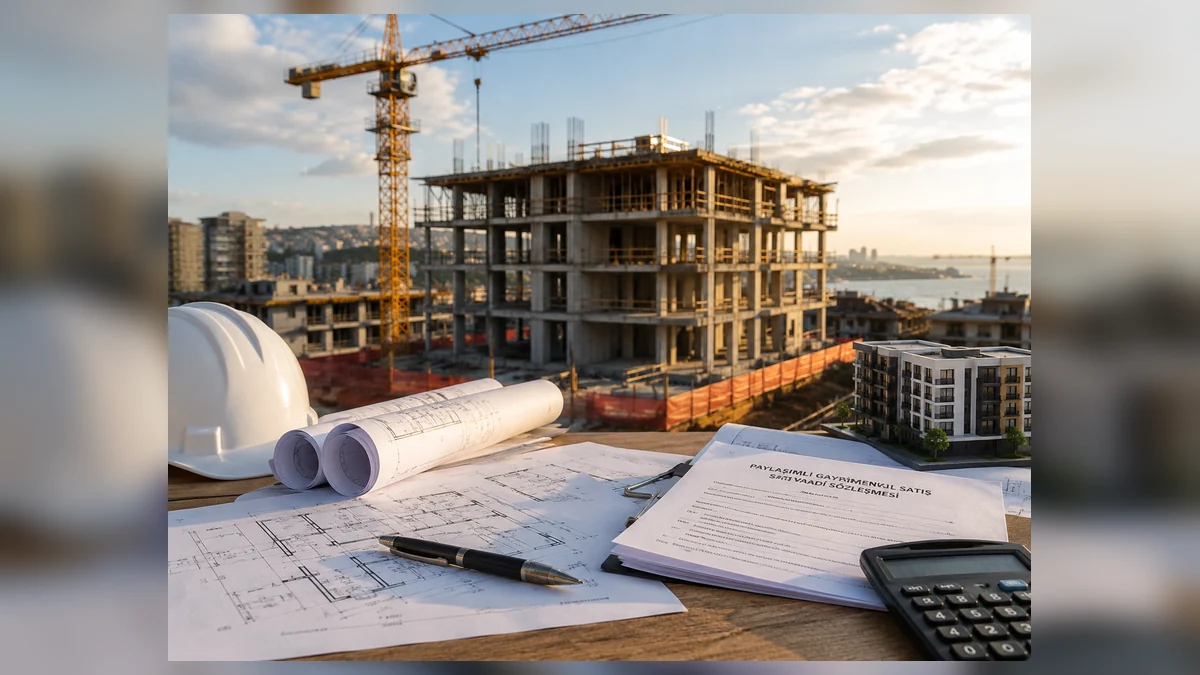
Building Demolition Risk Record Check
Key information
Demolition risk must be tied to a building-specific official record: risky-building determination, demolition/evacuation notice, urban-transformation action or municipal enforcement. A general earthquake-hazard map does not establish that a building is ordered demolished.
Check the issuing authority, address/parcel, decision date, service/notice status, objection or cure stage and whether the decision affects the entire building or a specific illegal alteration.
Price the consequences, not the label: temporary loss of use, relocation, demolition/construction cost allocation, project uncertainty and timing can materially change value and financing.
Reconcile record and reality
For “Building Demolition Risk Record Check”, authenticity is established through the issuing authority and chain of acquisition, not by the appearance of a PDF or an institutional logo. If bank-account or payment instructions change by email or message, the change should be confirmed through an independent, previously verified channel before funds move; a genuine contract does not make later payment instructions automatically genuine. Official systems such as EİDS or Web Tapu prove only the elements within their scope and should not be used to legitimize unrelated data. For subject-specific due diligence, preserve old and new versions, receipt time, sender, verification channel and result; that audit trail is what later exposes silent substitution or forged versions.
Limits of the evidence
For “Building Demolition Risk Record Check”, the land-registry record must be separated from marketing descriptions. TKGM lists party identification and, where representation is used, the representation document among sale-transaction materials; the registered owner, independent-unit details and recorded restrictions remain the controlling evidence when descriptions conflict. Names, identity or passport data and property identifiers should therefore be reconciled before signature, and the registry output relied upon should be preserved with its retrieval date. This is especially material to subject-specific due diligence, because an unexplained identity or asset mismatch can change whether the transaction can proceed at all.
Decision consequence
“Building Demolition Risk Record Check” engages Condominium Ownership Law No. 634 whenever the issue concerns an independent unit, common part, land share or site management. The law distinguishes independent sections, common areas and appurtenances and regulates management, common expenses and advances. An aidat amount, parking/storage right or ownership-share ratio should therefore not be accepted from a seller’s statement alone; the management plan, decision book, unit ledger, registry and approved project are checked according to the issue. For subject-specific due diligence, ordinary recurring dues should also be separated from exceptional advances or major works so future obligations are not hidden inside a quoted monthly figure.
Verification before commitment
For “Building Demolition Risk Record Check”, site earthquake hazard must be separated from the structural safety of the particular building. AFAD’s current national hazard map became effective on 1 January 2019 and describes location-based seismic hazard; it is not a structural-safety certificate for an individual building. Building review requires age, structural system, visible alterations and technical records, and serious concerns may justify specialist inspection or the statutory risky-building process under Law 6306. DASK is financial earthquake insurance for covered properties, not proof of structural resistance, and its compulsory policy is issued for one year and requires renewal. For subject-specific due diligence, these distinct evidentiary layers should never substitute for one another.
Primary and official sources
- Ministry of Environment — Risky Building Process — https://istanbulakdm.csb.gov.tr/riskli-yapi-sureci-104407
- İBB — Rapid Building Screening — https://binatespiti.ibb.istanbul/
- AFAD — Türkiye Earthquake Hazard Map — https://tdth.afad.gov.tr/
- Ministry of Justice — Notary Law — https://mevzuat.adalet.gov.tr/mevzuat/103477
- TKGM — sale transaction documents / Web Tapu — https://www.tkgm.gov.tr/sss