
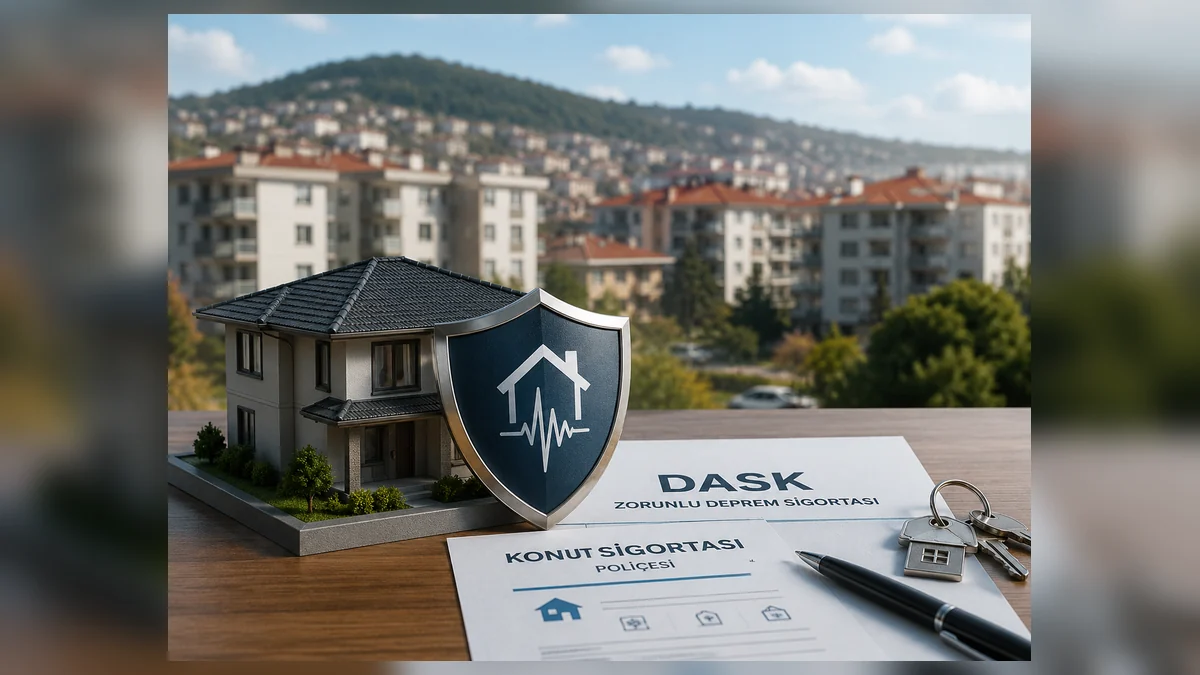
Independent Evidence Replication — DASK Earthquake Insurance
Independent verification of a DASK policy means more than reading the PDF supplied by a seller or agent. The key facts should be re-established from the official DASK channel and tied back to the actual dwelling. A policy image may have been genuine when produced yet be insufficient today because it has expired, been renewed, or contains an address, unit or building description that no longer matches the property. The real question is therefore not “does a DASK document exist?” but “can the current policy and the data on which it was issued be independently connected to this exact dwelling?”
What DASK proves—and what it does not
DASK is compulsory earthquake insurance for buildings within its statutory scope. The insured amount is not the full market value of the apartment. It is calculated under the DASK tariff using floor area, construction type and tariff factors. For policies starting on 1 August 2026, DASK publishes construction unit costs of TRY 11,562 per square metre for reinforced-concrete buildings and TRY 7,708 per square metre for other structures, with a maximum insured amount of TRY 2,451,062 per dwelling. Those figures help test the logic of the policy calculation; they are not a ceiling on the property’s market price.
Rebuild the result from the property data behind the policy
DASK’s “required information and documents” page states that policy issuance relies on data including the open address/address code, title information, construction year, construction type, total floor count, damage status, the dwelling’s gross floor area and use. DASK also states that compulsory earthquake insurance is based on declarations and warns that losses caused by incorrect declarations are the insured’s responsibility. This makes data matching essential: a correct name does not cure a wrong floor area, construction type or address.
An independent review should first read the policy without accepting the conclusion: record the policy number, start and end dates, insured person, address or address code, unit reference where available, gross floor area, construction year and building type. Then compare those items with the property documents and perform a fresh official DASK inquiry where possible. A mismatch needs an explanation before the result can be considered reproduced.
Why a second path to the same answer matters
Independent replication is particularly valuable when the first file was assembled by the interested party or when the only evidence received is a screenshot or PDF. The second reviewer should not start from the first reviewer’s conclusion. Starting from the policy identifier and property, the reviewer should query the official source again. If the same current policy appears and the validity dates and dwelling data match, confidence increases. If the system returns a newer policy, a different address or an earlier expiry, that is new evidence rather than a cosmetic discrepancy.
Independence does not require pointless duplication of every clerical step. It requires a separate evidential route: official source, policy identifier, property identity, date of inquiry and the data used to reach the result. Those elements make later rechecking possible after renewal or amendment.
Testing the insured amount and premium
If the insured amount or premium appears unexpectedly high or low, review floor area, construction type and tariff factors before assuming the price is wrong. DASK publishes seven risk groups with different premium rates across construction categories. A sale price therefore cannot be used to reverse-engineer the DASK premium. Tariff updates also explain why an older policy and a policy beginning in August 2026 may legitimately show different insured amounts even for the same dwelling.
Keep the scope precise
A DASK policy does not certify that a building is “earthquake safe.” It is not a structural-engineering assessment, a risky-building determination under Law No. 6306 or a seismic performance report. Nor is it the same as optional building or household insurance. Those subjects can be relevant to a property purchase, but their evidence should remain separate from the DASK verification.
Professional conclusion
Independent replication succeeds when the reviewer can move from the policy identifier and property to the same official result without relying solely on the seller’s copy, and when address, unit, floor area, construction type and validity dates all fit the actual dwelling. If a material field differs, the review should not close with “DASK exists.” The difference should be identified and corrected or explained before the policy is relied upon.