
Exception Register — Cadastral boundary
A practical Exception Register workflow for Cadastral boundary, focused on evidence, timing, record reconciliation, exception closure and an auditable decision.
Verified facts relevant to this topic
Purpose of this guide
Exception Register — Cadastral boundary applies an operational verification workflow to Cadastral boundary. The specific objective is to turn every gap, conflict or exception into an explicit record with an owner, closure date and stated decision impact. A fact should not be treated as operationally reliable merely because it exists; it must be tied to the correct property, party and date and supported by evidence that another reviewer can audit later.
When to use this review
- Before signing a contract or amendment that changes rights or obligations.
- Before sending money or changing a beneficiary or account.
- When a new version of a previously relied-on document arrives.
- When there is a conflict, missing document or incomplete condition.
- When the database and a primary document or official source disagree.
- Before final closing when the information can change over time.
Escalation signals
Financial and operational impact
Verified facts from official sources
Cadastral boundary verification
Maintain an exception register showing issue, owner, deadline and evidence required for closure.
Practical FAQ built from the record’s verified facts
What official fact about cadastral boundary should a buyer verify after the underlying record changes?
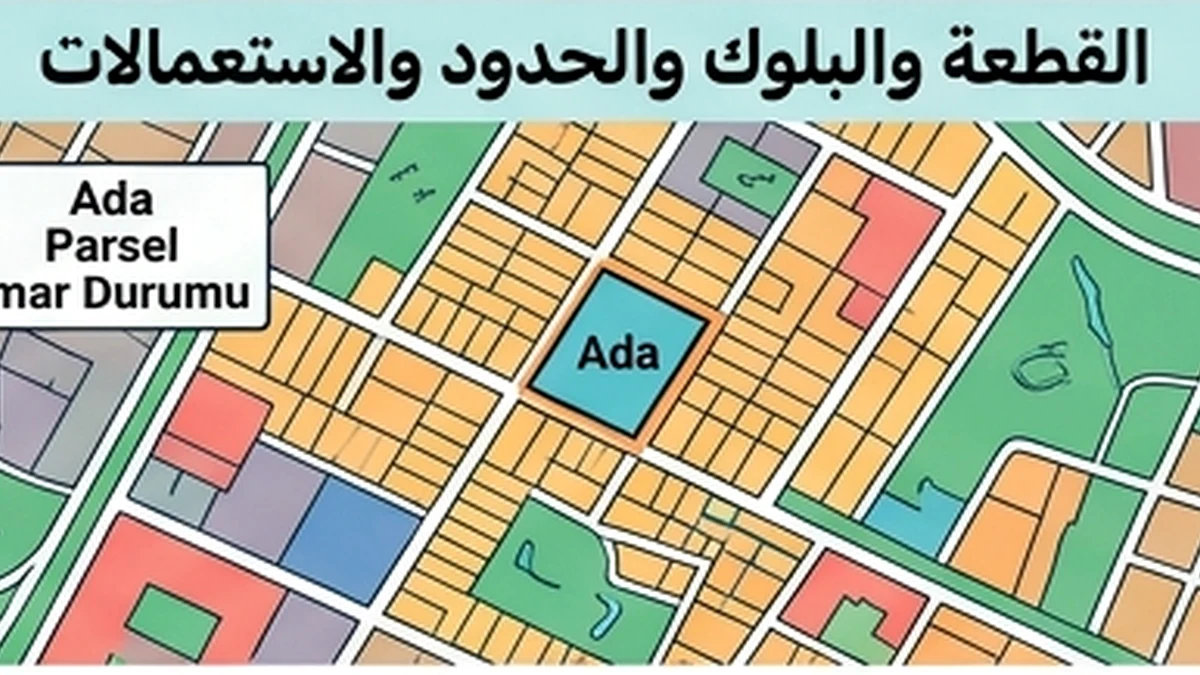
Do not rely only on fences, current occupation or an online map. Tie the boundary to the correct ada/parsel and cadastral record, and obtain an official aplikasyon or survey when there is doubt or conflict. Maintain an exception register showing issue, owner, deadline and evidence required for closure.
Which document fields or legal details on cadastral boundary matter most after the underlying record changes?
Maintain an exception register showing issue, owner, deadline and evidence required for closure. Do not rely only on fences, current occupation or an online map. Tie the boundary to the correct ada/parsel and cadastral record, and obtain an official aplikasyon or survey when there is doubt or conflict. TKGM guidance explains that aplikasyon re-establishes parcel corners and boundaries on the ground from cadastral data, while public map-query information is not by itself a final transaction document.
What can go wrong with cadastral boundary after the underlying record changes, and what evidence resolves it?
TKGM guidance explains that aplikasyon re-establishes parcel corners and boundaries on the ground from cadastral data, while public map-query information is not by itself a final transaction document. Maintain an exception register showing issue, owner, deadline and evidence required for closure.
Sources for this section were reviewed on 16 August 2026.
Boundary exception register
Record encroachment, gaps or map-to-ground differences, affected area and evidence needed for closure; do not hide a boundary problem inside “needs review” without an owner and deadline.
Boundary exceptions that require a separate resolution path
A cadastral exception register should distinguish a mapping inconvenience from a defect that can alter the asset being purchased. Examples include an occupation line that does not follow the cadastral boundary, a fence built inside or outside the registered parcel, a mismatch between old and current measurements, a technical error under correction, or a parcel affected by an ongoing cadastral update. For each exception, record the exact coordinate, edge or area in dispute, the survey or official record that revealed it, and whether the issue affects access, building placement, usable area or a neighboring owner.
Do not close a boundary exception because the parties agree informally where the line “really is.” The closure evidence should come from the competent cadastral process: an application result, approved correction, updated cadastral record or other official technical document appropriate to the problem. If the remedy requires neighbor participation, an administrative step or a court process, reflect that dependency in the transaction timetable. A buyer should know whether the title can transfer while the issue remains open and what risk is accepted if it does. The register is complete only when each discrepancy has a dated status, responsible party, expected resolution route and an explicit decision on whether it blocks signing, payment, construction or later resale.