
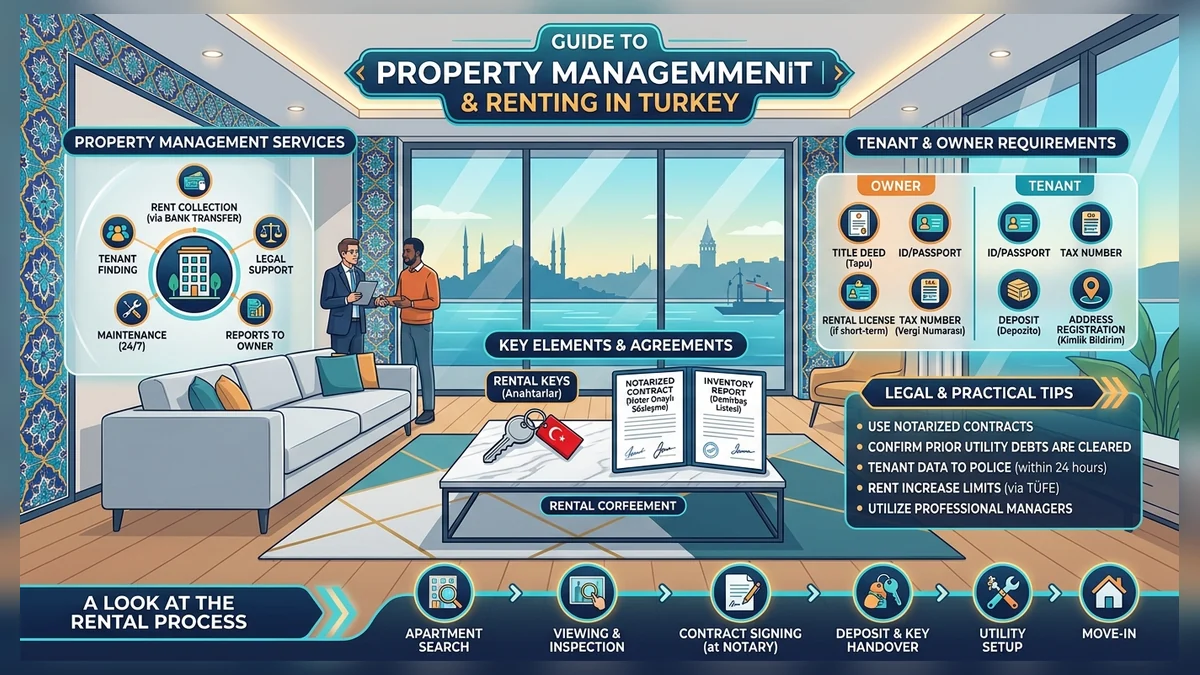
Tenant Occupancy Status Risk Review When Buying Property in Türkiye
A tenant in possession does not automatically make a property a bad purchase, and a sale does not automatically make the property vacant. A proper risk review identifies who occupies the unit, the legal basis of that occupation, and which obligations follow the property into the buyer’s ownership. Article 310 of the Turkish Code of Obligations provides that when the leased property changes hands, the new owner becomes a party to the lease. Occupancy must therefore be analysed as a legal, operational and financial condition separate from title ownership itself.
1. Identify the actual occupant and the basis of possession
Match the person physically using the unit to the lease, rent transfers or receipts, correspondence and later amendments. If the occupant is a spouse, relative, sub-user, employee or subtenant, do not reduce the file to the label “tenant.” Determine who signed, who pays, when possession began, and whether any assignment, sublease or informal permission exists. An unexplained mismatch between the named tenant and the actual occupant is a material risk because it affects notices, handover and any later dispute.
2. Reconcile the lease and every later version
Review commencement date, term, rent, increase mechanism, security deposit, ancillary expenses, handover language, notices and amendments. Two different lease versions, an unsigned appendix or an oral promise of vacancy should remain open issues. The seller’s copy is not automatically the governing copy if the tenant holds a different signed document. A buyer should preserve both versions, identify the difference and obtain legal advice where the difference affects possession or money.
3. Do not assume the sale terminates the lease
Transfer of ownership does not itself terminate an existing lease. If the buyer genuinely needs the property as a residence or workplace for the buyer, spouse, descendants, ascendants or persons the buyer is legally obliged to support, Article 351 creates a specific route for the new owner. It includes written notice within one month from acquisition and the possibility of bringing an action after six months, or using the contract-end route within its statutory time. Those rules are procedural conditions, not a guaranteed promise that a court will order eviction on a particular date.
4. Test any claimed evacuation undertaking
If the seller says the tenant signed a tahliye taahhütnamesi, examine the original rather than relying on a screenshot. Article 352 addresses a written undertaking made after delivery in which the tenant undertakes to vacate on a specified date, followed by a limited period for enforcement or litigation if the tenant does not leave. Check signature, date, identity, relationship to the handover date, alterations, and whether the document is already disputed.
5. Analyse arrears and notices chronologically
Ask for a payment timeline, not the statement “the tenant owes rent.” Article 315 addresses default in rent or ancillary expenses and, for residential and roofed workplace leases, requires a written cure period of at least thirty days before termination on that basis. Article 352 separately deals with two justified notices for non-payment under its own conditions. Distinguish a late payment, a disputed amount, a proper notice, an execution file and a pending lawsuit. They have different consequences.
6. Separate conduct problems from ordinary landlord-tenant friction
Article 316 requires the tenant to use the property carefully and respect residents and neighbours, but not every complaint creates an immediate eviction right. Review building-management records, documented complaints, photographs of damage, repair correspondence and formal notices. Separate serious damage or intolerable conduct from normal wear, personal disagreement or unsupported allegations made during a sale negotiation.
7. Verify access and viewing history
For occupied property, viewing must be coordinated lawfully and respectfully. Article 319 requires the tenant to tolerate access to the extent necessary for maintenance, sale or later reletting, while the landlord must give suitable advance notice and consider the tenant’s interests. One refusal to accept an inconvenient viewing time is not the same as a fundamental breach. The risk review should record reasonable requests, responses and whether the buyer was able to inspect the actual unit being purchased.
8. Map the deposit and other money held for the tenancy
Identify the deposit amount, where it is held, what the lease says and how responsibility will be transferred at closing. Do not casually offset the seller’s claimed deposit against the purchase price. The new owner should know what the tenant may later claim, who holds evidence of the opening condition of the property, and whether the parties agree on the transfer of any financial obligation connected with the deposit.
9. Compare the sale promise with the real possession state
A listing may say “vacant on delivery” while the inspection confirms a continuing tenant. The seller may call the lease expired while rent continues to be accepted. Treat these as closing conditions, not narrative details. The sale agreement should state the required possession status, evidence needed to prove it, the date for compliance and the consequence if the promised status is not delivered.
10. Check disputes, mediation and enforcement files
Since 1 September 2023, disputes arising from lease relationships are generally subject to mandatory mediation before litigation under Article 18/B of Law No. 6325, except the statutory route for eviction through non-judgment enforcement. Ask whether there is a mediation application, final record, lawsuit, execution proceeding, objection or settlement. Buying into an unresolved dispute can create immediate legal-management costs even when title transfer itself is technically possible.
Practical risk grading
- Low: identified occupant, one reconciled lease, clear payments, no dispute and a written plan for lease continuation or lawful handover.
- Moderate: a curable document gap, a minor documented delay or an explainable discrepancy that does not undermine possession.
- High: occupant does not match the lease, competing versions, an oral vacancy promise, questionable evacuation undertaking, undocumented money or an unclear pending case.
- Critical: vacant-delivery promise with no credible proof, active possession dispute, suspicious documents or pressure to release purchase money before the buyer understands the post-acquisition legal position.
Buyer decision before closing
The review should end with a written outcome: proceed with the tenant on the existing terms, proceed only with a price adjustment or retained amount, obtain independent legal treatment of a specific dispute, or delay closing. Do not price a possible future eviction as if it were certain. If personal occupation is essential to the purchase, the buyer should evaluate statutory timing, procedure, evidence and litigation risk before entering an irreversible commitment.
Conclusion: the most dangerous assumption is “the tenant will leave after the sale” when the file contains no legal basis or verified possession plan. A professional risk review ties the occupant to the lease, payments, notices, possession and disputes, then applies the legal effect of ownership transfer before the buyer decides price, payment and handover.