
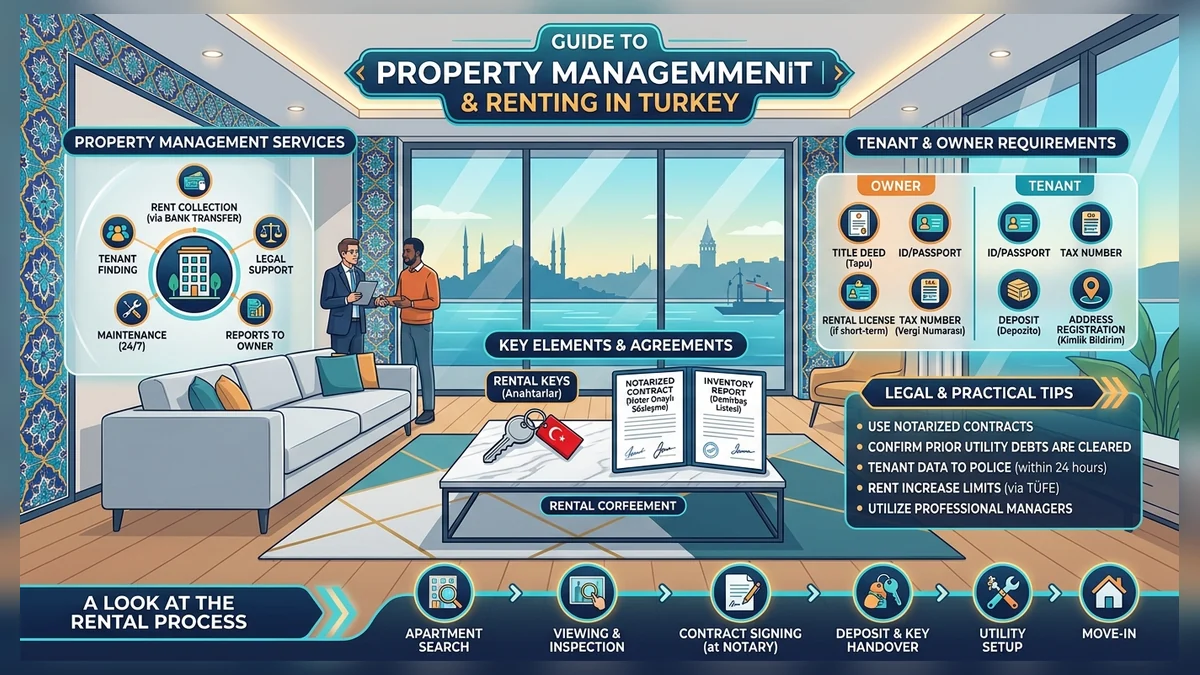
Tenant Occupancy Status Decision Framework for Buyers
This guide is not another list of tenant risks. Its purpose is to convert an occupied-property file into an executable purchase decision. The first question is not “Is there a tenant?” but “What possession outcome does the buyer require?” An investor seeking immediate income may prefer a stable tenancy, while an owner-occupier or a buyer requiring vacant delivery faces a different legal and timing profile. The decision therefore begins with the buyer’s objective and tests that objective against verified occupancy evidence.
Stage 1: define the required closing outcome
- Lease continues: the buyer accepts the tenant and wants an orderly transfer of the landlord position.
- Seller delivers vacant possession before closing: the buyer does not rely on a future eviction after becoming owner.
- Buyer purchases for later personal use: the buyer understands that ownership transfer does not automatically terminate the lease.
- Closing is conditional on resolving a dispute: a defined issue such as occupant identity, arrears or an evacuation undertaking must be resolved first.
Stage 2: establish the legal and factual possession file
Collect the lease, payment history, correspondence, deposit record, initial handover evidence where available, and any mediation, court or enforcement material. Article 310 of the Turkish Code of Obligations means that the new owner becomes a party to the lease when ownership changes. A buyer cannot responsibly postpone understanding the lease until after title transfer because that is the relationship the buyer may immediately inherit.
Stage 3: test the investment-with-tenant scenario
If the buyer intends to keep the tenant, examine payment regularity, duration of occupation, current rent compared with the buyer’s model, deposit, ancillary costs, maintenance history and disputes. Calculate return using collectible rent rather than advertised rent. A good tenant can reduce vacancy risk and transition cost, but a poorly documented lease or unresolved payment history can increase administration and legal cost. The decision should reflect the quality of the tenancy, not simply its existence.
Stage 4: test the vacant-delivery scenario
If vacant possession is essential, turn that requirement into a closing condition. Define what counts as proof: physical vacancy, keys, signed handover record, final inspection and treatment of any remaining personal property or accounts. A seller’s statement that “the tenant promised to leave” is not a substitute. If the seller relies on an unverified document or informal promise, the decision should move from approval to conditional approval or stop.
Stage 5: if the buyer plans personal occupation
Do not treat personal need as an automatic shortcut. Article 351 regulates a route for a new owner who genuinely needs the property as a residence or workplace for the owner, spouse, descendants, ascendants or persons the owner is legally obliged to support. It includes written notice within one month of acquisition and a route to bring an action after six months, plus an alternative linked to the end of the contract term. The buyer should budget time, legal cost and litigation uncertainty rather than assuming a guaranteed move-in date.
Stage 6: evaluate an evacuation undertaking as a separate decision input
A claimed tahliye taahhütnamesi may materially affect the file, but it is not self-proving. Article 352 contains specific legal and timing requirements. If the original is unavailable, the date is contested, the signature is uncertain or the buyer cannot establish that the undertaking was given after delivery, do not price it as a guaranteed vacancy mechanism. A written legal opinion may be an appropriate pre-payment condition.
Stage 7: convert arrears into a realistic option
If the tenancy problem is non-payment, examine the timeline. Article 315 gives a written cure period of at least thirty days in residential and roofed workplace leases for due rent or ancillary expenses before termination on that basis. Article 352 deals separately with two justified notices under its conditions. A buyer should distinguish a single late payment from a developed enforcement or litigation position and decide whether the purchase includes stable income, a disputed receivable or a relationship requiring immediate action.
Stage 8: place mediation and litigation on the closing timeline
Where a rental dispute will require a lawsuit, Article 18/B of Law No. 6325 generally requires mandatory mediation before litigation for lease disputes from 1 September 2023, except the statutory eviction route through non-judgment enforcement. Request existing applications, final mediation records, pleadings, enforcement references and settlements. A pending process can change the expected time and cost even when it does not prevent title transfer.
Decision matrix
- GO: occupant, governing lease, payments and required possession outcome are consistent with the buyer’s objective.
- GO WITH CONDITIONS: a defined document gap can be closed before money is released.
- REPRICE: the buyer accepts the tenancy but arrears, below-model rent or dispute cost changes asset value.
- LEGAL HOLD: a disputed undertaking, occupant identity problem or active case needs independent advice before commitment.
- STOP: the transaction depends on an unproven assumption, such as guaranteed vacancy, or the counterparty refuses material evidence.
Record the reasoning, not only the label
Create a short decision memorandum stating the buyer’s objective, actual occupant, governing contract, payment status, required possession at closing, legal basis for any expected termination, and every condition that must close before payment. Record treatment of the deposit, rent accruing around transfer, ancillary charges and known dispute costs. This prevents a later disagreement about what the buyer actually agreed to acquire.
Conclusion: a sound decision framework prevents an occupied property from being purchased on the strength of an undocumented expectation. When the buyer’s objective, tenant status, evidence and statutory timing are assessed together, “proceed,” “reprice,” “hold” or “stop” becomes a reasoned transaction decision rather than a surprise after title transfer.