
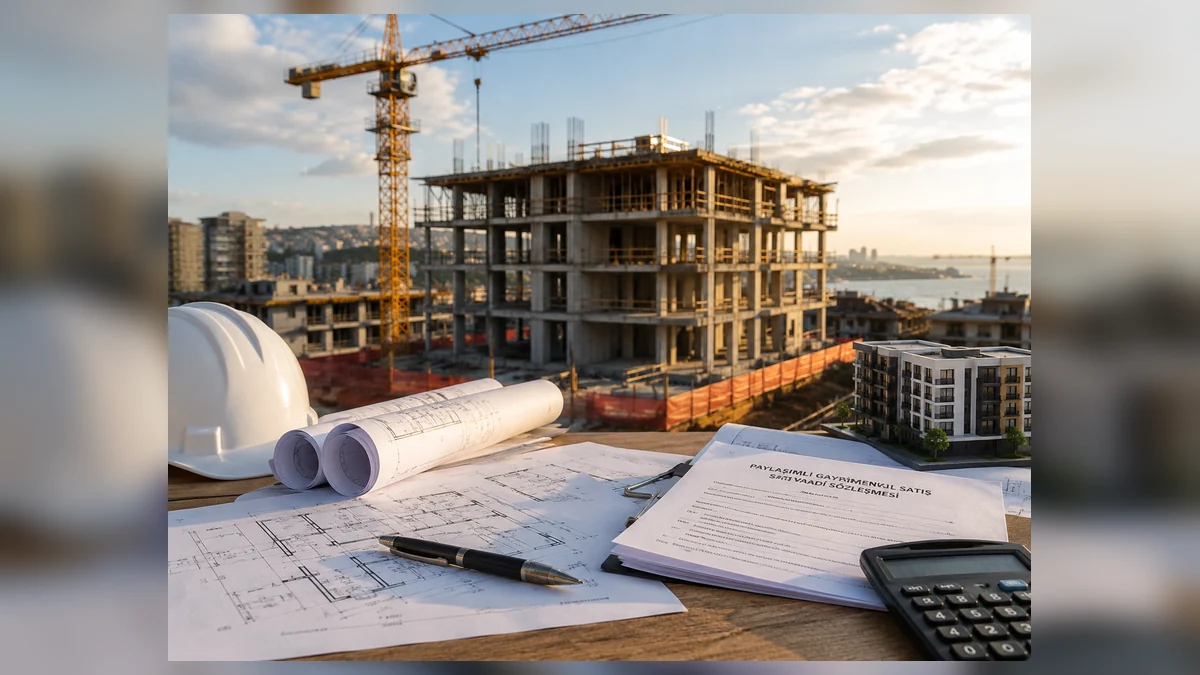
Source Freshness Review — Structural inspection
A practical Source Freshness Review workflow for Structural inspection, focused on evidence, timing, change control, exception closure and an auditable decision.
Verified facts relevant to this topic
Purpose of this guide
Source Freshness Review — Structural inspection applies a controlled verification workflow to Structural inspection. The specific objective is to confirm that the source supporting the decision is still current for the signing, payment or closing moment, with an explicit practical freshness threshold for changeable evidence. A fact is operationally reliable only when it is tied to the correct property, party, date and version and another reviewer can reconstruct the decision from retained evidence.
When to use this review
- Before signing, payment, transfer or another irreversible commitment.
- When a previously relied-on document, amount, party or date changes.
- When an exception remains open near a deadline.
- When responsibility moves between people or teams.
- When database information conflicts with a primary document or official source.
- After closing when an obligation or risk continues to change.
Evidence file
- Retain the exact source or document used for the decision.
- Record retrieval or receipt date and reviewer identity.
- Link each version to the correct property, unit and counterparty.
- Preserve prior versions when a document changes.
- Record differences between the database and primary evidence.
- Do not fill missing facts with undocumented estimates.
Consistency tests
- Does every item refer to the same property and unit?
- Are party identities, authority and legal capacity consistent?
- Is the evidence current enough for this decision moment?
- Are amounts, rights, restrictions and dates consistent across records?
- Can each approval and exception be linked to the version it concerns?
- Can another reviewer reproduce the conclusion from the same file?
Official and primary sources
- AFAD — Türkiye Building Earthquake Code — 15-08-2026
- İBB — Rapid Building Screening — 15-08-2026
- Ministry of Environment — Zoning FAQ — 15-08-2026
Structural-inspection review
Separate visual inspection, engineering assessment and an official Riskli Yapı determination. Each has a different evidentiary weight and purpose.
Use qualified technical evidence for structural conclusions rather than inferring safety from building age or cosmetic condition.
Scope and freshness of structural-inspection evidence
A source-freshness review for structural inspection begins by identifying what kind of inspection was performed, who performed it and under which technical basis. A short visual walk-through should not be presented as a structural analysis, and a private buyer report should not be confused with a formal Riskli Yapı determination under Law 6306. When a report supports a material structural conclusion, it should identify the exact building or block, address, scope, inspection date, tests or calculations performed, the responsible engineer and any areas or elements that were outside the scope.
How to test freshness
Connect the inspection date to later events capable of changing the building: earthquake, fire, significant settlement or water damage, removal or alteration of walls or structural members, added floors or loads, strengthening and major repairs. A report that was adequate before such an event can become historical even if it does not have a printed statutory expiry date. Keep the original report, annexes, photographs and follow-up documents, and record whether recommended repairs were actually completed.
Official determination versus private due diligence
If the objective is a formal determination under the 6306 framework, use the Ministry-licensed institutions and the technical process for Riskli Yapı. Ministry guidance explains that one owner or legal representative can initiate the process and that determinations are made under the prescribed technical rules by licensed organisations. A buyer may separately commission an independent engineer for transaction due diligence, but that private opinion does not automatically acquire the administrative effect of a 6306 determination.
Do not substitute a hazard map for inspection
AFAD hazard mapping describes seismic hazard at a location; it does not assess a specific building. A permit or construction year likewise does not prove the present condition of structural members. Cracking, undocumented alterations or discrepancies between drawings and actual construction should therefore become an explicit inspection scope or closing condition rather than being hidden behind a broad statement that the building looks good.
FAQ
Does every structural report have a fixed validity period?
No single period applies to every private report. Date, scope and later material events determine whether reliance remains reasonable.
Is a private engineer report the same as Riskli Yapı?
No. Formal determination has a specific licensed and administrative process.
When is an update necessary?
After a material event, a change in decision scope, or new evidence that conflicts with the earlier report.
Evidence and decision plan for Source Freshness Review — Structural inspection
When reviewing “Source Freshness Review — Structural inspection”, the file should confirm that the relied-on rule, registry extract, certificate or other evidence is current enough for the decision date. This makes the article useful at the point of commitment because unresolved facts are separated from verified facts instead of being buried in narrative.
Evidence to assemble
- For “Source Freshness Review — Structural inspection”, match the property and party identifiers in the evidence to the asset and people actually involved; a correct document for the wrong unit or person does not close the check.
- For “Source Freshness Review — Structural inspection”, record issuer, source, issue or retrieval date and version where available, then distinguish an original/current record from a scan, translation, draft, expired copy or superseded version.
- For “Source Freshness Review — Structural inspection”, compare documentary status with the physical, payment or operational reality relevant to the topic and write down every unexplained difference before commitment.
- For “Source Freshness Review — Structural inspection”, convert each unresolved difference into a named condition: evidence required, person responsible, deadline and the consequence if the condition is not satisfied.
Official reference to recheck
The source register for “Source Freshness Review — Structural inspection” includes AFAD — Türkiye Building Earthquake Code (https://www.afad.gov.tr/turkiye-bina-deprem-yonetmeligi). Use that source for the matters within its authority and recheck it when timing or rules are material; it does not replace a registry, engineering, tax, banking or contractual record that the specific decision separately requires.
Decision boundary
A defensible conclusion on “Source Freshness Review — Structural inspection” records both what was verified and the limits of that verification. If a missing fact could change ownership, legality, safety, cost or payment security, it should block the related commitment until resolved.