
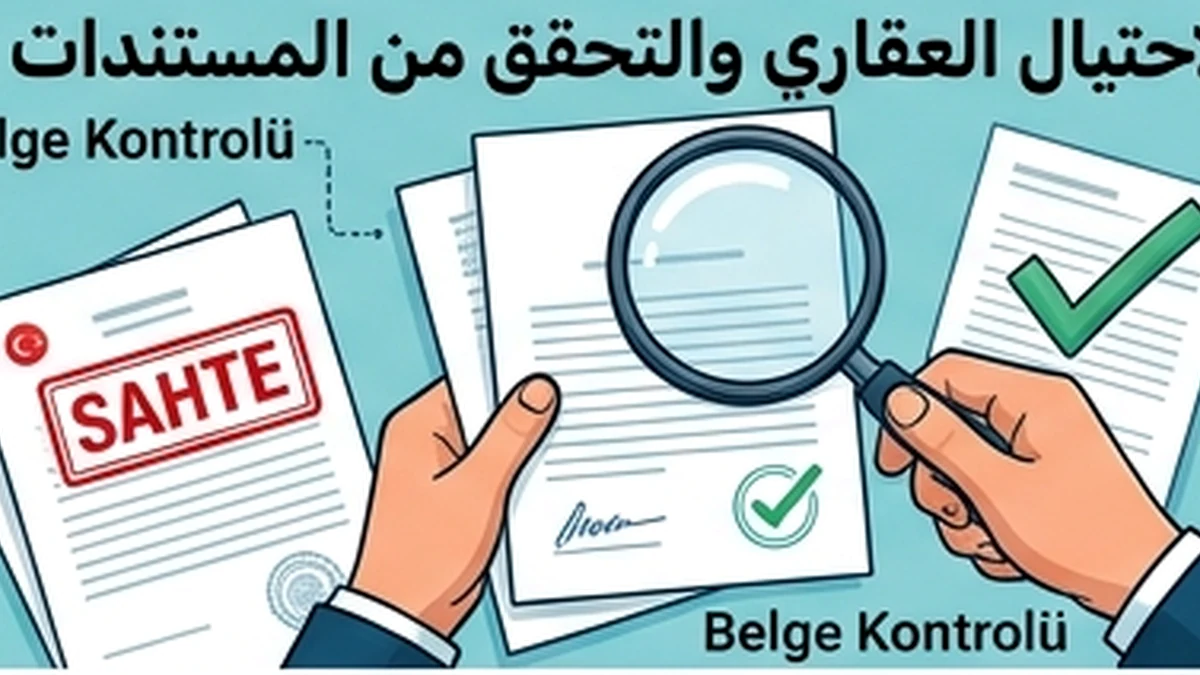
Seller Impersonation Fraud Red Flags
Core point
Seller impersonation often involves someone claiming to represent the owner while pressing for rapid payment or resisting independent verification.
How to verify it
Match the seller or agent identity to the title record and valid authority, and verify contact details through an independent channel rather than only the number supplied by the negotiator.
Decision impact
Any sudden change in bank account, beneficiary name or payment-instruction email after agreement should stop payment until reverified.
Seller-identity impersonation red flags
Protect the transaction from seller impersonation by matching the original identity photograph to the person present, checking the civil-registration data and any QR/security features, refusing cash or third-party payment requests, and directing purchase funds only to a bank account in the name of the title-registered owner. Where a power of attorney is used, verify it with the issuing notary and confirm that it remains valid and that the principal is alive.
Evidence to retain
Keep the original identity/passport evidence, the title and civil-registration confirmation for the owner, and the notary’s verification of any power of attorney.
Decision use
A request to send part of the price to another person’s account is treated by the supplied material as a critical fraud signal. Suspected powers of attorney should be checked by their official reference in the notary system or directly with the issuing notary before any payment.
Evidence and decision plan for Seller Impersonation Fraud Red Flags
The due-diligence purpose of “Seller Impersonation Fraud Red Flags” is to build a clear, evidence-based answer to the topic itself. A reviewer should be able to trace every material conclusion to a current source and identify any assumption that has not yet become evidence.
Evidence to assemble
- For “Seller Impersonation Fraud Red Flags”, match the property and party identifiers in the evidence to the asset and people actually involved; a correct document for the wrong unit or person does not close the check.
- For “Seller Impersonation Fraud Red Flags”, record issuer, source, issue or retrieval date and version where available, then distinguish an original/current record from a scan, translation, draft, expired copy or superseded version.
- For “Seller Impersonation Fraud Red Flags”, compare documentary status with the physical, payment or operational reality relevant to the topic and write down every unexplained difference before commitment.
- For “Seller Impersonation Fraud Red Flags”, convert each unresolved difference into a named condition: evidence required, person responsible, deadline and the consequence if the condition is not satisfied.
Official reference to recheck
The source register for “Seller Impersonation Fraud Red Flags” includes TKGM — General Directorate of Land Registry and Cadastre (https://www.tkgm.gov.tr/anasayfa). Use that source for the matters within its authority and recheck it when timing or rules are material; it does not replace a registry, engineering, tax, banking or contractual record that the specific decision separately requires.
Decision boundary
For “Seller Impersonation Fraud Red Flags”, a residual issue should remain open whenever its legal, technical, tax, payment or cost consequence cannot yet be measured. The file is ready only when that issue is closed or consciously accepted by the appropriate decision-maker.
Second-pass review for Seller Impersonation Fraud Red Flags
A second-pass review of “Seller Impersonation Fraud Red Flags” should test whether the first conclusion would survive a change of reviewer. Start from the underlying source rather than the previous summary, repeat the identity match, and check whether a later document, payment, amendment or physical change has altered the answer. The source register describes its relevance as: Official primary reference for Seller Impersonation Fraud Red Flags; checked 2026-08-15. Facts should be rechecked when the source is updated.
For “Seller Impersonation Fraud Red Flags”, keep a short discrepancy log that states the fact in question, the two conflicting pieces of evidence, the competent source chosen to resolve the conflict, and the transaction step held back while the discrepancy remains open.
At handover or file closure, “Seller Impersonation Fraud Red Flags” should leave a compact evidence package: the controlling document or source extract, supporting correspondence or technical evidence, the dated conclusion, and any condition the buyer accepted. This improves resale and future auditability without pretending that old evidence stays current forever.
Closure package for Seller Impersonation Fraud Red Flags
Before treating “Seller Impersonation Fraud Red Flags” as complete, verify that the evidence package answers four separate questions: what exactly was checked, which source had authority for that fact, when the source was checked, and what decision followed. Keeping those four elements together prevents a later reader from mistaking a recommendation for proof.
If “Seller Impersonation Fraud Red Flags” depends on more than one discipline, keep the boundaries explicit. A land-registry result should not be used as an engineering opinion, an insurance policy should not be used as a structural certificate, a tax value should not automatically become market value, and a marketing representation should not replace an official or contractual record.