
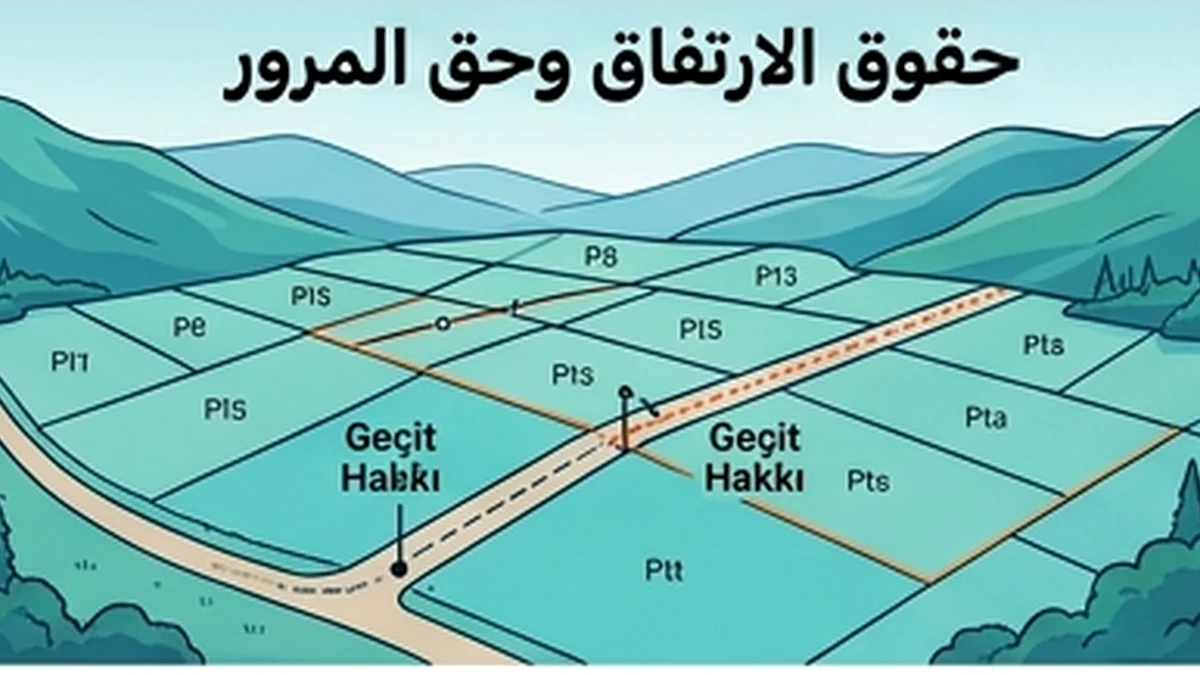
Source Freshness Review — Right of Way
A right of way is unusually sensitive to both legal and physical change. The land registry may show a passage easement, while the route on the ground may have shifted, been blocked, become unnecessary after a new public road connection, or been affected by subdivision. Conversely, a neighbour may have allowed access for years without a registered right that gives the buyer the legal certainty expected. A source-freshness review therefore has to refresh both the registry evidence and the route evidence.
Separate registered right from practical access
Start with the current official registry and identify the benefited and burdened properties. Confirm the passage right, registration reference and any linked plan. Then inspect or map the physical route. A driveway used by permission, habit or neighbourly tolerance is not automatically the same as a registered easement. For investment or development decisions, the legal basis and the actual usability must both be current.
Check whether the cadastral situation changed
Subdivision, merger, road dedication or cadastral correction can alter the relevance of an earlier passage right. The Land Registry Regulation contains specific rules for easements when benefited or burdened properties are divided and also addresses cases where a merger results in road frontage and a passage right may be deleted under the applicable conditions. Accordingly, a pre-subdivision extract can be materially stale even if the words “right of way” remain in the historical file.
Review the legal basis of the passage
Turkish Civil Code provisions distinguish between registered easements and certain passage rights arising directly by law, while compulsory passage can arise through agreement or court decision and registration. The file should therefore identify whether the buyer is relying on a registered appurtenant easement, a court-created compulsory passage, a statutory temporary passage or merely factual access. Different legal bases require different evidence.
Refresh the plan, not only the text
If the passage has a defined route or width, obtain the most current cadastral or technical plan available. Confirm entrances, gates, slope, vehicle suitability and any construction or utility interference. A legal right can remain valid while the route becomes practically difficult, and a physically convenient route can be outside the registered corridor. When the property’s value depends on vehicle access, these differences are material.
Update before transaction gates
Refresh the evidence before a non-refundable deposit, after any subdivision or road change, before financing that assumes legal access, and close to title transfer. Record the retrieval date, source, parcel identifiers and the reviewer. If the right is claimed to have become unnecessary or to be scheduled for deletion, obtain current registry confirmation rather than relying on a planning drawing or seller explanation.
Freshness conclusion
The evidence is sufficiently fresh when it proves the current legal right and the current physical route for the exact parcels involved. The purpose is not to impose a fixed expiry period on a passage document; it is to ensure that the transaction decision uses information produced after the last event capable of changing access.
Official sources
- Turkish Civil Code No. 4721, passage and neighbouring-property provisions.
- TKGM — Tapu Sicili Tüzüğü.
- TKGM — Geçit Hakkı transaction guidance.