
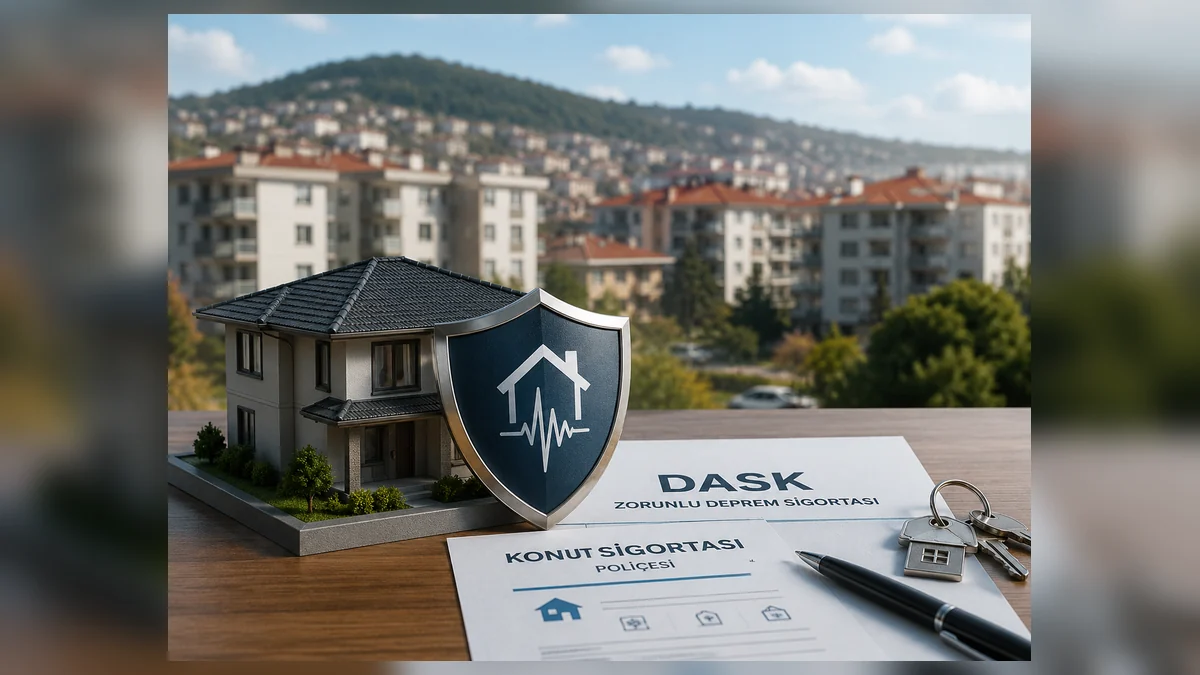
Source Freshness Review — DASK earthquake insurance
A practical Source Freshness Review workflow for DASK earthquake insurance, focused on evidence, timing, change control, exception closure and an auditable decision.
Verified facts relevant to this topic
Purpose of this guide
Source Freshness Review — DASK earthquake insurance applies a controlled verification workflow to DASK earthquake insurance. The specific objective is to confirm that the source supporting the decision is still current for the signing, payment or closing moment, with an explicit practical freshness threshold for changeable evidence. A fact is operationally reliable only when it is tied to the correct property, party, date and version and another reviewer can reconstruct the decision from retained evidence.
When to use this review
- Before signing, payment, transfer or another irreversible commitment.
- When a previously relied-on document, amount, party or date changes.
- When an exception remains open near a deadline.
- When responsibility moves between people or teams.
- When database information conflicts with a primary document or official source.
- After closing when an obligation or risk continues to change.
Evidence file
- Retain the exact source or document used for the decision.
- Record retrieval or receipt date and reviewer identity.
- Link each version to the correct property, unit and counterparty.
- Preserve prior versions when a document changes.
- Record differences between the database and primary evidence.
- Do not fill missing facts with undocumented estimates.
Consistency tests
- Does every item refer to the same property and unit?
- Are party identities, authority and legal capacity consistent?
- Is the evidence current enough for this decision moment?
- Are amounts, rights, restrictions and dates consistent across records?
- Can each approval and exception be linked to the version it concerns?
- Can another reviewer reproduce the conclusion from the same file?
Official and primary sources
- DASK — Tariff and Premiums — 15-08-2026
- DASK — Coverage and Scope — 15-08-2026
- DASK — Policy Inquiry — 15-08-2026
DASK verification
Verify policy number, insured address, address code, building data, unit data and validity directly through DASK where possible.
DASK is compulsory earthquake cover within its scope; it is not a substitute for all-risk building or contents insurance.
Testing whether the DASK policy is fresh enough to rely on
This record is not satisfied by finding a DASK policy number in an old transaction folder. The working question is whether the compulsory earthquake policy is still in force at the decision date and whether it identifies the correct building and unit. DASK states that the policy term is one year and that cover ends at the stated expiry date if the policy is not renewed. Record the inception and expiry dates, policy number, address or address code, declared floor area and construction information, and then reconcile those items with the title and the property actually being acquired.
Events that make an old copy unsafe
A change of owner, address, floor area, use or building information is a reason to verify the current policy rather than rely on a PDF copied from an earlier stage. Check the policy through DASK or the issuing insurer and retain the date of that verification. DASK also distinguishes buildings that fall within compulsory cover from buildings that do not. Its core cover concerns direct physical damage to the insured building caused by earthquake and specified earthquake consequences, subject to policy limits; it does not turn into contents insurance, loss-of-rent cover or a structural-safety certificate.
Why freshness matters operationally
DASK regulations provide for the existence and validity of compulsory cover to be checked for relevant land-registry transactions, water and electricity subscriptions and housing loans. TKGM also lists a compulsory earthquake policy among purchase documents for buildings. A policy that expired yesterday therefore cannot be treated as current merely because every other document in the file still looks the same. The dated verification should sit beside the title, address record and closing checklist.
FAQ
Is a DASK policy valid for several years?
No. The term is one year and renewal is required each year.
Does a current DASK policy prove that the building is structurally safe?
No. Insurance status is not a structural inspection and is not a formal Riskli Yapı determination.
Does DASK insure the contents of the apartment?
No. The compulsory cover concerns specified building damage; movable property and many indirect losses require different insurance.
Evidence and decision plan for Source Freshness Review — DASK earthquake insurance
When reviewing “Source Freshness Review — DASK earthquake insurance”, the file should confirm that the relied-on rule, registry extract, certificate or other evidence is current enough for the decision date. This makes the article useful at the point of commitment because unresolved facts are separated from verified facts instead of being buried in narrative.
Evidence to assemble
- For “Source Freshness Review — DASK earthquake insurance”, match the property and party identifiers in the evidence to the asset and people actually involved; a correct document for the wrong unit or person does not close the check.
- For “Source Freshness Review — DASK earthquake insurance”, record issuer, source, issue or retrieval date and version where available, then distinguish an original/current record from a scan, translation, draft, expired copy or superseded version.
- For “Source Freshness Review — DASK earthquake insurance”, compare documentary status with the physical, payment or operational reality relevant to the topic and write down every unexplained difference before commitment.
- For “Source Freshness Review — DASK earthquake insurance”, convert each unresolved difference into a named condition: evidence required, person responsible, deadline and the consequence if the condition is not satisfied.
Official reference to recheck
The source register for “Source Freshness Review — DASK earthquake insurance” includes DASK — Tariff and Premiums (https://dask.gov.tr/tr/tarife-ve-primler). Use that source for the matters within its authority and recheck it when timing or rules are material; it does not replace a registry, engineering, tax, banking or contractual record that the specific decision separately requires.
Decision boundary
A defensible conclusion on “Source Freshness Review — DASK earthquake insurance” records both what was verified and the limits of that verification. If a missing fact could change ownership, legality, safety, cost or payment security, it should block the related commitment until resolved.