
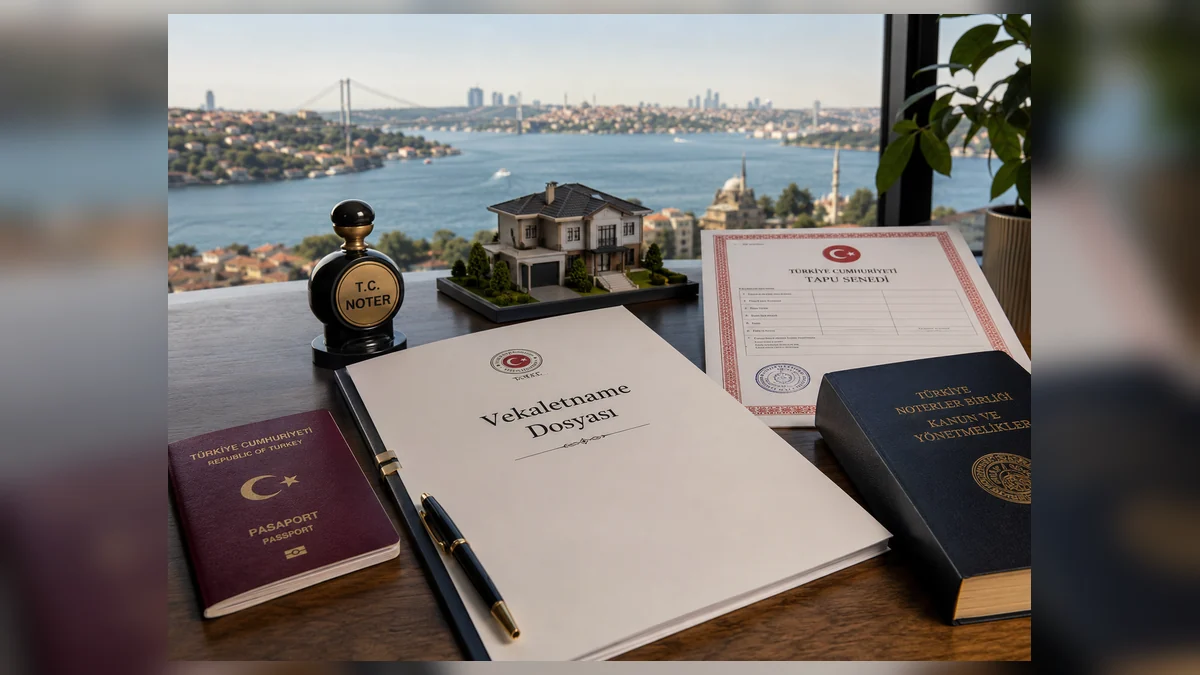
Closing appointment Verification Guide
This article has one purpose: resolve the question raised by “Closing appointment Verification Guide” for the topic Closing appointment. Start with Web Tapu/application and appointment, and tie both to the exact property, party and transaction date.
Fact to prove
This article has one purpose: resolve the question raised by “Closing appointment Verification Guide” for the topic Closing appointment. Start with Web Tapu/application and appointment, and tie both to the exact property, party and transaction date.
Primary evidence
- Web Tapu/application
- appointment
- identity/authority
- fees
- translations/expiring docs
Cross-check
For the verification guide focus, test the strongest claim first. If identity/authority conflicts with fees, preserve both pieces of evidence and identify the reason for the conflict before treating the file as complete.
Mismatch resolution
Final verification
Transaction example
Example: the file contains Web Tapu/application, but translations/expiring docs cannot be verified. Do not mark “Closing appointment Verification Guide” complete. Keep the issue open, obtain a current official record and document whether the mismatch changes payment, price, use, finance or closing.
Checklist before closure
- Web Tapu/application
- appointment
- identity/authority
- fees
- translations/expiring docs
Official sources
Individual dossier for Closing appointment Verification Guide
Use the page to isolate one transaction risk and close it with evidence rather than intuition.
Second check
Scope of fact
The review must connect closing with appointment using evidence from the same asset and the same decision date. If either belongs to another unit, year, party or version, the apparent match is unreliable.
Mismatch resolution
Build a short contradiction note: what the seller says about closing; what the official record shows; what the physical or payment evidence shows; and what must happen if they disagree.
Primary record
Test appointment independently before using closing as supporting evidence. This prevents a secondary document from validating an incorrect primary assumption.
Freshness
For a hypothetical closing, assume appointment is confirmed but closing remains unresolved. The transaction file must state whether that uncertainty blocks title transfer, payment, financing, possession, lawful use or only affects pricing.
Conclusion
Source-grounded analysis
Separate the appointment notice from proof that closing conditions are satisfied: fees, documents, current registry restrictions and payment details still require independent verification.
Evidence and decision plan for Closing appointment Verification Guide
“Closing appointment Verification Guide” should be handled as a decision file, not as a collection of documents. Its working objective is to verify the claimed fact from the strongest available primary evidence before relying on it. Evidence is useful only when it can be tied to the same property, party and decision date.
Evidence to assemble
- For “Closing appointment Verification Guide”, match the property and party identifiers in the evidence to the asset and people actually involved; a correct document for the wrong unit or person does not close the check.
- For “Closing appointment Verification Guide”, record issuer, source, issue or retrieval date and version where available, then distinguish an original/current record from a scan, translation, draft, expired copy or superseded version.
- For “Closing appointment Verification Guide”, compare documentary status with the physical, payment or operational reality relevant to the topic and write down every unexplained difference before commitment.
- For “Closing appointment Verification Guide”, convert each unresolved difference into a named condition: evidence required, person responsible, deadline and the consequence if the condition is not satisfied.
Official reference to recheck
The source register for “Closing appointment Verification Guide” includes TKGM — Land Registry Procedures Guide (https://www.tkgm.gov.tr/sites/default/files/2020-12/procedures_guide_2.pdf). Use that source for the matters within its authority and recheck it when timing or rules are material; it does not replace a registry, engineering, tax, banking or contractual record that the specific decision separately requires.
Decision boundary
The decision for “Closing appointment Verification Guide” is not “document present / document absent.” It is whether the evidence is current, identifies the right asset and parties, resolves material conflicts and supports the next irreversible step.