
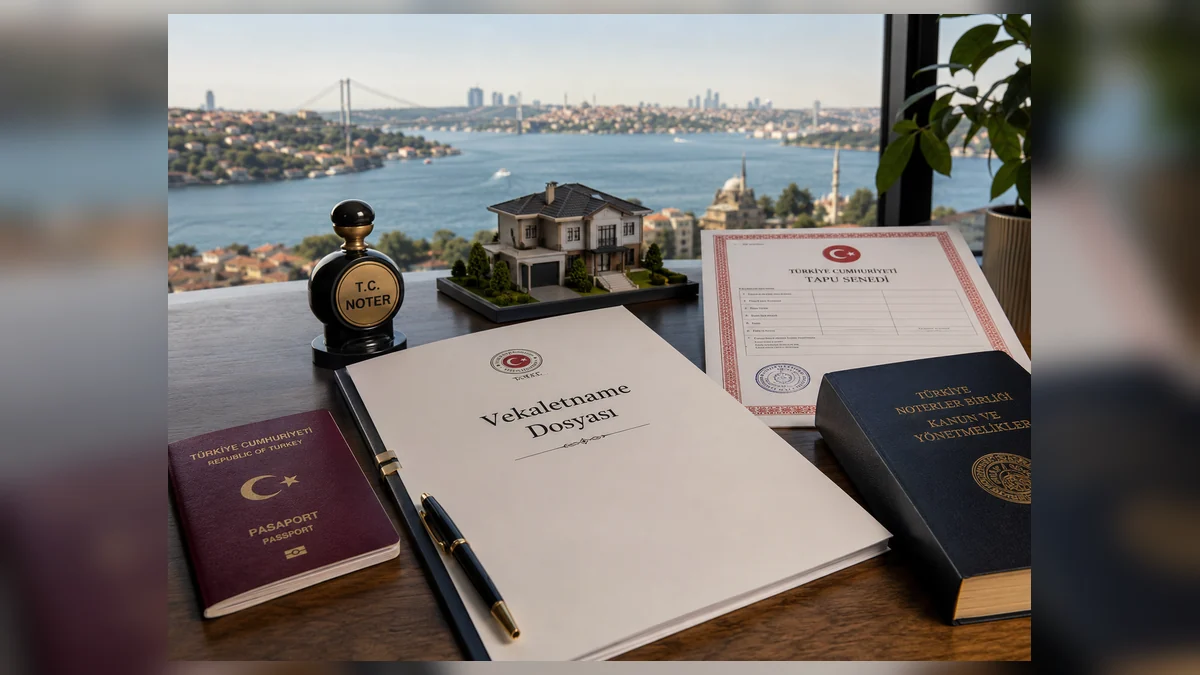
Closing appointment Risk Review
This article has one purpose: resolve the question raised by “Closing appointment Risk Review” for the topic Closing appointment. Start with Web Tapu/application and appointment, and tie both to the exact property, party and transaction date.
Risk statement
This article has one purpose: resolve the question raised by “Closing appointment Risk Review” for the topic Closing appointment. Start with Web Tapu/application and appointment, and tie both to the exact property, party and transaction date.
Risk drivers
- Web Tapu/application
- appointment
- identity/authority
- fees
- translations/expiring docs
Risk reducers
For the risk review focus, test the strongest claim first. If identity/authority conflicts with fees, preserve both pieces of evidence and identify the reason for the conflict before treating the file as complete.
Scenario test
Risk decision
Transaction example
Example: the file contains Web Tapu/application, but translations/expiring docs cannot be verified. Do not mark “Closing appointment Risk Review” complete. Keep the issue open, obtain a current official record and document whether the mismatch changes payment, price, use, finance or closing.
Checklist before closure
- Web Tapu/application
- appointment
- identity/authority
- fees
- translations/expiring docs
Official sources
Individual dossier for Closing appointment Risk Review
Treat this record as a standalone dossier, not as a variation of another Wiki page.
Severity
Residual risk
Mitigation
Decision
Probability
Test appointment independently before using closing as supporting evidence. This prevents a secondary document from validating an incorrect primary assumption.
Risk statement
Source-grounded analysis
Evidence and decision plan for Closing appointment Risk Review
For “Closing appointment Risk Review”, the practical objective is to identify the material ways the topic can fail, then connect each risk to evidence and a transaction consequence. The review should distinguish what is proved now, what still depends on a missing or stale document, and what difference that gap makes to price, signing, payment, handover or later resale.
Evidence to assemble
- For “Closing appointment Risk Review”, match the property and party identifiers in the evidence to the asset and people actually involved; a correct document for the wrong unit or person does not close the check.
- For “Closing appointment Risk Review”, record issuer, source, issue or retrieval date and version where available, then distinguish an original/current record from a scan, translation, draft, expired copy or superseded version.
- For “Closing appointment Risk Review”, compare documentary status with the physical, payment or operational reality relevant to the topic and write down every unexplained difference before commitment.
- For “Closing appointment Risk Review”, convert each unresolved difference into a named condition: evidence required, person responsible, deadline and the consequence if the condition is not satisfied.
Official reference to recheck
The source register for “Closing appointment Risk Review” includes TKGM — Tapu ve Kadastro Genel Müdürlüğü (https://www.tkgm.gov.tr/anasayfa). Use that source for the matters within its authority and recheck it when timing or rules are material; it does not replace a registry, engineering, tax, banking or contractual record that the specific decision separately requires.
Decision boundary
Close “Closing appointment Risk Review” only when the conclusion can be reproduced from evidence by another reviewer. A reasonable outcome may be proceed, proceed subject to a written condition, reprice, obtain specialist advice, or stop; uncertainty should remain visible instead of being converted into a positive statement.
Practical closure test for Closing appointment Risk Review
Before relying on “Closing appointment Risk Review”, make the file answer the topic-specific objective in operational terms: identify the material ways the topic can fail, then connect each risk to evidence and a transaction consequence. The evidence should identify the exact asset or transaction, show when the fact was checked, and distinguish a current verified fact from an assumption carried forward from an earlier stage.
For “Closing appointment Risk Review”, use TKGM — Tapu ve Kadastro Genel Müdürlüğü (https://www.tkgm.gov.tr/anasayfa) as one of the reference points already attached to the record. Confirm the scope of that source and keep any complementary registry, contract, engineering, tax, insurance or payment evidence separate so that one document is not asked to prove a fact outside its function.
A useful closure note for “Closing appointment Risk Review” should state what changed during the review, what remained unchanged, which discrepancy was resolved, and which residual issue—if any—was consciously accepted. If later resale, financing or dispute review would require the same evidence, preserve the controlling version and its retrieval date rather than only a narrative conclusion.