
Cost Consequence Trace — Cadastral boundary
A practical Cost Consequence Trace workflow for Cadastral boundary, focused on evidence, timing, record reconciliation, exception closure and an auditable decision.
Verified facts relevant to this topic
Purpose of this guide
Cost Consequence Trace — Cadastral boundary applies an operational verification workflow to Cadastral boundary. The specific objective is to trace each verification result to its potential effect on acquisition cost, recurring expense, liquidity, financing and resale without inventing unsupported numbers. A fact should not be treated as operationally reliable merely because it exists; it must be tied to the correct property, party and date and supported by evidence that another reviewer can audit later.
When to use this review
- Before signing a contract or amendment that changes rights or obligations.
- Before sending money or changing a beneficiary or account.
- When a new version of a previously relied-on document arrives.
- When there is a restriction, gap or obligation that can change cash flow or saleability.
- When the database and a primary document or official source disagree.
- Before final closing when the information can change over time.
Execution sequence
- Define the critical point and pass criterion.
- Retrieve the current source or request the primary document.
- Cross-check names, identifiers, dates, amounts and rights.
- Log every conflict or gap explicitly.
- Assign an owner and closure date to each open point.
- Turn unresolved material points into written pre-commitment conditions.
- Recheck changeable information at the actual decision moment.
- Archive the pass, conditional-pass or stop decision with its reason.
Financial and operational impact
Verified facts from official sources
Cadastral boundary verification
Translate each issue into a cost consequence: delay, tax, fee, financing, liquidity or correction cost.
Practical FAQ built from the record’s verified facts
What official fact about cadastral boundary should a buyer verify when seller, bank and other parties disagree?
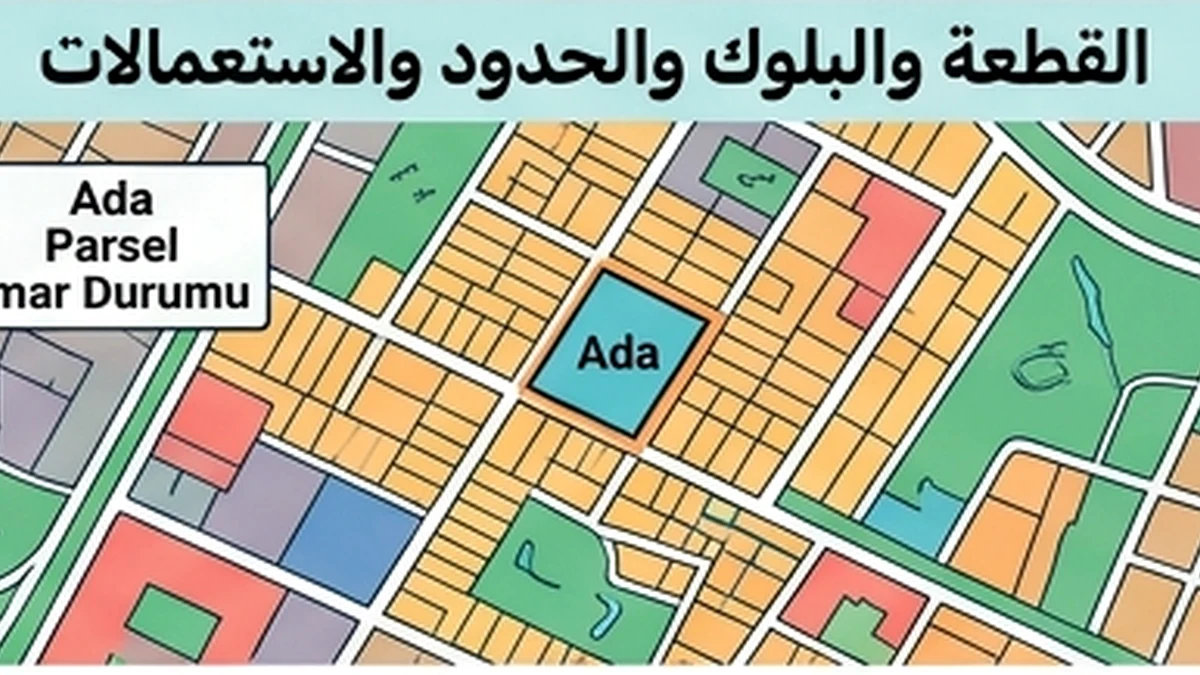
Do not rely only on fences, current occupation or an online map. Tie the boundary to the correct ada/parsel and cadastral record, and obtain an official aplikasyon or survey when there is doubt or conflict. Translate each issue into a cost consequence: delay, tax, fee, financing, liquidity or correction cost.
Which document fields or legal details on cadastral boundary matter most when seller, bank and other parties disagree?
Translate each issue into a cost consequence: delay, tax, fee, financing, liquidity or correction cost. Do not rely only on fences, current occupation or an online map. Tie the boundary to the correct ada/parsel and cadastral record, and obtain an official aplikasyon or survey when there is doubt or conflict. TKGM guidance explains that aplikasyon re-establishes parcel corners and boundaries on the ground from cadastral data, while public map-query information is not by itself a final transaction document.
What can go wrong with cadastral boundary when seller, bank and other parties disagree, and what evidence resolves it?
TKGM guidance explains that aplikasyon re-establishes parcel corners and boundaries on the ground from cadastral data, while public map-query information is not by itself a final transaction document. Translate each issue into a cost consequence: delay, tax, fee, financing, liquidity or correction cost.
Sources for this section were reviewed on 16 August 2026.
Evidence and decision plan for Cost Consequence Trace — Cadastral boundary
When reviewing “Cost Consequence Trace — Cadastral boundary”, the file should trace each issue to a documented cost, responsible payer, timing and effect on price, cash flow or closing funds. This makes the article useful at the point of commitment because unresolved facts are separated from verified facts instead of being buried in narrative.
Evidence to assemble
- For “Cost Consequence Trace — Cadastral boundary”, match the property and party identifiers in the evidence to the asset and people actually involved; a correct document for the wrong unit or person does not close the check.
- For “Cost Consequence Trace — Cadastral boundary”, record issuer, source, issue or retrieval date and version where available, then distinguish an original/current record from a scan, translation, draft, expired copy or superseded version.
- For “Cost Consequence Trace — Cadastral boundary”, compare documentary status with the physical, payment or operational reality relevant to the topic and write down every unexplained difference before commitment.
- For “Cost Consequence Trace — Cadastral boundary”, convert each unresolved difference into a named condition: evidence required, person responsible, deadline and the consequence if the condition is not satisfied.
Official reference to recheck
The source register for “Cost Consequence Trace — Cadastral boundary” includes TKGM — Parcel Query (https://parselsorgu.tkgm.gov.tr/). Use that source for the matters within its authority and recheck it when timing or rules are material; it does not replace a registry, engineering, tax, banking or contractual record that the specific decision separately requires.
Decision boundary
A defensible conclusion on “Cost Consequence Trace — Cadastral boundary” records both what was verified and the limits of that verification. If a missing fact could change ownership, legality, safety, cost or payment security, it should block the related commitment until resolved.
Cost-consequence trace — cadastral boundary
Translate every boundary discrepancy into a defined cost consequence rather than calling it merely a technical issue. A new application sketch, cadastral correction or survey can create professional fees and delay; an encroachment or a smaller-than-assumed usable area can affect valuation, redesign or the cost of regularising use. Each amount should come from an estimate, invoice or documented assumption rather than an invented allowance.
Separate verification cost from remediation cost. Paying for a survey is not the same as curing a boundary dispute, removing an encroachment or redesigning a development. The decision file should state who bears each cost, when it becomes payable and whether it changes price, closing conditions or the walk-away decision.