
Traditional geographic location or proximity to historic centers is no longer the only criterion determining property value in Istanbul. Metro, Metrobus, tunnels and airports have become major forces shaping residential and commercial values.
Transport investment can improve accessibility and change buyer demand, but the scale and timing of any price effect varies by district, station, project stage and wider market conditions. Official project pages verify the transport project; they do not establish a guaranteed percentage increase in nearby property values.
Attraction factors and modern buyer preferences
- Shorter travel time: links to the center and business hubs such as Maslak and Levent raise suburban appeal.
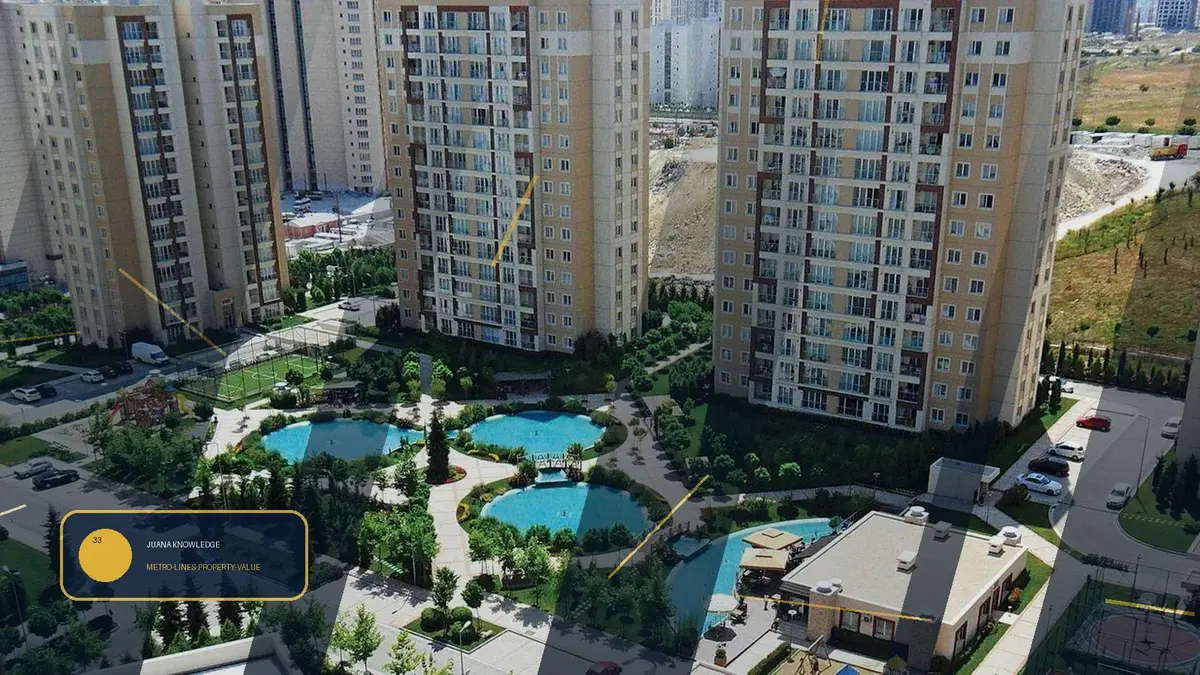
- Gated compounds: demand is increasing for mini-city communities with security, gardens, sports and retail facilities.
- Commercial property on major corridors: offices and shops on rapid metro routes, E-5 and TEM have gained investment value.
Strategic recommendation
Property advisers recommend targeting areas where municipalities announce future metro extensions while stations are under construction, because values can rise further after completion and official operation.
How to evaluate a metro project before buying
An official transport project is evidence that a line is planned or under construction; it is not, by itself, evidence that every nearby property will rise by a fixed percentage. Metro İstanbul’s current project lists show lines and extensions at different stages, including the M1B Kirazlı–Halkalı extension, the M7 Mahmutbey–Esenyurt section and the M12 Göztepe–Ümraniye line. Investors should therefore verify the exact station, project stage and interchange pattern before treating “near a future metro” as an investment advantage.
A practical comparison starts with walking distance from the property to the station entrance, the number of transfers needed to reach major employment areas, the expected opening stage, and whether the neighborhood already has alternative transport. Then compare those benefits with the asking price, aidat, unit size, building age and the supply of competing apartments. A station can improve accessibility while an overpriced unit can still produce a weak investment result.
Evidence checklist for transport-led investment
- Confirm the project: use Metro İstanbul or İBB project pages rather than sales brochures or social-media claims.
- Separate construction from planning: a project under construction and a project in the planning or financing pipeline carry different timing risks.
- Check the exact property position: measure real pedestrian access, not only straight-line map distance.
- Compare today’s price: do not pay in advance for an assumed future uplift that is already fully reflected in the seller’s price.
- Model the exit: assess both rental demand and resale liquidity instead of relying on infrastructure alone.
For 2026 decisions, the safest approach is to treat transport infrastructure as one input in a wider property analysis. Official project pages can verify that a transport scheme exists and its current status; they do not guarantee a specific property-price increase. Any return estimate should therefore be supported by current comparable sales, rents and the individual building’s condition.