
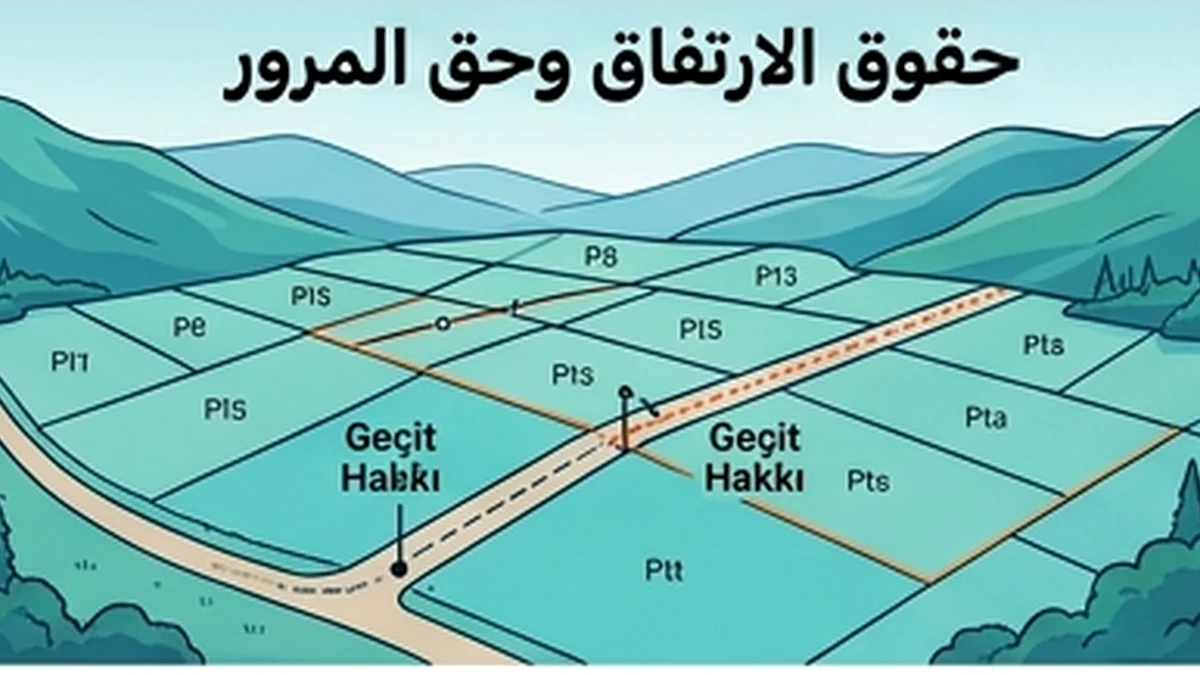
Right-of-way verification for property in Türkiye
A right of way, commonly described in Turkish land-registry practice as a geçit hakkı, is not the same thing as a road that happens to be visible or used on the ground. A buyer should treat access as two separate questions: whether a legally recognizable easement or right is recorded for the relevant property, and whether the recorded route is actually usable for the intended purpose. A dirt track, gate, driveway or long-standing neighbourly practice can show practical access today without proving a durable legal right. Conversely, a registered easement can exist while the route has become obstructed, narrowed or disconnected from the access the buyer expected.
Start with the land register
The Turkish Land Registry Regulation provides for easement rights to be entered in the specific easement section of the register. The reviewer should read the current entry rather than rely on a sales brochure or a seller summary. Identify the burdened parcel and the benefited parcel where the right is appurtenant to another property. Record the province, district, neighbourhood, block and parcel identifiers and make sure the documents relate to the property being purchased. A perfectly genuine instrument concerning another parcel is irrelevant to the transaction.
The wording of the entry matters. Determine the type of easement, any duration or condition stated, the registration basis and any reference to a plan, official deed, court decision or technical document. If a seller produces an old registry copy, obtain a current record through the official channels and reconcile the two. A right that appeared years ago may have been changed or cancelled; a recent entry may also require explanation before the buyer commits funds.
Reconcile the legal right with the mapped route
Where the easement depends on a defined corridor or technical drawing, the legal text should be read together with the cadastral material. Check the route, width and connection points to the extent shown in the official documents. Then inspect the site. The path currently driven by residents may not be the path that is legally protected, while the registered corridor may be blocked by a wall, building, gate, vegetation or topography. A statement that there is access is therefore too vague for due diligence.
The intended use also changes the analysis. Pedestrian access may not answer the needs of a development site that requires construction vehicles, utility access or emergency services. If the economic value of the property depends on vehicle access, document the registered scope and the physical width and condition before signing. Planning and municipal road information may need a separate review because a private easement is not identical to frontage on a public road or a road shown in an implementation plan.
Agreement, compulsory passage and litigation
A right of way can arise through an instrument capable of registration, and disputes over necessary access may also be addressed through agreement or judicial proceedings under the applicable law. A buyer should not translate an ongoing lawsuit or a statement that the owner can obtain compulsory passage into a guaranteed result. If a court decision is relied upon, verify the decision itself, the parcels it concerns, its procedural status and the registry consequence. If the right has not yet been established and the property cannot be used as intended without it, completion of the right should be treated as a defined pre-closing condition rather than a future promise.
Practical verification sequence
First match the property identifiers. Second obtain the current title and encumbrance information and identify every relevant easement entry. Third obtain the document that established the right and any referenced plan or decision. Fourth compare the benefited and burdened parcels with official cadastral information. TKGM Parsel Sorgu is useful for locating parcels and understanding basic geometry, but a public map view should not replace formal cadastral documents or a technical determination where the route or boundary is disputed. Fifth inspect the physical entrance and the path actually used. Sixth document any discrepancy before money becomes non-refundable.
Red flags
- The parcel has no practical public-road frontage and access depends solely on crossing a neighbour parcel with no verifiable right.
- The route used on the ground differs from the registered or mapped corridor.
- The seller relies on a verbal permission, informal letter or family arrangement instead of a registrable or registered basis.
- A gate, structure or active dispute prevents realistic exercise of the right.
- The only evidence is an old title extract and the present registry status has not been checked.
- The benefited or burdened parcel numbers in the supporting document do not match the transaction property.
- A proposed route change or cancellation is pending and the legal and technical effect has not been completed in the register.
Recordkeeping and evidence preservation
The former recordkeeping article is consolidated here because evidence discipline is part of the same verification task. Preserve the registry extract used for the decision together with its retrieval date, the establishment instrument or court decision if applicable, the plan or technical sketch, site photographs and notes explaining how the physical route compares with the legal route. If two versions conflict, retain both and explain which one is current and why. Do not silently replace an older document, because the timeline may later matter in a resale, dispute or professional review.
Transaction decision
A practical result can be recorded as pass when the current right, parcels, route and intended use are consistent; conditional when one specific item can be verified or completed before commitment; or stop when essential access depends on an unregistered, disputed or unverifiable arrangement. This classification is a due-diligence tool, not a legal judgment about an individual dispute. Complex cases should be escalated to the relevant land-registry office, cadastral professional and legal adviser.
Frequently asked questions
Does a road on the ground prove a right of way? No. It proves that a route physically exists or is being used, not necessarily that the buyer has an enforceable property right to continue using it.
Is TKGM Parsel Sorgu enough to fix the exact route? It is useful for parcel identification and orientation. A disputed or technically decisive route should be checked through the formal cadastral and registration material and, where needed, competent technical procedures.
What if the neighbour says access will continue? A private assurance should not be treated as equivalent to a verified property right when access is essential to the purchase.