
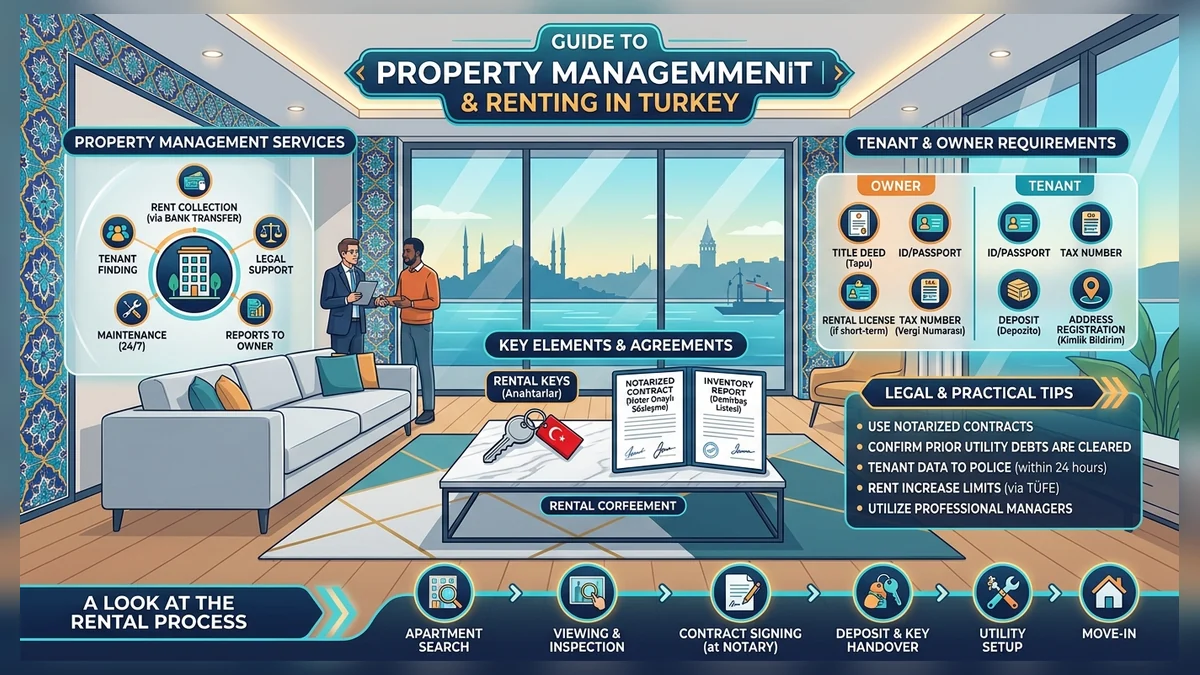
The Ministry of Culture and Tourism states that tourism-purpose home-rental permit applications are made through e-Devlet; the Ministry also publishes a searchable list of permitted homes.
Furnished vs Unfurnished Rental Strategy
Furnishing may raise rent but adds damage, tenant-turnover and re-fit costs between tenancies.
Test the target tenant’s expected stay and local demand; a strategy suited to short-stay workers or visitors may not suit long-term families.
Use the topic as a decision file rather than general reading. Separate “what the official source says” from “what is true for this property,” then document inputs, assumptions, evidence and conclusion. For numbers state period/unit; for legal rights state the document that proves them.
The operational and legal difference between long- and short-term letting
The comparison should not start with “the nightly rate is higher” but with net income after the different operating model is recognised. Long-term letting usually has fewer turnovers and lower cleaning, marketing and check-in costs, but it can bind the unit to a longer contractual occupation. Short-term operation needs vacancy between bookings, platform or manager commissions, linen and cleaning, furniture wear, utilities and more frequent maintenance to be included. Compare annual net cash, not a nightly rate against one month’s rent.
Under Law No. 7464 and the related tourism-rental regime, residential letting for tourism purposes for periods of 100 days or less is subject to a specific Ministry of Culture and Tourism permit framework in the cases covered by the law and regulation. Property, building and documentary eligibility therefore become part of the short-term decision rather than a marketing detail. Ordinary longer residential leases are fundamentally governed by the Turkish Code of Obligations, so their documents, termination risks and operating relationship differ from tourist accommodation.
The investment comparison should also include the owner’s time or management fee, furniture replacement cycle, seasonality, cancellation risk, actual taxes and charges, and the cost of switching the unit from one model to the other. If short-term profitability does not remain superior after those items, or the required permit cannot be obtained, a high advertised nightly rate does not make it the better strategy.
Compare turnover economics, not just headline nightly rent
Short-term letting may produce a higher gross rate per occupied night, but the comparison must include cleaning, platform or sales costs, utilities, furnishing wear, empty nights, guest-management time and any permit or building-rule constraints. Long-term rent normally has fewer turnovers and more predictable occupancy but creates different tenant, collection and renewal risks. Model both strategies over a full year using collected revenue rather than advertised rates, and include a conversion scenario showing the cost and downtime required to switch from one strategy to the other.
The Ministry of Culture and Tourism states that tourism-purpose home-rental permit applications are made through e-Devlet; the Ministry also publishes a searchable list of permitted homes. For the long-term vs short-term rental issue, use this evidence at the point of relying on the conclusion; do not substitute a generic document from another transaction.