
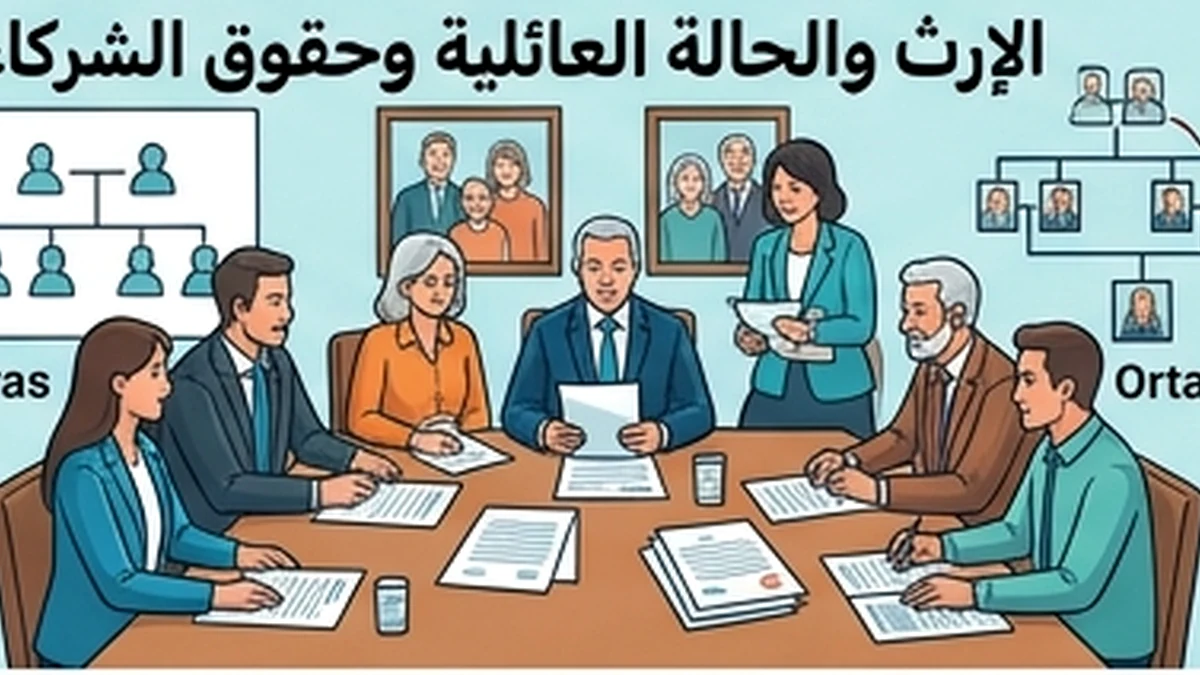
Inheritance ownership records Decision Framework
Core question
Independent check
Check decision independently from the person or document that supplied inheritance. If it conflicts with framework, identify the authoritative owner of the fact and obtain a fresh record.
Decision rule
Required evidence
Build the evidence set around inheritance, ownership, decision, framework, official and source. Mark each as verified, conflicting, stale or unavailable.
- framework
- identity
- date
- official
- ownership
- source
Practical cure
Failure scenario
Failure example: inheritance looks correct, but official belongs to a different date, unit or transaction. Keep the issue open and record whether it affects price, payment, use, finance, possession or registration.
- official
- ownership
- inheritance
- date
- source
- decision
Audit trail
Record-specific evidence matrix
| Item | Cross-check | Status |
|---|---|---|
| decision | ownership | Open / Verified |
| official | inheritance | Open / Verified |
| date | identity | Open / Verified |
Official sources
Practical questions answered from primary sources
What is the legal or financial effect of sale before inheritance registration in inheritance ownership records?
Inherited property requires three separate checks: who the heirs are under the inheritance certificate, how ownership has been transferred into the title register, and whether tax or registry conditions affect a later disposition. Known heirs do not automatically mean the title is ready for sale. Ask who the heirs are, whether any heir died later, whether there are minors or representatives, whether the title is joint/shared, and whether tax clearance is needed for the intended disposition. For this exact point—“sale before inheritance registration” within inheritance ownership records—use the cited source to establish the governing rule for the same property and current transaction.
Who has authority to confirm or change sale before inheritance registration in inheritance ownership records, specifically sale before inheritance registration?
Ask who the heirs are, whether any heir died later, whether there are minors or representatives, whether the title is joint/shared, and whether tax clearance is needed for the intended disposition. The goal is to show the visitor what the evidence proves, what it does not prove, and the next check required before signing or payment. For the document check on “sale before inheritance registration” within inheritance ownership records, match the official identifiers, date, authority and scope to the closing file; a related document for another unit or older version is not enough.
What evidence shows the issue has actually been resolved in inheritance ownership records, specifically sale before inheritance registration?
The goal is to show the visitor what the evidence proves, what it does not prove, and the next check required before signing or payment. For the risk question on “sale before inheritance registration” within inheritance ownership records, treat any unresolved mismatch as a live transaction issue until the competent record or authority shows the required status.
Sources checked: 16 August 2026.
Questions to ask
Evidence and decision plan for Inheritance ownership records Decision Framework
When reviewing “Inheritance ownership records Decision Framework”, the file should convert the evidence into a transparent proceed, proceed-with-condition, reprice, escalate or stop decision. This makes the article useful at the point of commitment because unresolved facts are separated from verified facts instead of being buried in narrative.
Evidence to assemble
- For “Inheritance ownership records Decision Framework”, match the property and party identifiers in the evidence to the asset and people actually involved; a correct document for the wrong unit or person does not close the check.
- For “Inheritance ownership records Decision Framework”, record issuer, source, issue or retrieval date and version where available, then distinguish an original/current record from a scan, translation, draft, expired copy or superseded version.
- For “Inheritance ownership records Decision Framework”, compare documentary status with the physical, payment or operational reality relevant to the topic and write down every unexplained difference before commitment.
- For “Inheritance ownership records Decision Framework”, convert each unresolved difference into a named condition: evidence required, person responsible, deadline and the consequence if the condition is not satisfied.
Official reference to recheck
The source register for “Inheritance ownership records Decision Framework” includes TKGM — Tapu ve Kadastro Genel Müdürlüğü (https://www.tkgm.gov.tr/anasayfa). Use that source for the matters within its authority and recheck it when timing or rules are material; it does not replace a registry, engineering, tax, banking or contractual record that the specific decision separately requires.
Decision boundary
A defensible conclusion on “Inheritance ownership records Decision Framework” records both what was verified and the limits of that verification. If a missing fact could change ownership, legality, safety, cost or payment security, it should block the related commitment until resolved.