
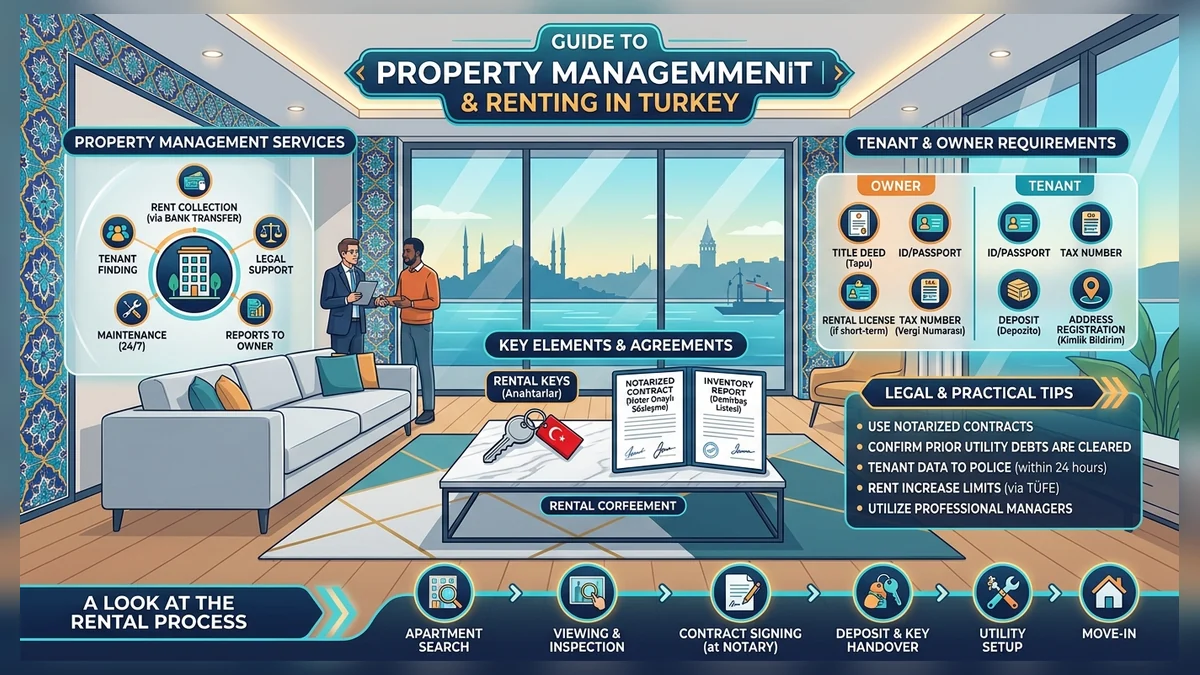
Eviction Commitment Workflow Guide
An eviction undertaking is not an administrative paper to attach to a lease and forget. Article 352 of the Turkish Code of Obligations links its effect to specific elements: the tenant gives a written undertaking after delivery of the leased premises and commits to vacate on a certain date. If the tenant does not leave on that date, the landlord may seek termination by commencing enforcement or filing an action within one month from the promised vacate date. A sound workflow therefore manages the document from creation through the statutory deadline as a dated evidence file.
Stage 1: Separate the undertaking from lease execution
Start by proving when possession was actually delivered and when the undertaking was signed. A later date printed on the paper is not enough if surrounding evidence suggests that it was obtained with the lease or before delivery. Preserve the lease, key or possession handover record and dated correspondence that establishes the chronology. The aim is not to create a formal appearance after the fact; it is to test whether the real sequence is consistent with the statutory condition.
Stage 2: Verify parties, premises and the fixed date
The file should identify the tenant, landlord and leased premises without ambiguity, and the promised vacate date should be definite. If there are several tenants, ownership changes or a representative signs, do not assume the same legal effect in every configuration; obtain transaction-specific legal review. Match names, signatures, address or unit identifiers against the lease, and treat any document that cannot be confidently linked to the tenancy as unresolved.
Stage 3: Preserve the original and control versions
Keep the original in a protected file and record any scan, translation or copy that was issued. Do not alter dates or wording after signature. If there are blanks, overwriting or additions in a different hand, document them and seek legal assessment rather than trying to “clean” the instrument. Notarial involvement may strengthen proof in a particular case, but Article 352 itself centres on the written undertaking, timing after delivery and a fixed date; notarisation should not be treated as a substitute for those substantive conditions.
Stage 4: Put the promised date on a legal calendar
Enter the vacate date in a controlled calendar with advance reminders. As the date approaches, confirm whether the tenant intends to leave voluntarily and organise keys, belongings, meter readings and financial settlement. If the tenant remains, the one-month period in Article 352 becomes critical. Open-ended negotiations should therefore be managed without losing sight of the deadline. A file with a valid-looking document but no deadline control can still fail operationally.
Stage 5: Choose the appropriate procedural route
After non-vacation, determine whether the matter should proceed through the applicable enforcement route or by court action. The choice is procedural and depends on the document and facts, so it should be reviewed by counsel before the deadline expires. Mediation Law No. 6325 also makes mediation a condition before litigation for rental disputes, while Article 18/B contains a specific exception for eviction through non-judgment enforcement under the Enforcement and Bankruptcy Law. Do not apply one procedural assumption to every path.
Stage 6: Keep other termination grounds separate
An undertaking does not erase other statutory grounds relating to tenancy termination, such as need-based cases or rules connected with payment default. Conversely, an unusable undertaking does not mean the landlord necessarily has no other remedy; it means only that the Article 352 route based on that undertaking must satisfy its own elements. Maintain separate timelines and evidence for separate legal grounds so that notices, periods and facts do not become mixed.
Stage 7: Close the file with an auditable result
If the tenant leaves voluntarily, prepare a handover record covering keys, condition, meters, security deposit and final amounts. If enforcement or litigation begins, preserve the filing date, file number, service records and outcome. A property file should not simply say “eviction undertaking exists.” It should state which controlling version was reviewed, the promised date, whether the conditions appear supported by evidence, the next action and the last date for taking it.
Conclusion
A good workflow turns the undertaking into a controlled timeline: delivery, signature, verification, preservation, monitoring and timely action. Clear chronology and identity evidence reduce reliance on assumptions. A buyer acquiring a tenanted property should therefore never base a vacant-possession plan on the label “eviction commitment” alone; the controlling document, actual circumstances and current deadline must all be reviewed.