Easement Rights Decision Framework
Ifraz or tevhit can change parcel identity and geometry. Reconstruct how the right carried to new parcels and do not mark it ended until current title shows terkin or amendment.
No. Some benefit another parcel, while rights such as intifa or sükna can be personal.
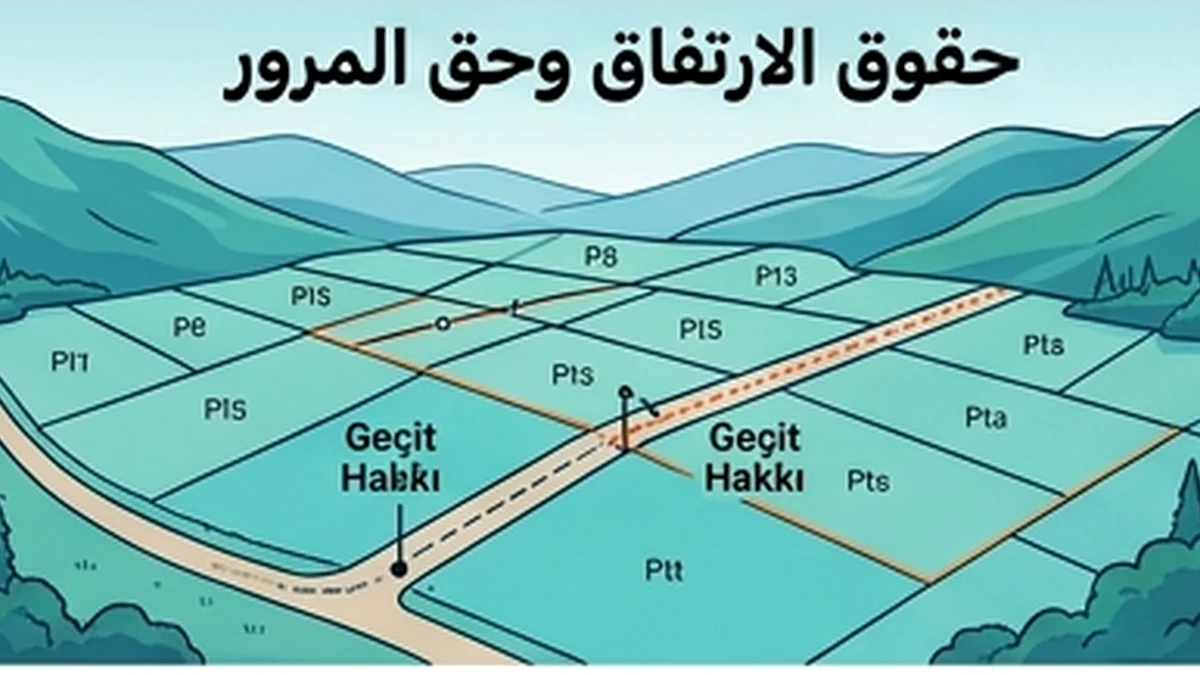
When the right occupies a defined route or area; the sketch connects the registry entry to its geometry.
A waiver may be the basis, but closure requires terkin or amendment visible in the current registry.
Verification should establish that For “Property Easement Rights Guide”: Use the current land-registry record as the controlling evidence, not a listing, screenshot or old deed copy. Reconcile the owner, independent-unit/parcel identity and any annotation, mortgage, attachment or easement before a payment or transfer decision; if the current record conflicts with the transaction file, the conflict must be resolved in the registry evidence first. Retain the source or primary document, its date/version, the exact property or counterparty identifier, the reviewer’s conclusion and the document that closes any exception. That record makes the decision reproducible instead of dependent on memory or a sales statement.
The purchase decision is affected when TKGM describes Web Tapu as the platform for online applications for land-registry transactions such as sale, mortgage and inheritance transfer before visiting the land-registry office. Use the official source as a control point, then reconcile it with the exact property, party, document and transaction purpose before relying on the conclusion. In “Property Easement Rights Guide”, this source is relevant specifically because it controls the official Web Tapu application trail. Before applying the guide to a live case, compare that rule or dataset with the evidence for easement rights; a generic statement about another property is not enough.
In practice, For “Property Easement Rights Guide”: TKGM describes Web Tapu as the official online channel for applications such as sale, mortgage and inheritance transfer; a current registry record should therefore be preferred to an advertisement or an old document image when identity or rights are being checked. Primary source used for the 16 August 2026 recheck: TKGM — Tapu ve Kadastro Genel Müdürlüğü. Keep the source URL and the transaction-specific evidence together; the source explains the rule or system, while the property file must prove how it applies to the exact unit or transaction.
In practice, TKGM defines “takyidat” as the collective term for annotations, declarations, easement rights, immovable obligations, foundation indications and pledges that restrict ownership, and states that a current title-record copy can be requested through Web Tapu. For the easement rights issue, use this evidence at the point of marking the subject as verified; do not substitute a generic document from another transaction.
This matters because The evidence file should cover benefited property, burdened property, right type, scope/duration and registry entry. A document can be genuine yet still be unusable if it belongs to a different unit, parcel, year or transaction.
The purchase decision is affected when A usufruct (intifa hakkı) separates the right to use and benefit from property from bare ownership. A buyer of bare ownership can acquire title while the usufruct holder retains registered use/benefit rights.
Frequently asked questions
Can burdened property change whether a right of way (Geçit Hakkı) transaction can proceed?
A right of way (Geçit Hakkı) is an easement that identifies the beneficiary, the burdened property and the permitted route/scope. A physical track does not by itself prove a legal right of way, and a registered right still requires review of its route and effect. Separate informal neighbour permission from a registered easement, a public road from private right of way, and the existence of a right from whether its route actually serves the intended access. For this exact point—“burdened property” within right of way (Geçit Hakkı)—use the cited source to establish the governing rule for the same property and current transaction.
What should be checked about effect on value and resale before reselling the property in right of way (Geçit Hakkı), specifically effect on value and resale?
A right of way (Geçit Hakkı) is an easement that identifies the beneficiary, the burdened property and the permitted route/scope. A physical track does not by itself prove a legal right of way, and a registered right still requires review of its route and effect. Proceed when legal access, route and practical usability are aligned; hold for establishment, clarification or amendment where access remains uncertain. For this exact point—“effect on value and resale” within right of way (Geçit Hakkı)—use the cited source to establish the governing rule for the same property and current transaction.
What is the legal or financial effect of paylı versus elbirliği ownership in co-owner rights and share sale?
For co-owned property, first identify the ownership form, registered share and who can dispose of the interest being sold. A share sale, sale of the whole property, conversion between co-ownership forms and pre-emption rights are distinct issues and should not be conflated. Which share is sold, who owns the remainder, whether all owners sign, and what pre-emption or use arrangements exist. For this exact point—“paylı versus elbirliği ownership” within co-owner rights and share sale—use the cited source to establish the governing rule for the same property and current transaction.
Can sale of the whole property change whether a co-owner rights and share sale transaction can proceed?
For co-owned property, first identify the ownership form, registered share and who can dispose of the interest being sold. A share sale, sale of the whole property, conversion between co-ownership forms and pre-emption rights are distinct issues and should not be conflated. Selling one share, selling the whole property, joint ownership and shared ownership create different authority and exit risks. For this exact point—“sale of the whole property” within co-owner rights and share sale—use the cited source to establish the governing rule for the same property and current transaction.
What should be checked about closing with an unresolved family-home issue before reselling the property in family residence annotation, specifically closing with an unresolved family-home issue?
A family-residence annotation can directly affect an owner’s ability to dispose of the property alone. Checking only the registered owner is insufficient: review the annotations, family-home status and spouse-related evidence before commitment or payment. Proceed only when disposition authority is clear; otherwise hold until the annotation/consent issue is resolved. For this exact point—“closing with an unresolved family-home issue” within family residence annotation—use the cited source to establish the governing rule for the same property and current transaction.
How can effect on construction change the true cost of right of way (Geçit Hakkı)?
A right of way (Geçit Hakkı) is an easement that identifies the beneficiary, the burdened property and the permitted route/scope. A physical track does not by itself prove a legal right of way, and a registered right still requires review of its route and effect. Parcel division, consolidation, expropriation or a registered amendment can affect the route or entry; refresh the record after such changes or before a delayed closing. For this exact point—“effect on construction” within right of way (Geçit Hakkı)—use the cited source to establish the governing rule for the same property and current transaction.