
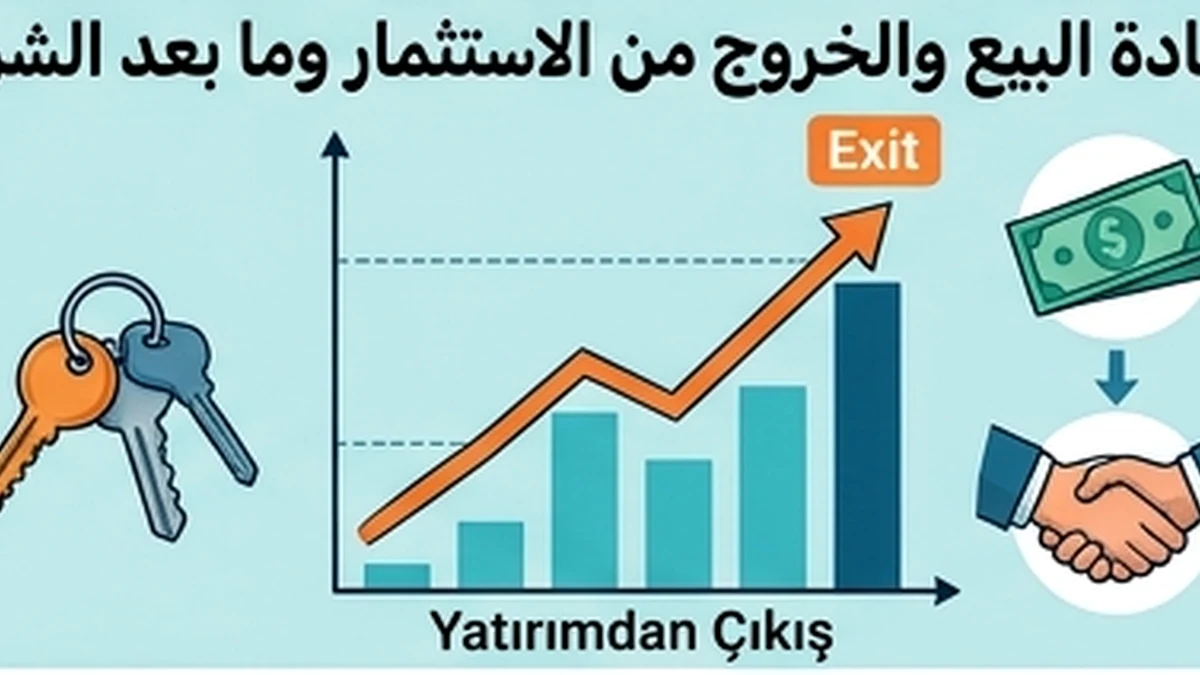
Property resale liquidity: knowing before purchase whether you can exit the investment
Resale liquidity is the ability to sell a property within an acceptable time and price range. It is not the same thing as price appreciation. Market indices can rise while a particular apartment remains difficult to sell because its layout is unusual, aidat is high, the legal file is incomplete or many identical units are competing in the same project. Exit therefore needs to be analysed before purchase, not years later when selling becomes necessary. The practical question is who will buy this property next and what will make that buyer choose it instead of available alternatives.
Define the likely buyer pool
Start by identifying who can realistically use or own the property: a family, rental investor, first-time buyer, foreign purchaser, commuter or, for commercial property, a business user. An asset that serves a broad and understandable segment is generally easier to compare, finance and market. Standard room counts, practical areas, documented parking and manageable common costs tend to be easier for buyers to understand than an unusual plan or a property whose value depends heavily on a very specific taste or use.
The legal file affects time to sale
The next buyer will ask the same questions you should ask today: who owns the property, what is the independent-unit number, are there mortgages, attachments or annotations, does the physical unit correspond to the approved project, and what are the condominium and occupancy positions? A ready file containing current registry information and relevant project/building evidence reduces investigation time. An unresolved unit-number mismatch, unclear alteration or undocumented parking claim can lead to more questions and can deter buyers or lenders.
Building condition and management are liquidity variables
A buyer enters a building or residential site, not only an apartment. Very high aidat, management arrears, deferred capital work, weak lifts or façade problems can narrow the buyer pool even when the interior is attractive. Review the management plan, budget, recent decisions and expected major work. Future ownership costs will affect the next buyer’s decision just as they should affect yours.
Separate transaction evidence from listing evidence
Listings show what sellers are asking and which competing properties are currently available; they do not prove completed transaction prices. Official market series such as TCMB indices provide broader direction, but they do not publish an official “days on market” for a particular apartment or its precise sale value. Track similar active properties, visible listing age where reliable, price reductions and the number of competing units. Use verified completed-sale evidence when available and label asking data honestly as asking data.
An existing tenant can help or restrict an exit
A tenanted property may appeal to an investor who wants in-place income, but it may be less attractive to an owner-occupier who needs immediate possession. Understand the current lease, rent, payment history, deposit, notices and the parties’ rights. Do not market a property as effectively vacant when it is not. A well-organised lease file can make an investment sale easier; unclear terms, disputes or undocumented payments can slow due diligence.
Consider financing eligibility
Part of the future buyer pool may require mortgage finance. Issues that make lenders or appraisers cautious can therefore reduce liquidity. Bank approval is not a quality certificate, but it affects how many buyers can complete. Clear registered identity, coherent building documentation and the absence of material unexplained differences between the physical property and official records generally make underwriting easier.
Bad pricing can create the illusion of poor liquidity
A property may be saleable while the owner is simply asking materially more than competing stock. Compare similar location, size, condition, floor, view and building quality and explain adjustments. Do not use the highest local asking price as the only benchmark. Establish a range and test a conservative exit price. An investment plan that works only if the property sells quickly at the highest asking price in the area is fragile.
Include marketing time and exit costs
Selling takes time, and ownership costs may continue while the property is listed or vacant. Include brokerage, marketing, repairs or preparation for sale and the potential tax consequences relevant to the owner and the rules then in force. If the property is financed, include the outstanding loan and closing mechanics. Real liquidity is about the net cash that can be realised and the time required to realise it, not a theoretical listing value.
Run an exit test before purchase
Assume you must sell after two years in a weaker market. Reduce the resale price, extend the marketing period and include selling costs. Ask how many buyers remain if a future infrastructure project is delayed or aidat rises. This exposes dependence on a single optimistic story. The most liquid property is not necessarily the one with the fastest recent appreciation; it is the one with a clear demand pool, a clean and understandable file, comparable characteristics and ownership costs the next buyer can reasonably accept.
2026 investment decision update — Property Resale Liquidity Guide
Resale liquidity is the ability to attract a real buyer at a realistic price within an acceptable period. Before buying, identify the next buyer pool, competing identical units, monthly charges, financeability and registry condition. Stress a faster sale at a reasonable discount rather than assuming exit at the highest asking price.
Türkiye recorded 123,603 home sales in July 2026. Mortgaged sales were 23,888 (19.3%), first-hand sales 42,529 and second-hand sales 81,074; foreign-buyer sales were 2,120 units, or 1.7% of the total. These are market aggregates, not a valuation of a specific unit.
The latest available CBRT Residential Property Price Index and New Tenant Rent Index release is July 2026. Use the indices for market direction and relative change; a specific asset value or achievable rent still requires current like-for-like evidence.
Formula / decision check: Exit liquidity score should combine expected marketing time, buyer-pool breadth, competing supply and price discount needed for a realistic sale; do not infer liquidity from price appreciation alone.