
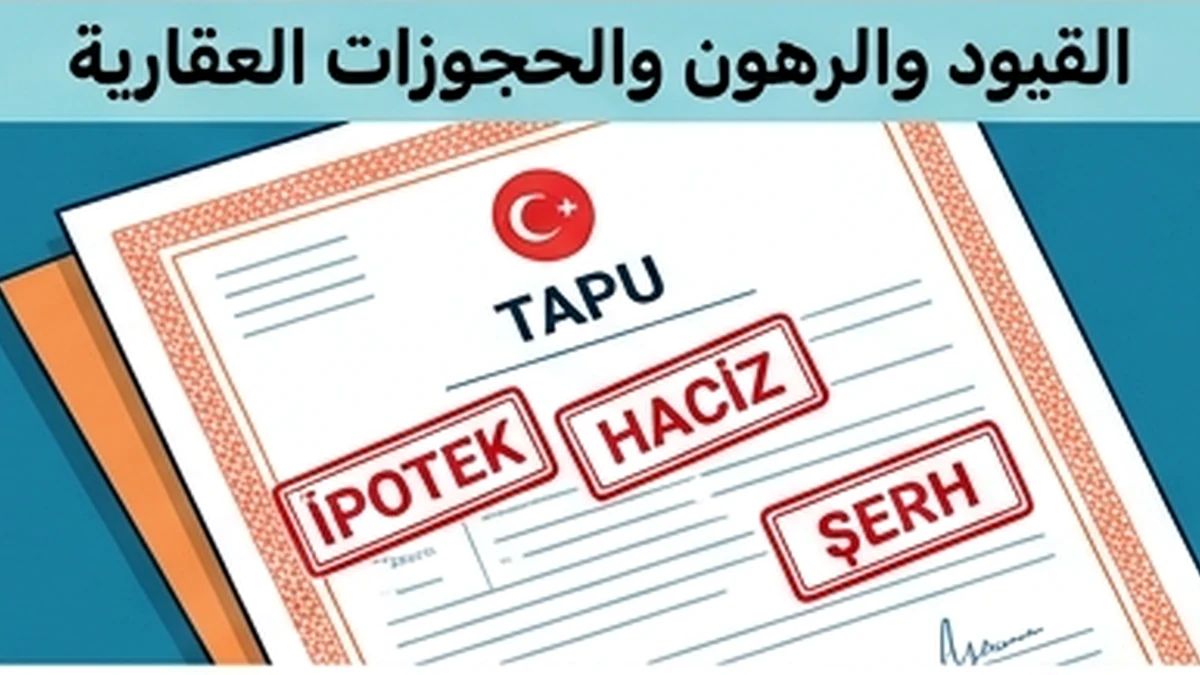
Mortgage and lien status Red Flags Guide
Core question
Make the conclusion reproducible by another reviewer. For “Mortgage and lien status Red Flags Guide”, begin with mortgage and lien and make sure both relate to the same asset, party and review date.
Independent check
Check flags independently from the person or document that supplied mortgage. If it conflicts with official, identify the authoritative owner of the fact and obtain a fresh record.
Required evidence
Build the evidence set around mortgage, lien, flags, official, source and date. Mark each as verified, conflicting, stale or unavailable.
- identity
- official
- lien
- mortgage
- source
- date
Practical cure
Decision rule
Failure scenario
A mortgage entry is a red flag when the source is stale, tied to another unit, or cannot be matched to the current registry. Keep the issue open until a current official record confirms the creditor, scope, and status, and document the effect on payment, financing, transfer, or possession.
- lien
- authority
- identity
- official
- source
- mortgage
Audit trail
Mortgage and Lien Red-Flag Evidence Matrix
| Item | Cross-check | Status |
|---|---|---|
| official | mortgage | Open / Verified |
| lien | authority | Open / Verified |
| identity | source | Open / Verified |
Official sources
Practical questions answered from primary sources
How do you compare two documents that disagree on foreclosure risk in mortgage and lien status, specifically foreclosure risk?
Red flags include relying on an old registry extract; a seller who refuses to provide viewing authority or current evidence; a ‘paid’ mortgage that still appears in the registry; an attachment with no identified authority or release process; different property identifiers across documents; and pressure to release funds before the promised deletion can be verified. These signs do not all prove fraud, but they justify stopping payment and escalating verification. For this exact point—“foreclosure risk” within mortgage and lien status—use the cited source to establish the governing rule for the same property and current transaction.
Which document version should control the transaction in mortgage and lien status, specifically foreclosure risk?
Red flags include relying on an old registry extract; a seller who refuses to provide viewing authority or current evidence; a ‘paid’ mortgage that still appears in the registry; an attachment with no identified authority or release process; different property identifiers across documents; and pressure to release funds before the promised deletion can be verified. These signs do not all prove fraud, but they justify stopping payment and escalating verification. For the document check on “foreclosure risk” within mortgage and lien status, match the official identifiers, date, authority and scope to the closing file; a related document for another unit or older version is not enough.
Why does the date of the record matter for foreclosure risk in mortgage and lien status, specifically foreclosure risk?
Red flags include relying on an old registry extract; a seller who refuses to provide viewing authority or current evidence; a ‘paid’ mortgage that still appears in the registry; an attachment with no identified authority or release process; different property identifiers across documents; and pressure to release funds before the promised deletion can be verified. These signs do not all prove fraud, but they justify stopping payment and escalating verification. For the risk question on “foreclosure risk” within mortgage and lien status, treat any unresolved mismatch as a live transaction issue until the competent record or authority shows the required status.
Sources checked: 16 August 2026.
Additional source-verified evidence
Official source: TKGM FAQ
Evidence and decision plan for Mortgage and lien status Red Flags Guide
The due-diligence purpose of “Mortgage and lien status Red Flags Guide” is to separate genuine warning signs from harmless irregularities and define which warning requires escalation before commitment. A reviewer should be able to trace every material conclusion to a current source and identify any assumption that has not yet become evidence.
Evidence to assemble
- For “Mortgage and lien status Red Flags Guide”, match the property and party identifiers in the evidence to the asset and people actually involved; a correct document for the wrong unit or person does not close the check.
- For “Mortgage and lien status Red Flags Guide”, record issuer, source, issue or retrieval date and version where available, then distinguish an original/current record from a scan, translation, draft, expired copy or superseded version.
- For “Mortgage and lien status Red Flags Guide”, compare documentary status with the physical, payment or operational reality relevant to the topic and write down every unexplained difference before commitment.
- For “Mortgage and lien status Red Flags Guide”, convert each unresolved difference into a named condition: evidence required, person responsible, deadline and the consequence if the condition is not satisfied.
Official reference to recheck
The source register for “Mortgage and lien status Red Flags Guide” includes TKGM — General FAQ / Mortgage Release (https://www.tkgm.gov.tr/sss). Use that source for the matters within its authority and recheck it when timing or rules are material; it does not replace a registry, engineering, tax, banking or contractual record that the specific decision separately requires.
Decision boundary
For “Mortgage and lien status Red Flags Guide”, a residual issue should remain open whenever its legal, technical, tax, payment or cost consequence cannot yet be measured. The file is ready only when that issue is closed or consciously accepted by the appropriate decision-maker.