
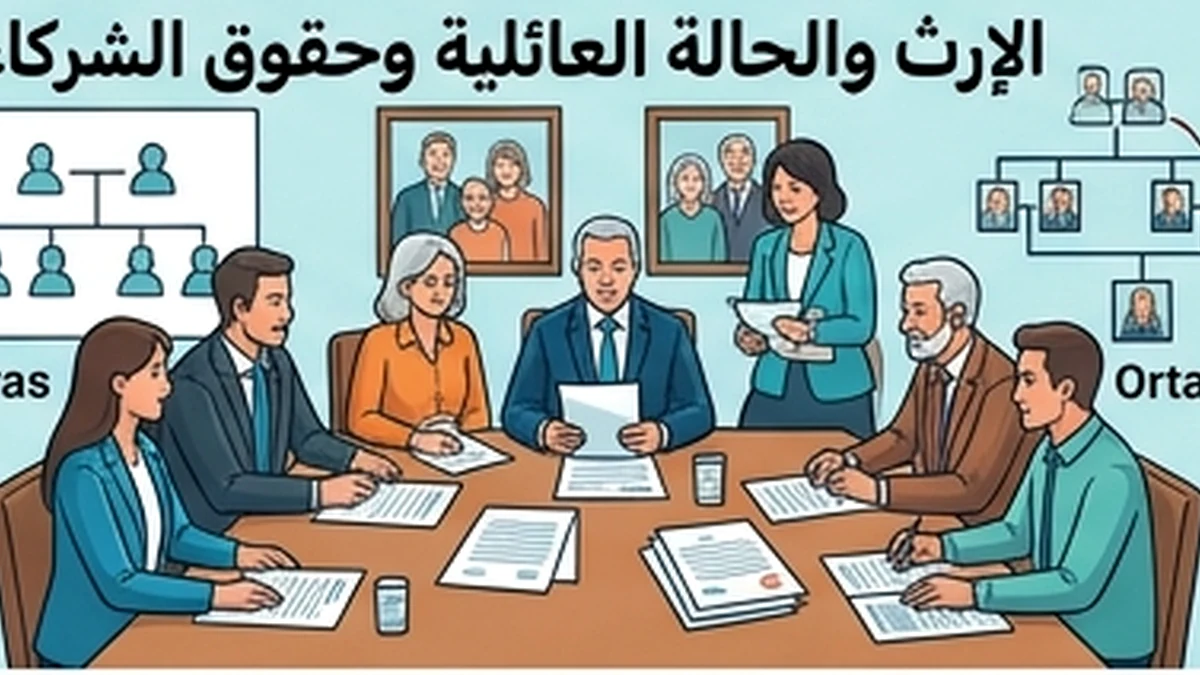
This guide examines Inheritance ownership records specifically through the lens of “Source Freshness Review”, using the official rule and evidence that belong to this topic rather than expanding into adjacent subjects.
Official facts that control the topic
The first substantive rule for “Source Freshness Review — Inheritance ownership records” is this: Inheritance ownership must connect the deceased, the property and the heirs through the inheritance certificate (veraset belgesi) and the subsequent registration of transfer in the title registry.
Applied specifically through the “Source Freshness Review” lens to Inheritance ownership records, the official position is more precise: TKGM explains that an inheritance-transfer application can be initiated through Web Tapu and requires identity and an inheritance certificate issued by a competent court/notary as applicable; foreign inheritance documents can require recognition/authentication steps. A deceased owner’s name on an old title copy does not prove the registry is unchanged; the latest registration, ownership form among heirs and any later sale, partition or release must be checked.
What this review changes
Source freshness for Inheritance ownership records is not satisfied merely because a website is official; the particular information must still apply to the period and facts on which the decision will rely. An old rule may be historically accurate yet unusable today.
Check the publication or verification date, then refresh these items for the current property and period: deceased’s identity, inheritance certificate and issuing authority/date, heirs and shares, latest inheritance registration, ownership form and any later partition, release or sale. If a figure, tariff or deadline changes by year, use the correct year’s version.
If the legal text has not changed but the property data or document has, the freshness problem lies in the case evidence rather than the law.
Documents and data that must reconcile
For “Source Freshness Review”, the key evidence is: deceased’s identity, inheritance certificate and issuing authority/date, heirs and shares, latest inheritance registration, ownership form and any later partition, release or sale
Scope boundary
Because this record is limited to “Source Freshness Review”, its boundary matters: An inheritance certificate does not replace the current title registration and does not resolve separate tax or encumbrance questions.
Official source
Practical review protocol: Source Freshness Review — Inheritance ownership records
Source freshness is a control on timing as much as on accuracy. Record when the evidence was issued, when it was retrieved, whether the source is authoritative for the subject, and what events could make it stale. A document can be genuine yet no longer describe the current position. For information that may change through a new registration, consent, payment, inheritance step, management decision or administrative update, define a recheck point close to the transaction milestone. Do not carry an old “verified” label forward without a new timestamp and a clear statement of what was revalidated.
The review should rely on the competent official register and the currently valid document, matching the property, parcel/block or independent-unit identifier and the parties as required by the topic. Check the issue date, issuing authority, later amendments, and whether any annotation, restriction, or procedure is missing from an older copy.
Keep the official record or document on which the decision was based, its reference or query number, the verification date, and a record of discrepancies and how they were closed. Where the information can change, revalidate it at a point close to signing or final registration.
For this record specifically, the reviewer should tie every conclusion back to “Source Freshness Review — Inheritance ownership records”, state what changed the risk assessment, and leave a dated decision note. Material exceptions should remain open until supported by new evidence or expressly accepted by the authorised decision-maker.